
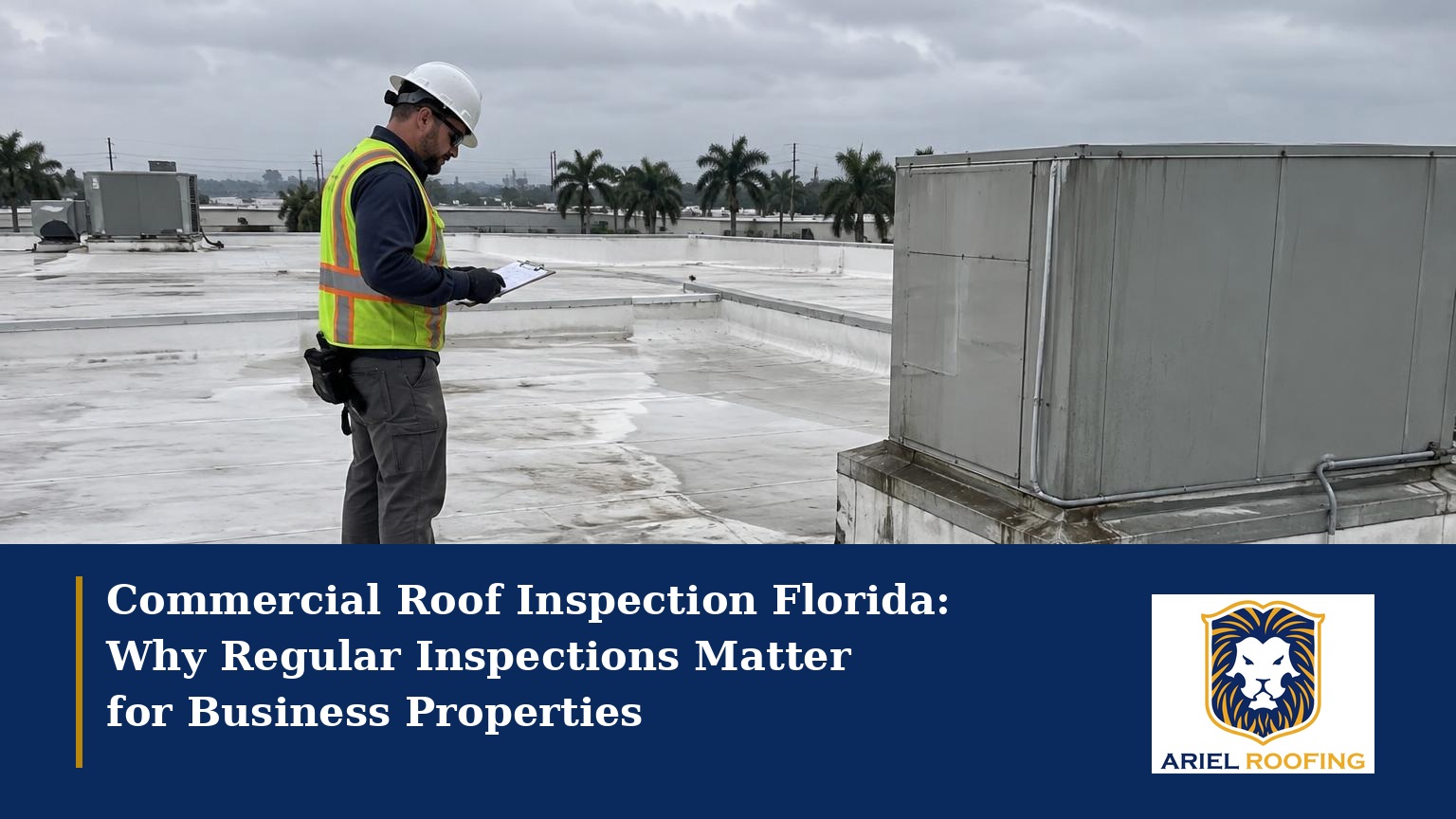
A shopping center's roof can look dry by lunchtime even after water entered a tenant's unit that morning. An afternoon shower may overwhelm a debris-filled outlet, while an older patch leaks only when wind drives rain against an equipment curb. Commercial Roof Inspection Florida research should lead to an assessment that explains those patterns—not just a photograph of the roof and a replacement estimate.
For commercial owners, roof condition affects more than the next maintenance invoice. A leak above a loading bay, an occupied office, or a stockroom creates different operational consequences. Regular inspection helps separate immediate defects from longer-term planning needs. In Florida, the useful questions are where rain goes, which details are deteriorating, and whether previous repairs remain compatible with the installed roof.
What Florida Exposure Means for a Commercial Roof
Intense sunlight and UV exposure contribute to weathering, but systems do not age identically. A reflective single-ply membrane, a surfaced asphalt assembly, and exposed metal details need different inspection methods. Color alone does not establish performance. Look for changes in surface condition, vulnerable transitions, and repairs that have stopped bonding properly.
High humidity can complicate the diagnosis of indoor moisture. Damp insulation or a stained ceiling may relate to water entry, condensation, or equipment problems. A contractor should explain the evidence behind the diagnosis instead of attributing every wet area to a membrane puncture. Roof and HVAC observations sometimes need to be assessed together.
Heavy rainfall tests the complete drainage path, from the roof surface to the outlet and downstream piping. Water can collect around curbs or in depressed areas even when a drain is open. Repeated wetting also makes a small opening harder to ignore. A proposal should address the cause of retained water, not only the patch beside it.
Tropical storms bring wind, wind-driven rain, and airborne debris. Perimeters, attachment details, penetrations, and rooftop equipment deserve attention before and after significant weather. An inspection does not certify hurricane resistance or establish structural capacity. Follow official weather instructions and never send staff onto a roof during hazardous conditions.
Commercial Flat and Low-Slope Roofs: Inspect the Assembly, Not Just the Surface
A flat roof inspection in Florida should begin by identifying the roof system where records and visible details allow. TPO and PVC use heat-welded seams; EPDM usually relies on compatible tapes or adhesives. Modified bitumen and built-up roofs have different lap and surface details. A generic repair material is not suitable for every assembly.
Review membrane condition, sheet joints, changes in roof level, wall flashings, and edge details together. Many problems occur where the waterproofing meets something else. A sound field membrane does not rule out a failed drain connection or a poorly detailed pipe boot. Likewise, an isolated defect does not prove the entire roof is exhausted.
Insulation and decking are largely concealed. A visual inspection can identify reasons to investigate them, but it cannot certify that they are dry or undamaged everywhere. Ask which conclusions are directly observed and which depend on further work. That distinction matters when deciding between a localized repair, broader maintenance, or replacement planning.
Warning Signs That Deserve a Closer Look
Keep a building-specific log rather than waiting for several tenants to report the same problem. Note where water appears, what the weather was doing, and whether recent rooftop service could be relevant. Photographs from safe indoor or ground-level locations help the inspector prepare.
- Recurring ceiling stains, damp stock, or moisture near walls: identify the source before assuming the stain maps directly to roof damage.
- Pools that remain after surrounding areas have dried: investigate outlets, slope, localized depressions, and possible movement.
- Open seams, splits, worn patches, or exposed reinforcement: assess the extent and whether surrounding material can accept a durable repair.
- Loose edge metal or displaced flashing: treat attachment and waterproofing as related concerns, especially after high winds.
- Debris around drains or missing strainers: document and correct the obstruction through safe, authorized maintenance.
- Repeated service calls without a clear diagnosis: compare prior repair locations and methods with the current evidence.
HVAC Equipment and Roof Penetrations Need Their Own Review
A busy commercial rooftop is also a work area for other trades. Technicians cross the membrane, open access panels, and move tools or replacement parts. Loose screws, abandoned materials, or unprotected travel routes can introduce damage unrelated to the roof's age. Walkway protection helps only when it is suitable for the system and people actually use it.
Inspect curbs, pipe flashings, conduit supports, and adjacent seams for deterioration or movement. Look at where condensate discharges and whether service work has disturbed the waterproofing. Equipment supports and anchorage may need evaluation by the appropriate specialist; a roofer's visual review should not be presented as an engineering certification.
Coordinate access with the facility manager. Roofing staff should not disconnect electrical equipment or alter mechanical systems outside their authorized scope. Record the division of responsibilities so an identified defect does not fall between the roofing contractor and the equipment service company.
What Does Commercial Roof Inspection Florida Work Include?
Before the visit, share installation records, available warranty documents, earlier reports, and recent work orders. Explain business hours, restricted areas, sensitive inventory, and access arrangements. A distribution facility may need work coordinated with deliveries; an office property may have equipment serving occupied spaces throughout the day.
The agreed visual scope should cover accessible roofing membranes and seams, flashings, penetrations, roof edges, drains, and areas around HVAC equipment. Reported interior leaks provide context. The inspector should record visible damage, likely water-entry paths, and conditions that require more investigation rather than label every uncertain area as confirmed failure.
A useful report includes dated photographs with recognizable locations, a roof sketch where practical, prioritized findings, and recommended corrective actions. Ask it to identify access limitations and distinguish maintenance tasks from repairs or specialist referrals. A replacement recommendation needs supporting findings, not just the statement that the roof looks old.
Moisture surveys, infrared work, core sampling, and other testing are not automatically part of a visual inspection. Discuss whether they are appropriate, what they can establish, and how results will be confirmed. Repairs and destructive investigation need separate authorization and a defined scope.
Ariel Roofing's professional commercial roof inspection services page is a starting point for an inquiry. Provide your Florida property address, describe the issue, and confirm availability and the inspection deliverables before scheduling. Do not assume a general service page guarantees every location or testing method.
Use Inspection Findings to Build a Preventive Maintenance Plan
Florida commercial roof maintenance works best when findings become assigned tasks. Separate urgent water-entry concerns from routine drainage cleaning, compatible detail repairs, and conditions that can be monitored. Name who approves the work, who performs it, and what documentation confirms completion.
An early repair can limit the opportunity for moisture to spread, but there is no reliable universal savings figure. The outcome depends on the defect, surrounding materials, and how quickly the building responds. Appropriate maintenance can support service life without guaranteeing a set number of extra years or eliminating future storm damage.
Keep the inspection report with repair photographs, invoices, and subsequent leak records. If a repair fails, that file helps distinguish an unresolved cause from a new defect. Budgeting becomes more useful when it is tied to known conditions rather than an unsupported estimate of how long every roof should last.
When to Inspect Before and After Florida's Heavy Weather
Plan a baseline inspection with enough lead time to address known problems before periods of heavier rainfall and tropical weather. Follow the roof manufacturer's actual inspection and maintenance requirements, and adjust for rooftop traffic, previous leaks, and the building's use. There is no single schedule that suits every Florida commercial property.
After a significant storm, wait until safe access is possible. Document changes against the earlier report and distinguish new damage from older deterioration where the evidence allows. A condition report is not a guarantee of insurance coverage; the policy and insurer's process need separate review.
Arrange additional assessment after active leaks, visible defects, or rooftop alterations. Protect people and vulnerable contents first. If structural distress, electrical hazards, or unstable materials are suspected, restrict access and get appropriate help. An emergency response is different from an ordinary maintenance appointment.
Commercial Roof Inspection Services Across South Florida
The following locations provide a practical way to organize a South Florida inspection inquiry. They are not a claim that Ariel Roofing has a local office or guaranteed availability in each city. Confirm the exact property address and service scope directly. Exposure, roof geometry, and building operations matter more than attaching the same keyword to every city.
Miami-Dade County and surrounding areas
For a commercial roof inspection in Miami, Doral, Hialeah, or Aventura, describe the property type and equipment density. A warehouse with loading operations has different access needs from a retail or multifamily building with several roof levels. Note drains near curbs, recent equipment work, and any coastal exposure that affects metal details.
Broward County
Commercial roofing inspection inquiries for Fort Lauderdale, Pompano Beach, Hollywood, and Coral Springs should include leak history and practical access information. Coastal and inland buildings do not face identical exposures. Inspectors should assess the actual perimeter details, service routes, and drainage arrangement instead of drawing conclusions from the city's name.
Palm Beach County and surrounding areas
For commercial roof inspection in West Palm Beach, Boca Raton, Palm Beach, Delray Beach, or Boynton Beach, clarify whether the property has separate roof sections and who controls access. Jupiter and Palm Beach Gardens inquiries should include the same building-specific information. Coastal proximity, tree debris, equipment interfaces, and prior alterations help define the review across these locations.
Choosing a Professional Commercial Roofing Contractor
Ask who will inspect the roof and whether that person understands the installed assembly. Request an example of the reporting format the contractor is authorized to share. Verify current insurance and applicable licensing directly; do not assume credentials from a logo, directory listing, or generalized marketing claim.
Ariel Roofing focuses on roofing work, particularly commercial properties. Discuss commercial roofing services in Florida in terms of your actual building, location availability, and the proposed scope. Ask how urgent findings are communicated and which conditions require an independent specialist. No particular certification or statewide service promise is assumed here.
Compare inspection proposals by deliverables, limitations, access assumptions, and follow-up responsibilities—not only price. A contractor should be able to explain why a detail needs repair and what remains uncertain. There should also be a clear distinction between the assessment and authorization to perform work.
Turn the Next Inspection Into a Clear Plan for Your Property
Commercial Roof Inspection Florida planning starts with the roof you own, not a generic replacement timetable. Bring the leak log, roof documents, and operating constraints to the conversation. Ask for findings that identify what needs action now, what can be monitored, and what requires further investigation.
Use Ariel Roofing's inspection service page linked above to discuss your South Florida commercial property and confirm availability. Request a defined assessment and written recommendations before choosing repairs. The aim is a roof condition record your team can act on before another rain event exposes the same unresolved detail.