Uptown Dallas retail centers run a tight economic model: ground-floor tenants paying premium rent, shared common-area roofs, and property managers who need any roof work done with minimal noise, odor, and disruption to customers walking in the front door below. That environment makes the coating-versus-replacement decision more than a cost question — it's an operations question too.
The honest answer is that coatings are the right call more often than most owners assume, but only on roofs that qualify. Here's the framework we use to make that call, along with what each path actually costs in 2026.
2026 cost comparison
The cost gap between coating and replacement is the reason this conversation is worth having before assuming replacement is the only option. For a typical Uptown retail center in the 10,000–40,000 sq ft range, current installed pricing looks like this.
- Silicone restoration coating over qualifying substrate: $3.75–$5.75 per sq ft
- Acrylic coating (lower-cost, shorter life, needs dry climate exposure): $2.75–$4.25 per sq ft
- Full 60-mil TPO tear-off and replacement: $9.50–$13.75 per sq ft
- Full 80-mil fully-adhered TPO with new tapered insulation: $11.00–$14.50 per sq ft
- PVC replacement (kitchen exhaust / grease exposure common in retail food tenants): $10.50–$15.75 per sq ft
What actually qualifies a roof for coating
A coating is a restoration, not a repair for a failing system — it renews the surface of an existing membrane that is otherwise sound. The substrate has to be dry throughout, fully adhered or secured with no loose seams, and structurally capable of supporting foot traffic for the coating application itself.
We run an infrared moisture survey and core cuts on every coating candidate before quoting it. If wet insulation shows up anywhere, coating that area traps the moisture underneath and accelerates the very failure the coating was meant to prevent — in that scenario, replacement is the only defensible recommendation regardless of budget preference.
- Qualifies: existing membrane intact, seams adhered, no ponding beyond minor puddling, moisture survey clean
- Qualifies with prep: minor seam repair, granule loss on modified bitumen, chalking on an aged single-ply
- Does not qualify: wet insulation anywhere in the field, structural deck deflection, membrane older than roughly 20 years with brittle seams
Why silicone over acrylic in North Texas
Silicone coatings resist ponding water indefinitely and hold up to UV exposure without the chalking and erosion that shortens acrylic's field life. On a flat Uptown retail roof where drainage is rarely perfect, that ponding resistance is the deciding factor — acrylic coatings applied over a spot that holds water for more than 48 hours after rain will degrade years ahead of schedule.
The tradeoff is upfront cost: silicone runs roughly $1.00–$1.50 more per sq ft than acrylic. For most Uptown properties, that premium pays for itself well within the 15-year restoration life we expect from a properly applied silicone system.
Reflectivity, drainage, and the retail heat load
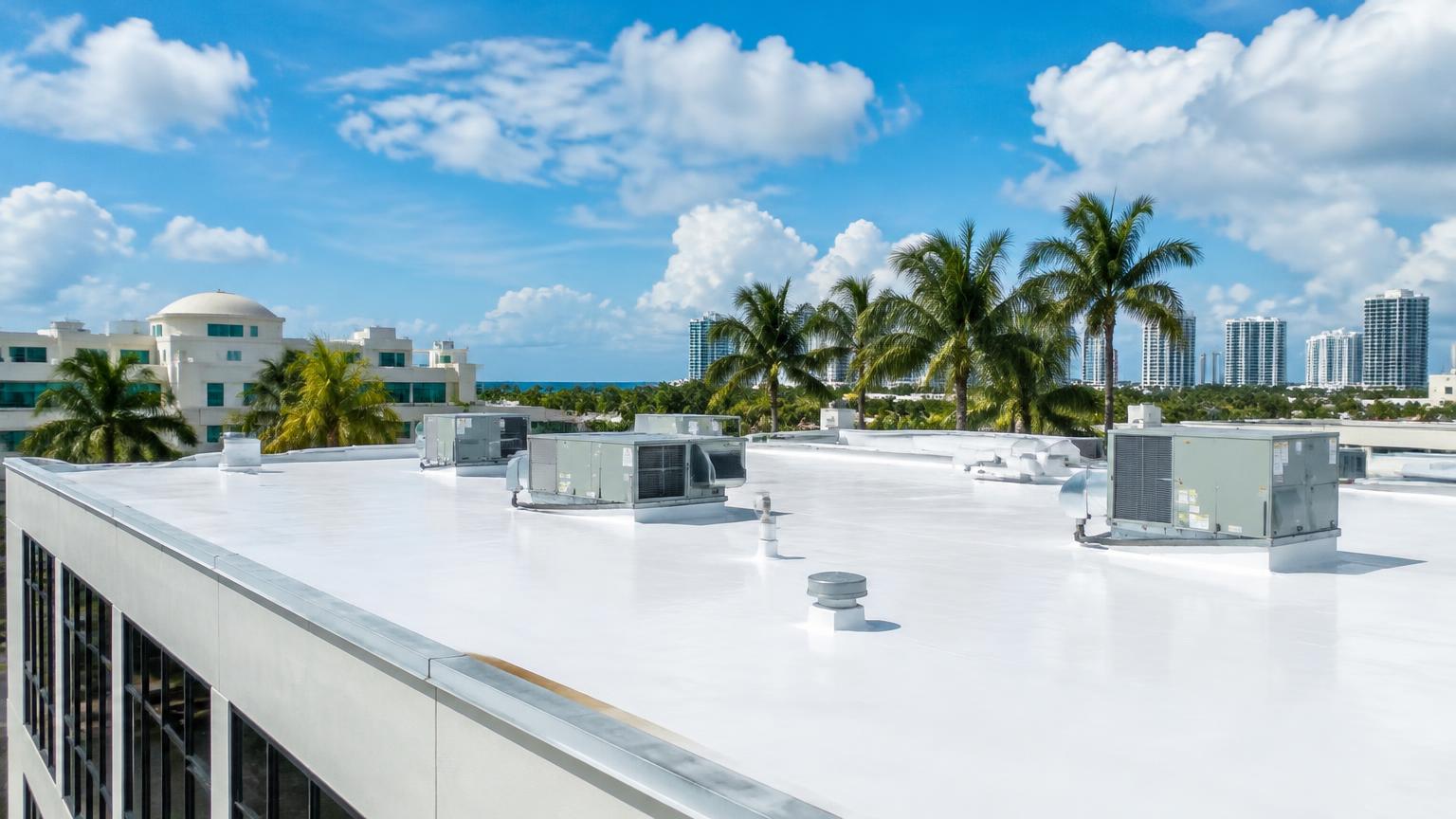
A fresh white silicone coating pushes solar reflectance back up to near-new membrane levels, which matters directly for ground-floor retail tenants running HVAC through Dallas summers with rooftop package units. Restoring reflectivity on an aged, dirt-darkened membrane is one of the fastest-payback moves available on an older retail roof.
Coatings don't fix a drainage problem on their own. If the pre-coating survey shows ponding beyond the acceptable window, we add tapered insulation crickets or additional drains as part of the restoration scope — skipping that step and coating over a ponding area is the most common reason a coating job underperforms its warranty.
Tenant-occupied phasing: the real advantage of coatings
A coating application is low-odor relative to hot tar or torch-applied systems, produces far less debris than a tear-off, and can typically be completed with minimal noise disruption to ground-floor tenants during business hours. That is a meaningful advantage for a property manager fielding tenant complaints about noise or fumes during a lease term.
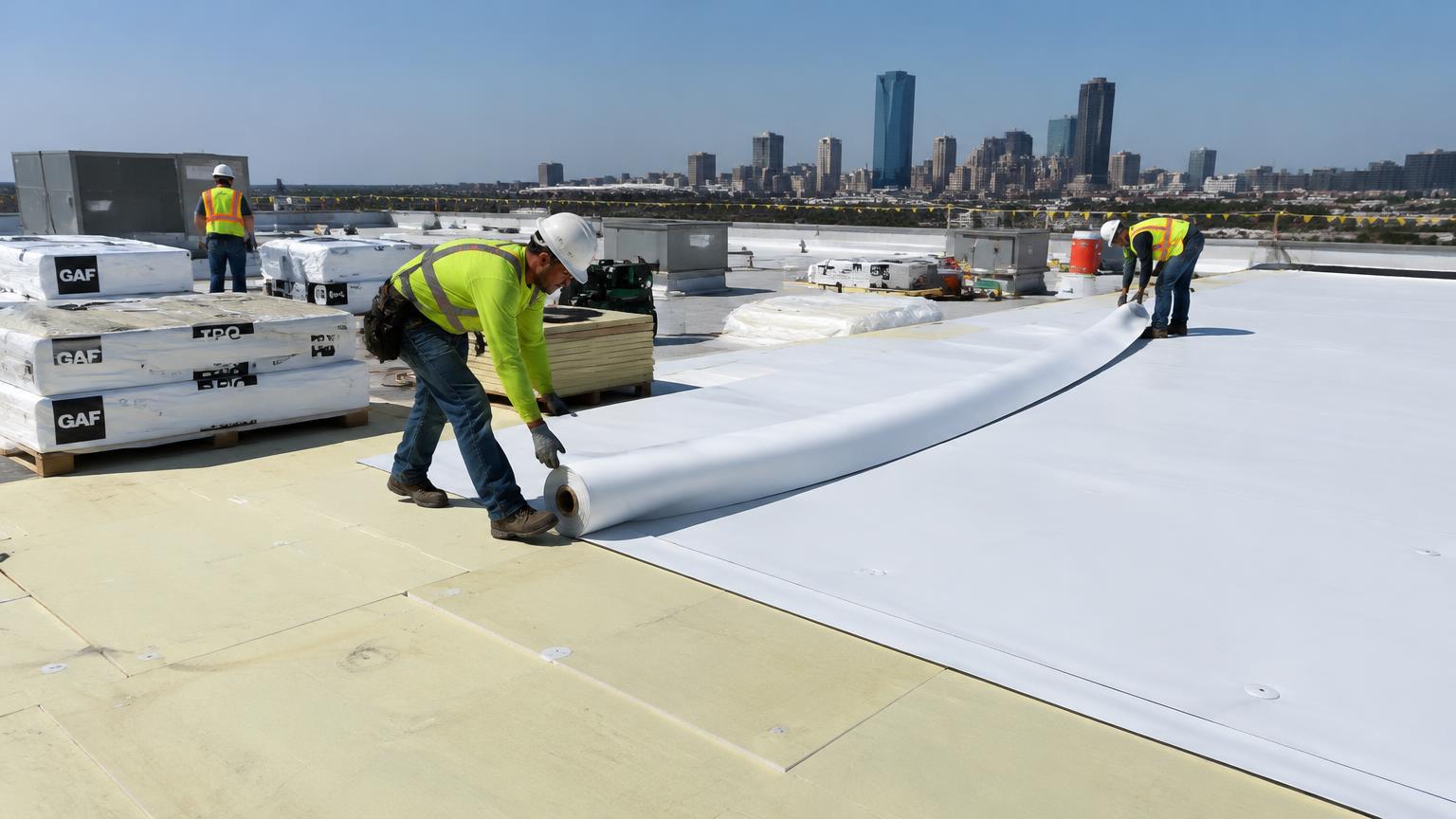
Full replacement on a tenant-occupied retail center requires more careful sequencing — protecting entrances, coordinating dumpster placement away from customer parking, and often working around a specific tenant's operating hours (restaurants in particular). It's manageable, but it's a bigger operational lift than a coating project.
Warranty differences you need to understand
A silicone restoration warranty is typically 10–15 years and is generally material-focused, meaning it covers the coating product itself rather than the full roof assembly the way a new-installation NDL warranty does. It's a real warranty, but it's a different coverage tier than what you'd get on a full tear-off and replacement.
A full TPO or PVC replacement done by a certified installer can carry a manufacturer NDL (No Dollar Limit) warranty covering both materials and labor for 20–25 years. If your roof still has meaningful remaining life and qualifies for coating, that shorter warranty term is a reasonable tradeoff for the cost savings; if the roof is near end-of-life anyway, the NDL warranty on a new system may be worth the higher upfront cost.
The maintenance program that extends either choice
Whichever path you choose, a documented preventative maintenance program — biannual inspections, drain clearing, and prompt repair of any membrane damage from other trades' rooftop work — is what determines whether you get 15 years out of a coating or 25 out of a new membrane, versus a premature failure either way.
Most manufacturer warranties on both coatings and new membranes require documented maintenance to stay valid. Building that into your annual facilities budget from day one, rather than reacting to the first leak, is the cheapest insurance available on either investment.
How to evaluate bids for a coating project
Any coating proposal should specify the moisture survey results, substrate prep scope (seam repairs, primer, spot repairs), coating type and dry-film thickness, drainage corrections if needed, and warranty term and coverage type. A bid that quotes a coating without a documented moisture survey is not a bid you should accept.
If a contractor recommends replacement without first evaluating coating eligibility, ask why — on a roof under roughly 15 years old with a clean moisture survey, that recommendation should come with a clear substrate-condition explanation, not just a preference for the larger project.