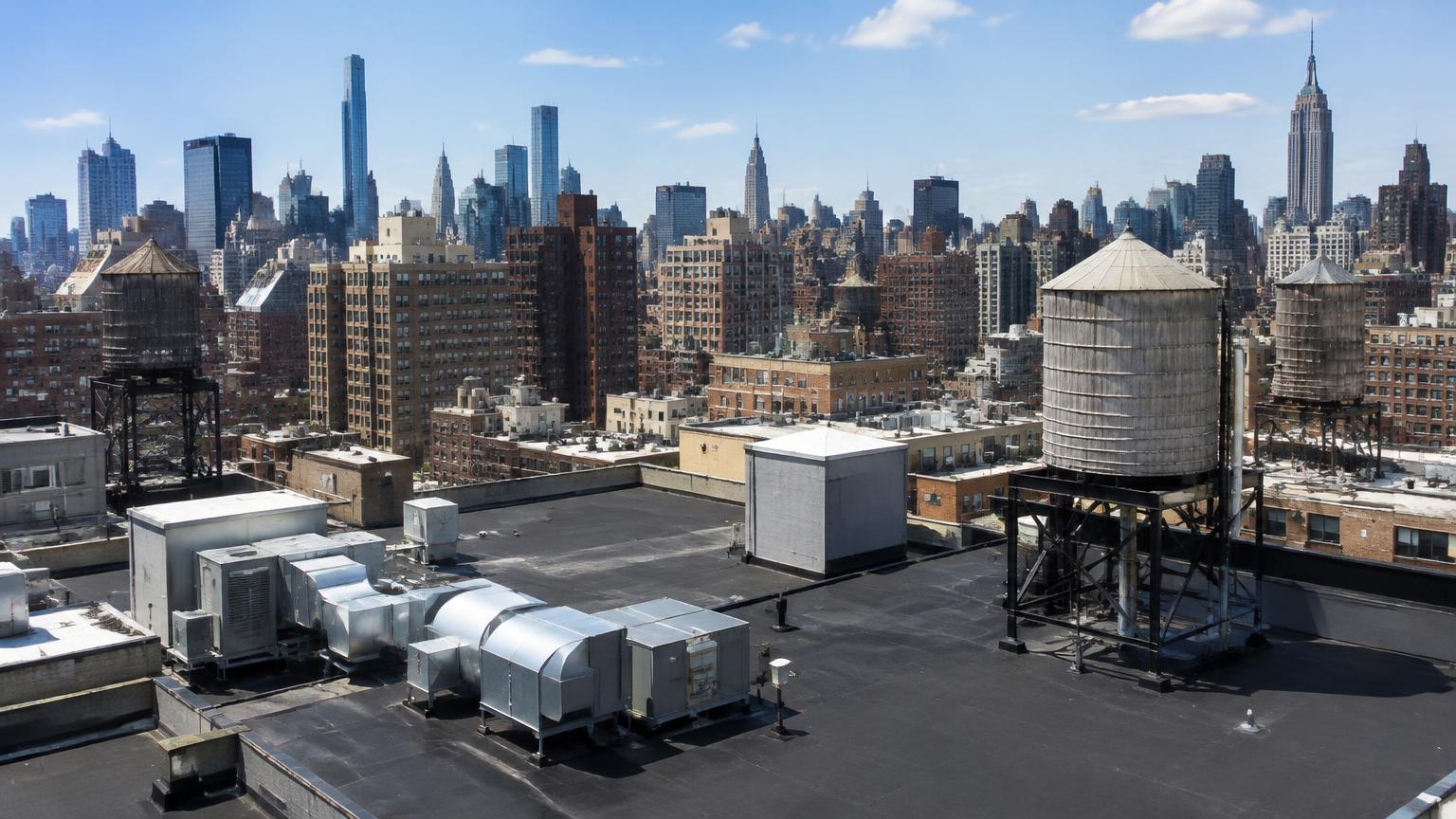
Look across any Manhattan or Brooklyn skyline and you're looking at one of the largest collections of flat commercial roofs in the world. New York City's commercial buildings — offices, retail co-ops, warehouses, mixed-use walk-ups — almost all rely on low-slope roof systems, and almost all of them work harder than their suburban counterparts.
This guide covers what NYC building owners, property managers and co-op boards should understand about commercial roofing in the city: the systems you'll find up there, the rules that govern the work, and the maintenance habits that protect the building below.
The roof systems you'll find on NYC buildings
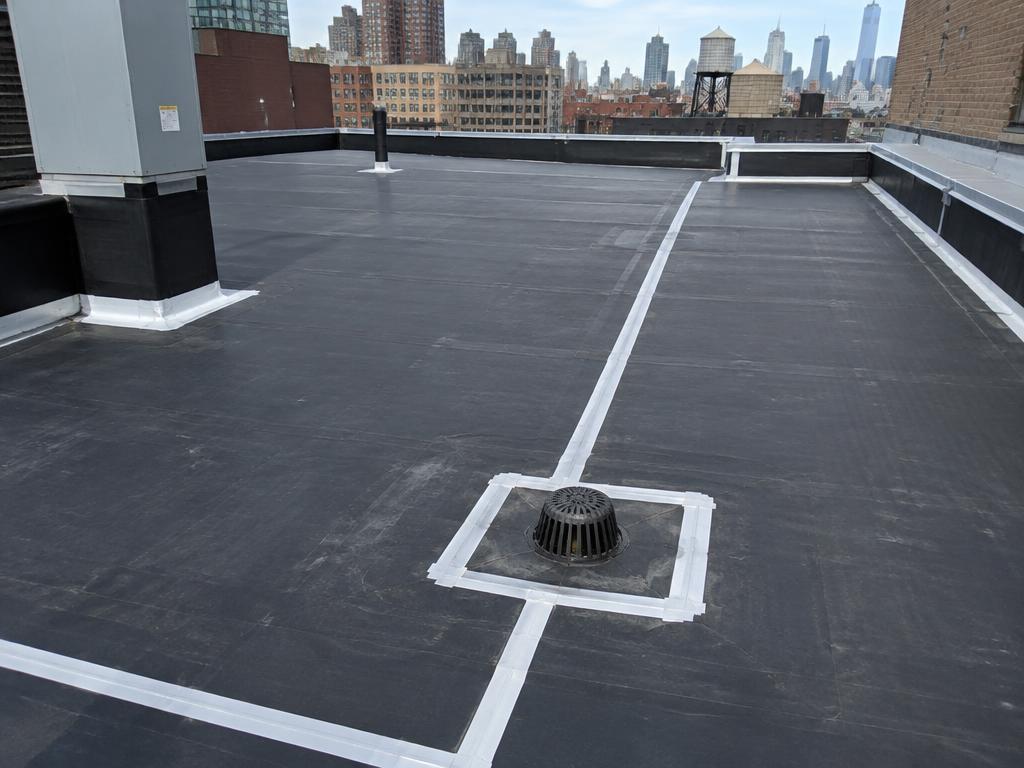
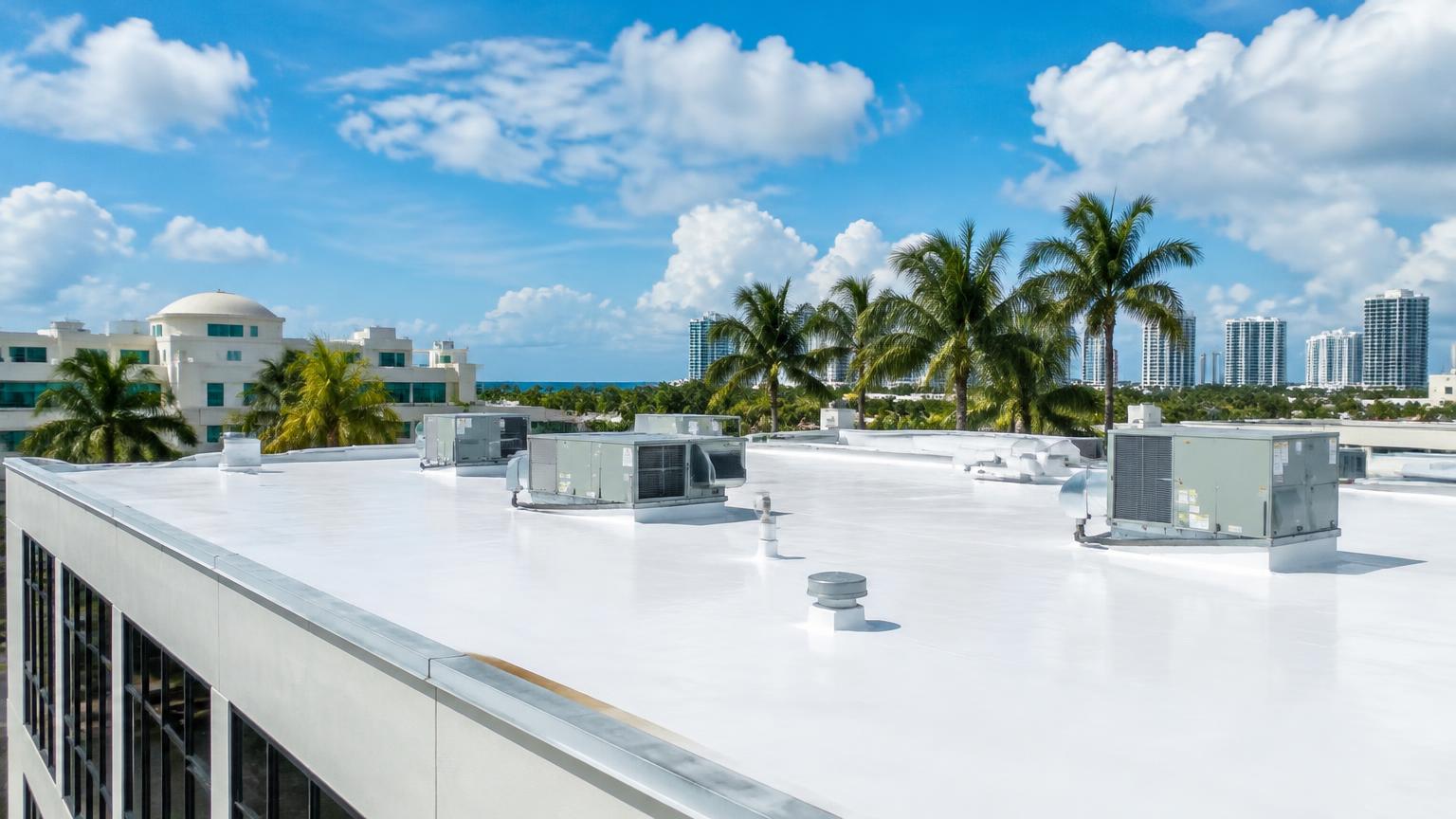
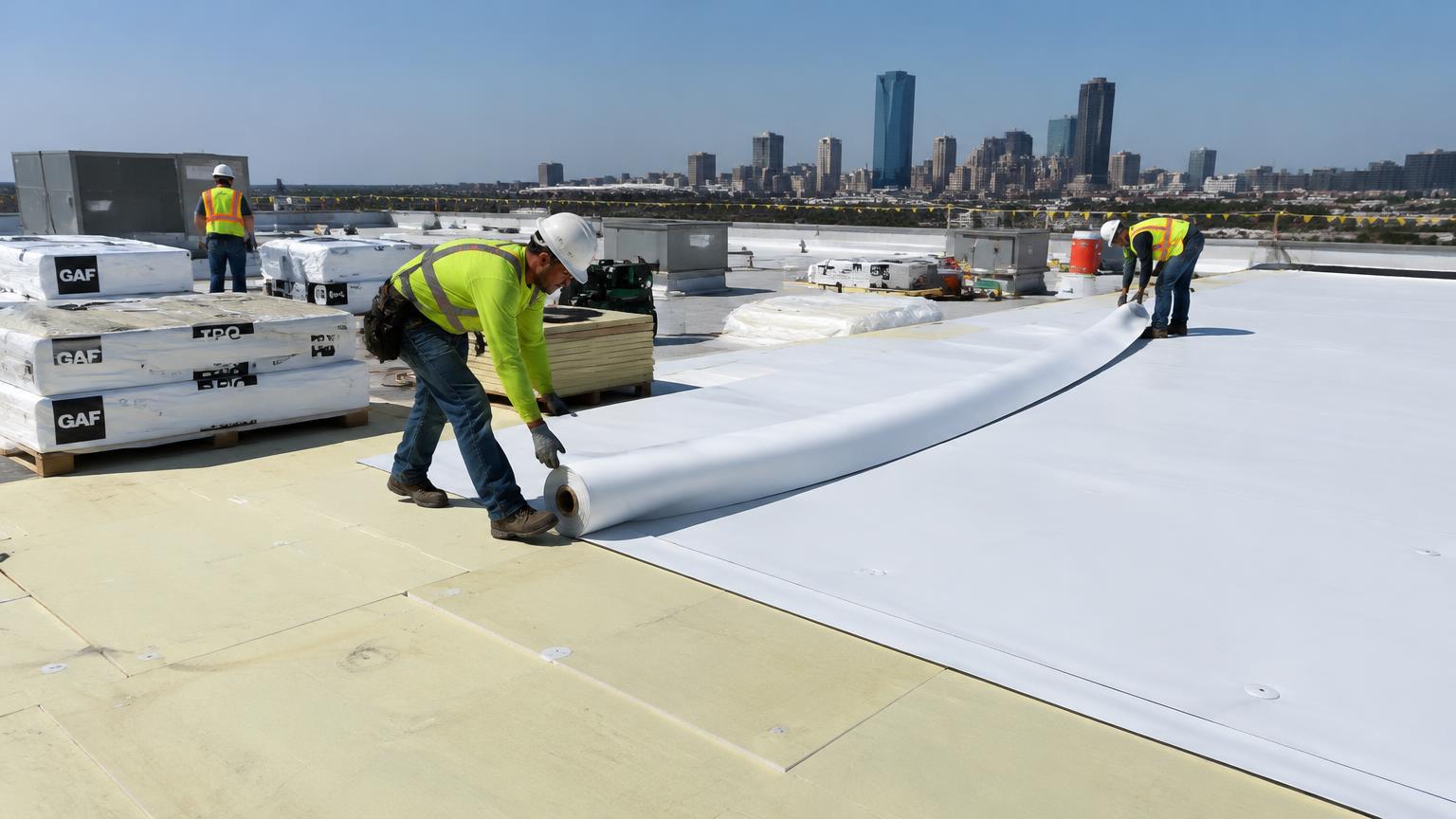
EPDM — the black rubber membrane seen across the city — has been a New York staple for decades. It's durable and repairable, though the dark surface absorbs summer heat. Modified bitumen, installed in torch-applied or cold-applied layers, is another longtime standard, especially on older buildings. TPO, the white reflective membrane, has grown steadily as energy costs and cool-roof rules pushed owners toward reflective surfaces. Built-up roofing (layers of asphalt and felt) still covers many older buildings, often under later recover systems.
Knowing which system you have — and how many layers sit under it — is the starting point for any repair or replacement decision. NYC code limits how many roof layers can be stacked before a tear-off is required.
Permits, the DOB and approvals
Reroofing in New York City runs through the Department of Buildings. Permits are required for roof replacement work, and filings must come from properly licensed and insured contractors. Depending on the building, there may be additional layers of approval: landmarked buildings need Landmarks Preservation Commission sign-off on visible roof work, and co-op and condo boards typically require their own review of contractor credentials, insurance and work plans.
Owners should also know that NYC has cool-roof requirements for many reroofing projects, which is part of why reflective membranes have become so common on city rooftops.
What wears out NYC roofs
Three factors do most of the damage on city roofs:
- Freeze-thaw cycles: water that finds its way into a seam or crack expands when it freezes, prying the defect a little wider every winter week.
- Ponding water: many older roofs have settled or were never sloped well, and standing water accelerates membrane aging and finds every weak point.
- Rooftop equipment and traffic: NYC roofs carry HVAC units, water towers, cell equipment and constant service traffic. Every penetration and every footpath is a wear point.
The logistics that shape NYC roofing costs
In most cities, roofing cost is mostly about the roof. In New York, logistics can rival it. Getting materials to a rooftop may mean a crane pick over a sidewalk (with the permits and protection that requires), a freight elevator, or a manual carry-up. Staging space is limited. Work hours may be restricted. Debris has to come down somehow.
This is why two identical roofs — one in Queens, one in a suburban office park — can price very differently, and why an honest NYC roofing proposal always follows a site visit rather than a phone estimate.
Maintenance in a vertical city
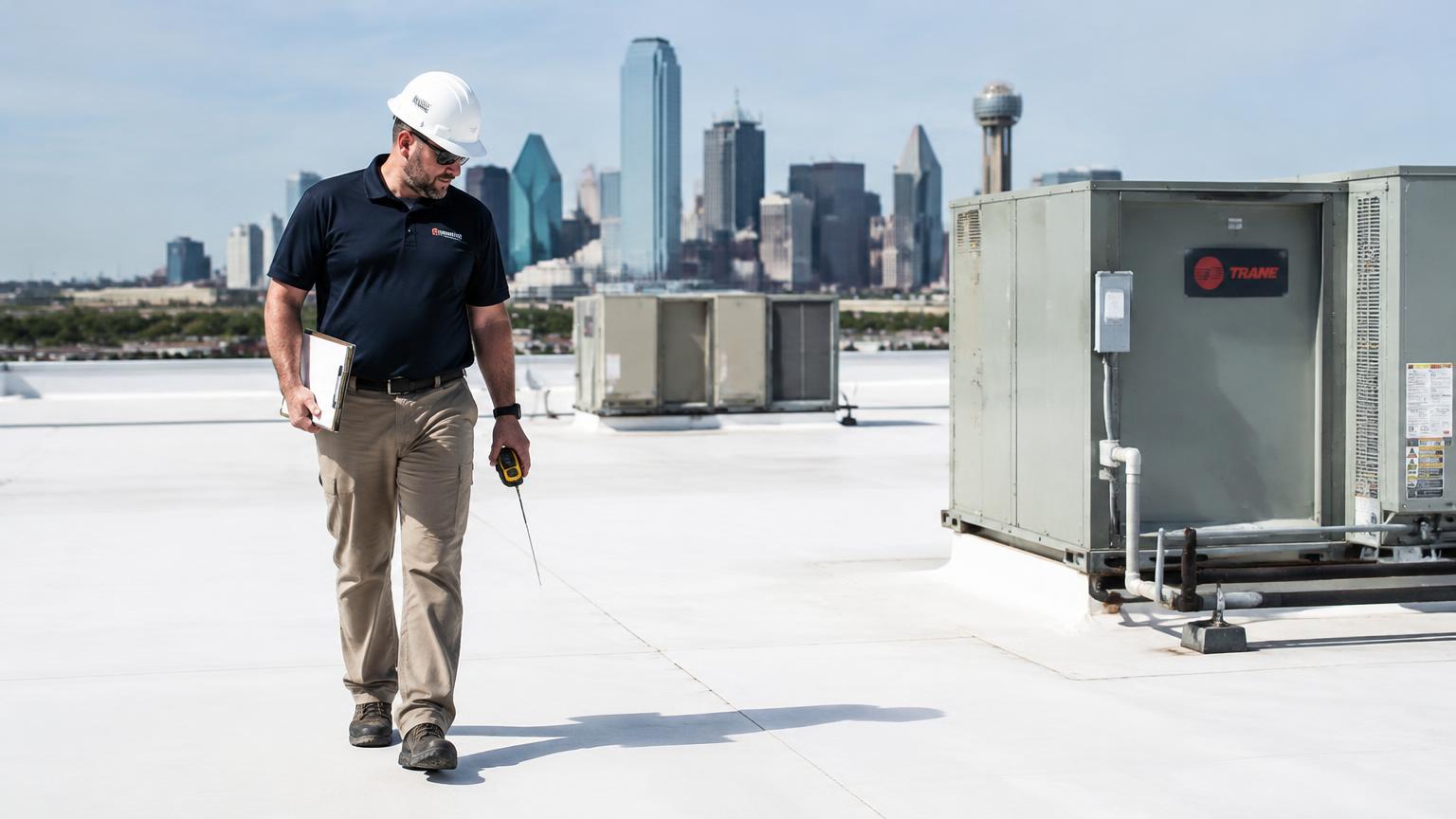
A leak in a suburban warehouse is an inconvenience. A leak in a twelve-story occupied building is a cascade — it can travel down walls and appear floors below its source. That makes scheduled inspections and prompt small repairs unusually valuable in NYC. A sensible program includes spring and fall inspections, drain and scupper cleaning before winter, seam and flashing checks after freeze-thaw season, and documented photos after any major storm.
Planning a repair or replacement
The owners who get the best outcomes start with a documented inspection: photos, moisture assessment where warranted, and a clear picture of the existing system and layers. From there, repair, recover and replacement options can be compared honestly — including the permit path, the logistics plan and a realistic schedule.
If you're evaluating contractors, our guide on finding a reliable roofing contractor covers the vetting questions that apply in any city. You can also browse our locations and service areas to see where Ariel Roofing operates. Whatever contractor you choose, insist on licensing and insurance verification, a written scope, and a closeout package with warranties and as-builts.