Commercial roofing in South Florida is a different discipline than roofing almost anywhere else. Between Palm Beach and Miami, a roof has to survive hurricane-force winds, horizontal rain, year-round UV exposure and salt-laden coastal air — while meeting the Florida Building Code, one of the most demanding building codes in the country.
Whether you own a retail plaza in Pompano Beach, an office building in Fort Lauderdale or a warehouse near Doral, the fundamentals below shape every roofing decision you'll make.
The Florida Building Code changes everything
Florida's code requires roofing products and assemblies to carry specific product approvals, with tested uplift resistance for the building's wind zone and exposure category. Coastal properties and high-velocity hurricane zones face the strictest requirements. This isn't paperwork for its own sake — these rules exist because Florida learned, storm by storm, exactly how roofs fail.
For owners, the practical takeaway is simple: the assembly on your roof must be an approved, tested system, installed as tested. A bid that's vague about product approvals or uplift ratings is a bid to walk away from.
Wind uplift: where storms attack first
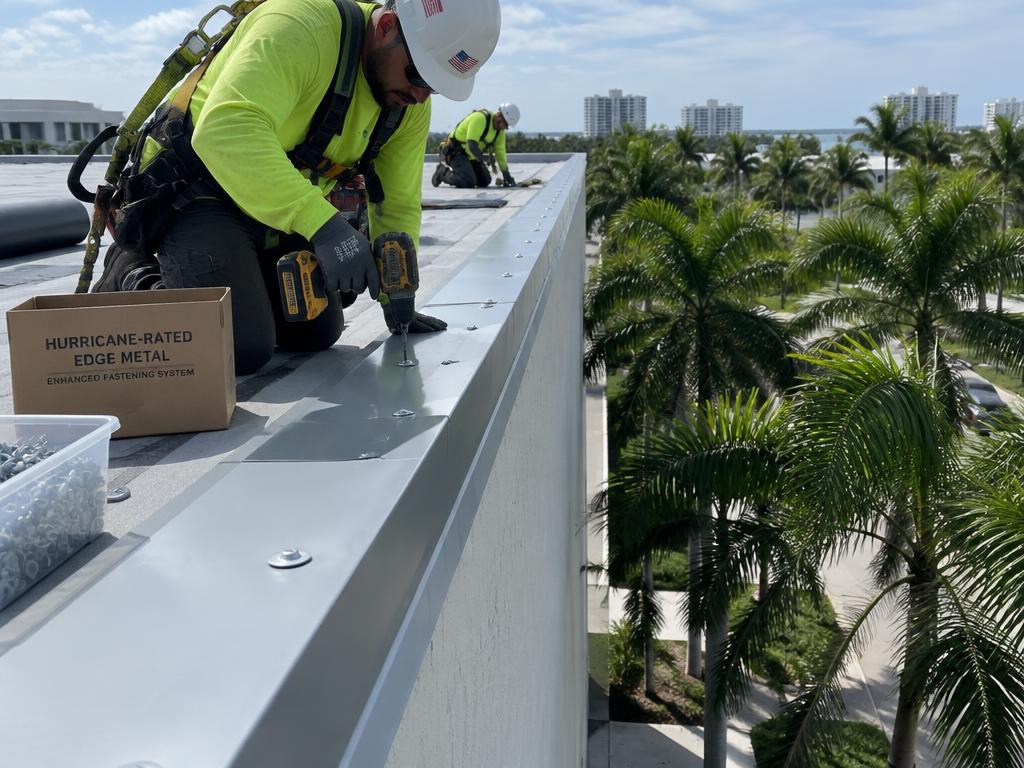
Roofs don't usually fail in the middle during a hurricane. They fail at the edges and corners, where wind pressure is highest. Once the edge lifts, the wind gets under the membrane or panels and the failure spreads across the field.
That's why perimeter and corner zones get enhanced fastening patterns, why edge metal has its own testing standard, and why parapet and coping details matter so much in South Florida. When we inspect a roof after a storm, the edge is the first place we look — and when we install one, it's where the specification is most demanding.
Systems that perform in South Florida
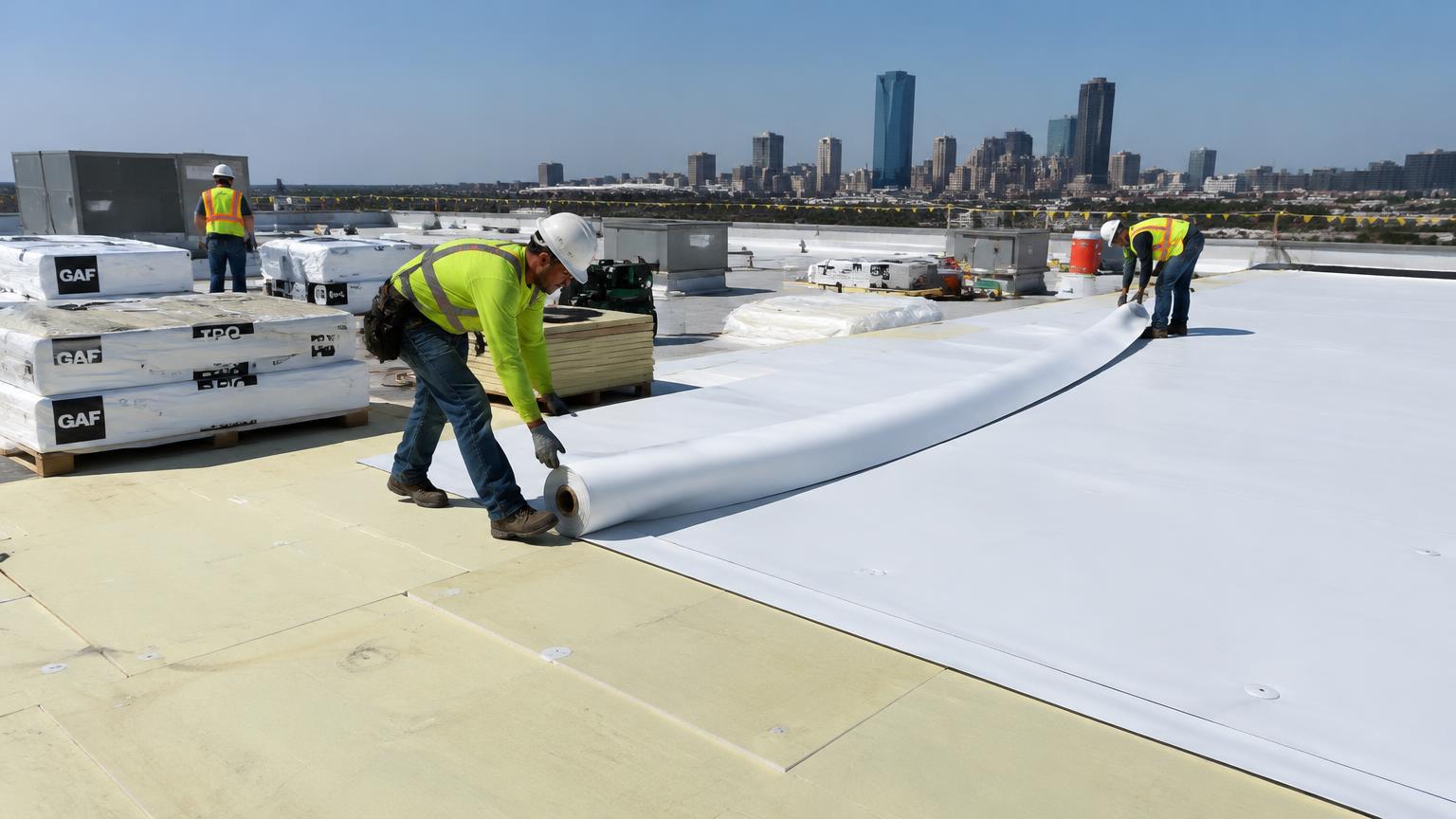
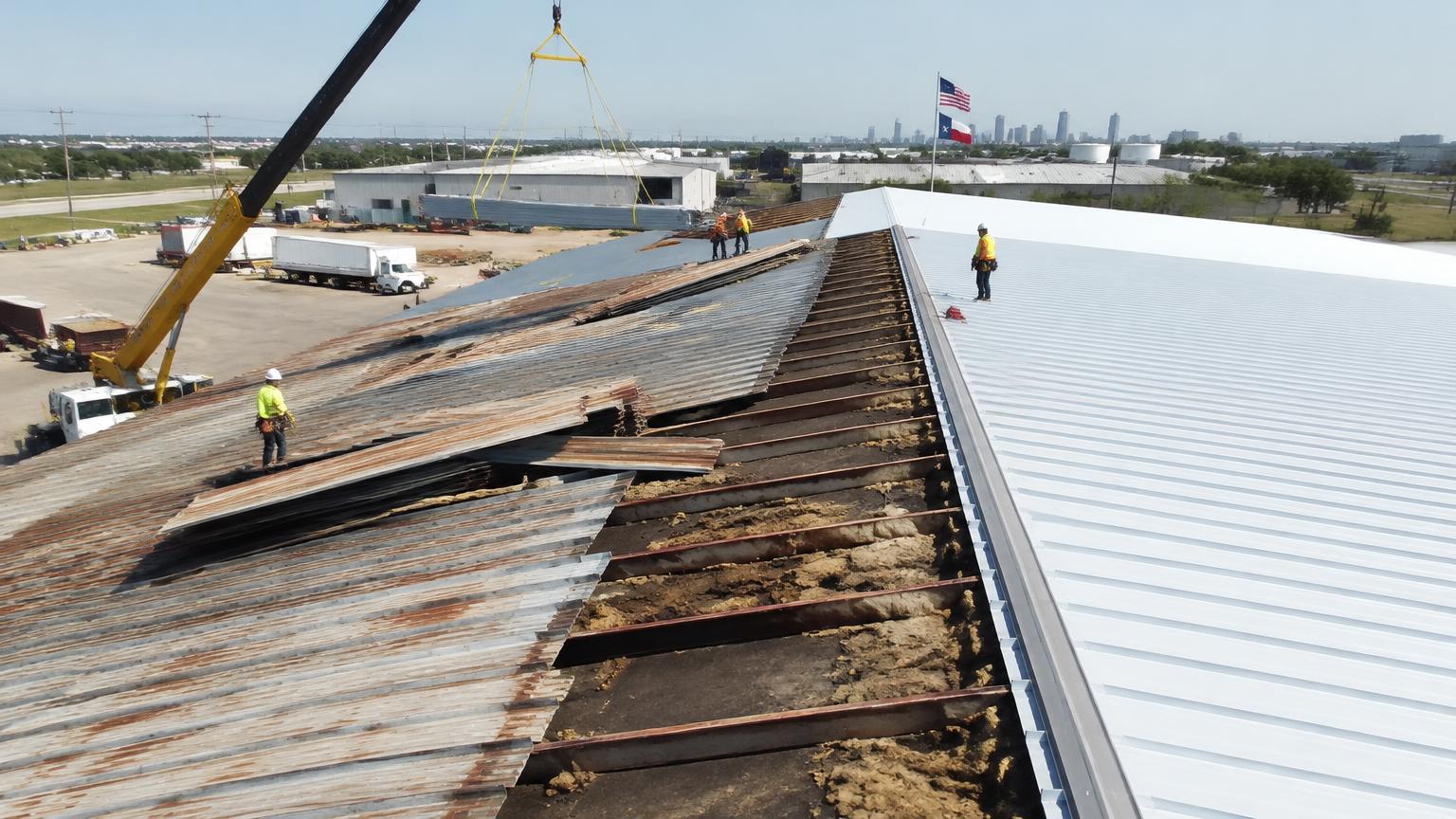
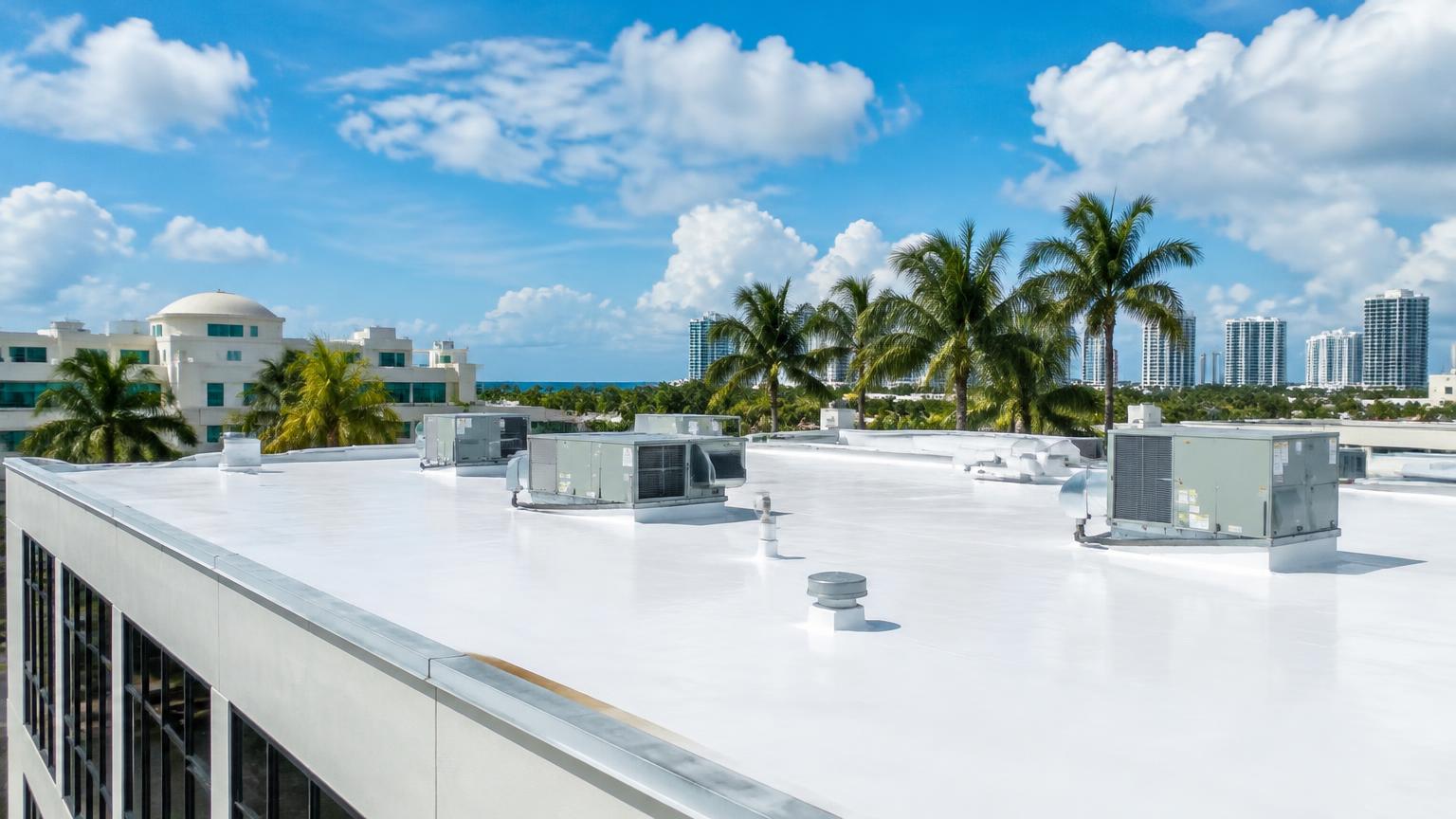
For low-slope commercial buildings, reflective white single-ply membranes are the most common choice. TPO reflects heat and installs efficiently. PVC adds resistance to grease and chemicals, which matters for restaurants and some industrial uses. Modified bitumen offers a tough, traffic-tolerant multi-ply surface. Metal roofing — especially standing seam — performs well on sloped commercial designs when the attachment is engineered for the wind zone.
Whatever the system, in this climate the details decide performance: attachment density, flashing metals that resist corrosion in salt air, and drainage sized for tropical downpours rather than average rainfall.
Maintenance in a hurricane climate
In South Florida, maintenance isn't optional — it's how you keep the roof insurable and warrantied. A sensible program includes:
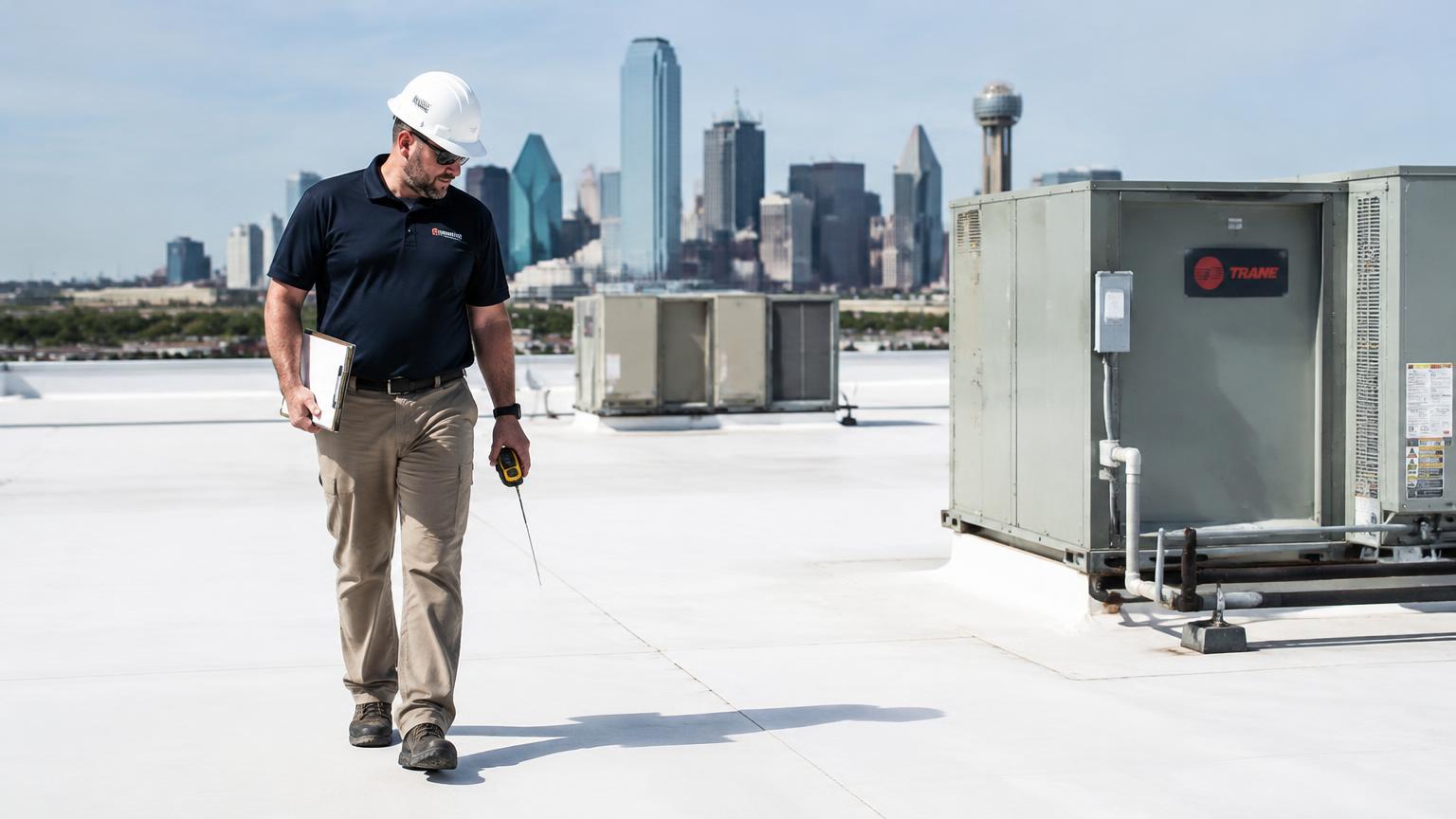
- A pre-season inspection each spring: fasteners, seams, flashing, edge metal and drainage, with photos on file.
- A post-storm inspection after any significant weather event, documented immediately for insurance purposes.
- Keeping drains and scuppers clear — tropical rain overwhelms a clogged drain in minutes.
- Prompt repair of any lifted edge or open seam, before the next storm finds it.
After a storm: documentation is everything
When a hurricane or tropical storm hits, the owners who fare best with insurers are the ones with documentation on both sides of the event: a recent pre-storm inspection showing the roof's condition, and a prompt post-storm inspection with dated photos. Without the 'before,' every claim becomes an argument about what the storm actually did.
How pricing works in South Florida
South Florida pricing reflects the code: approved assemblies, enhanced attachment, corrosion-resistant metals and the engineering documentation that goes with them. Roof size, exposure category, deck condition and access all shape the number. As always, an honest price starts with an inspection of the actual building.
Not sure what system your building has now? Our guide to identifying your commercial roof walks through the common types. And if you own property from Palm Beach to Miami, our South Florida commercial roofing team inspects, repairs and replaces commercial roofs across the region — request an inspection and we'll document exactly where your roof stands before the next season.