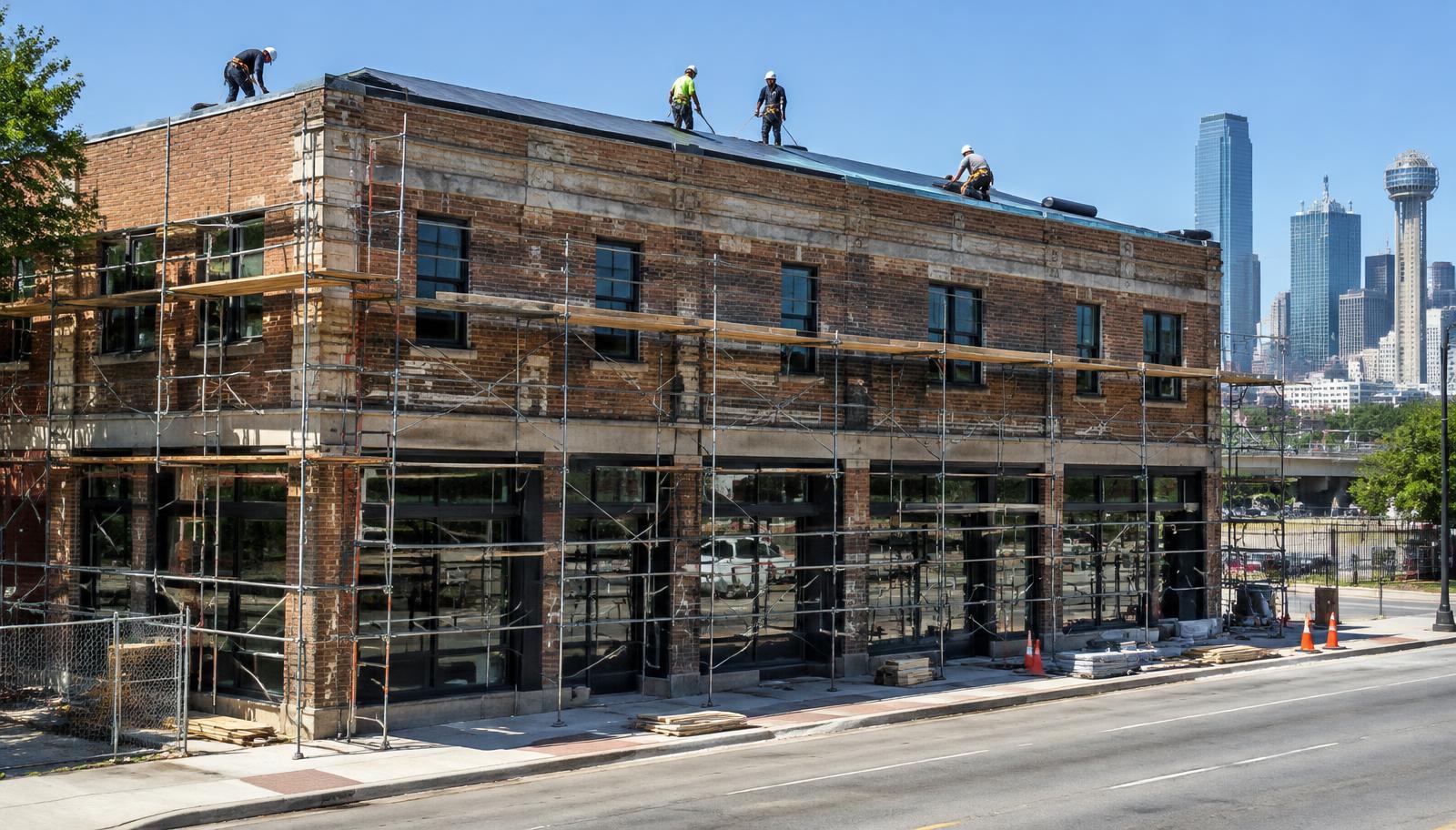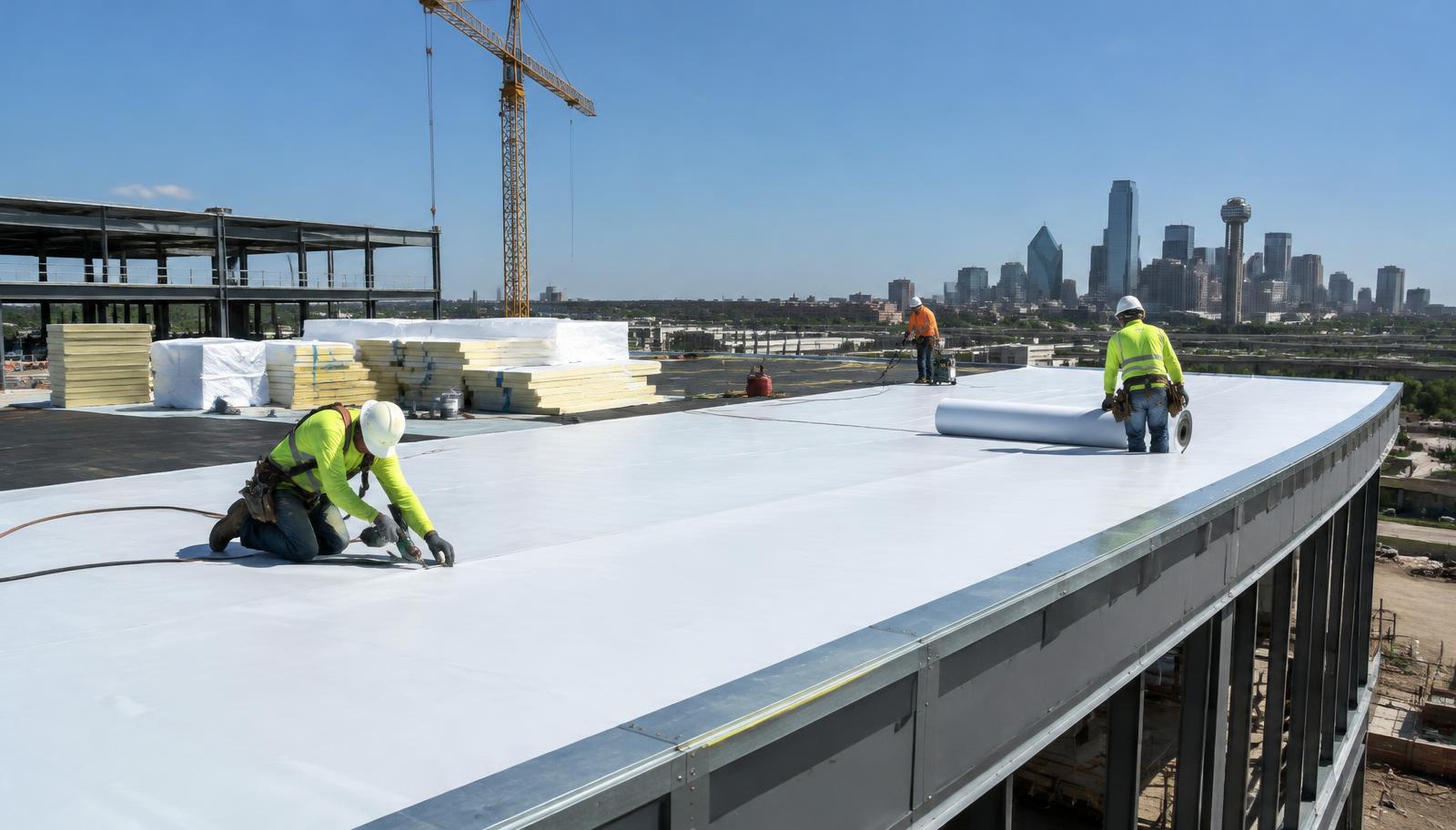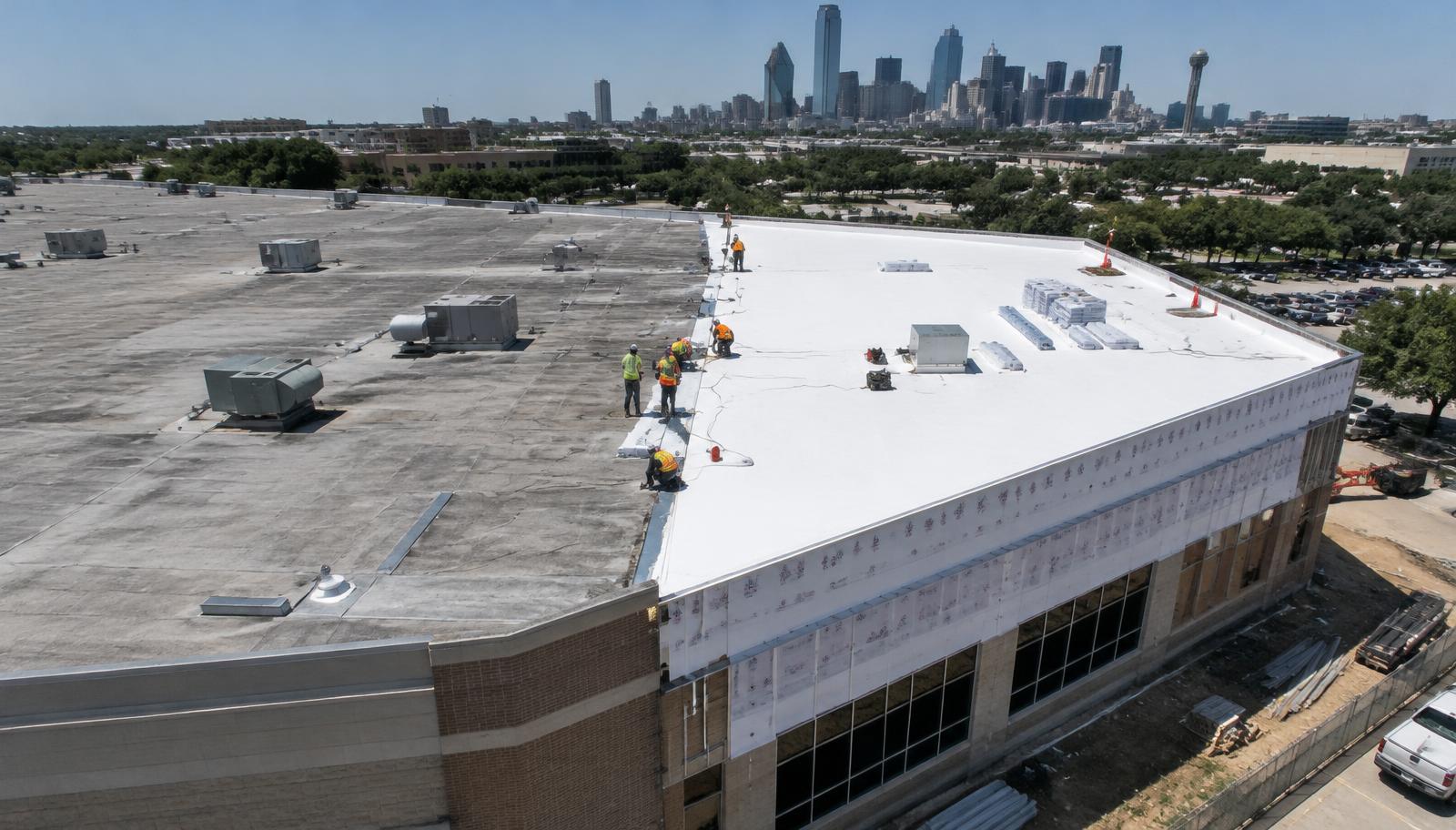
Across Dallas, owners are expanding warehouses, adding medical suites, building out retail and extending office space. Every addition creates a new roof, and that new roof has to meet the old one.
That connection — the tie-in — is where many leaks start. Different materials, different ages, different heights and two structures moving independently all meet in one line. This guide explains how roofing contractors approach tie-ins, and what owners and builders should plan for. Ariel Roofing handles the roofing scope on additions; the addition itself is built by your general contractor.
Start with the existing roof
Before designing the tie-in, the existing roof needs a proper inspection. What system is it? How old is it? Is the insulation wet? Is it still under warranty?
The answers shape the plan. If the existing roof is in good condition, the tie-in can preserve it. If it's near the end of its life, it's worth considering whether to replace it at the same time, so both roofs start fresh and can be covered by a single warranty.
Matching or mixing roof systems
The simplest tie-ins happen when the new roof uses the same system as the old one, such as TPO to TPO. Different systems can be joined, but compatibility matters. Some membranes can't touch each other or certain adhesives, and the transition needs a detail both manufacturers accept.
Allowing for movement
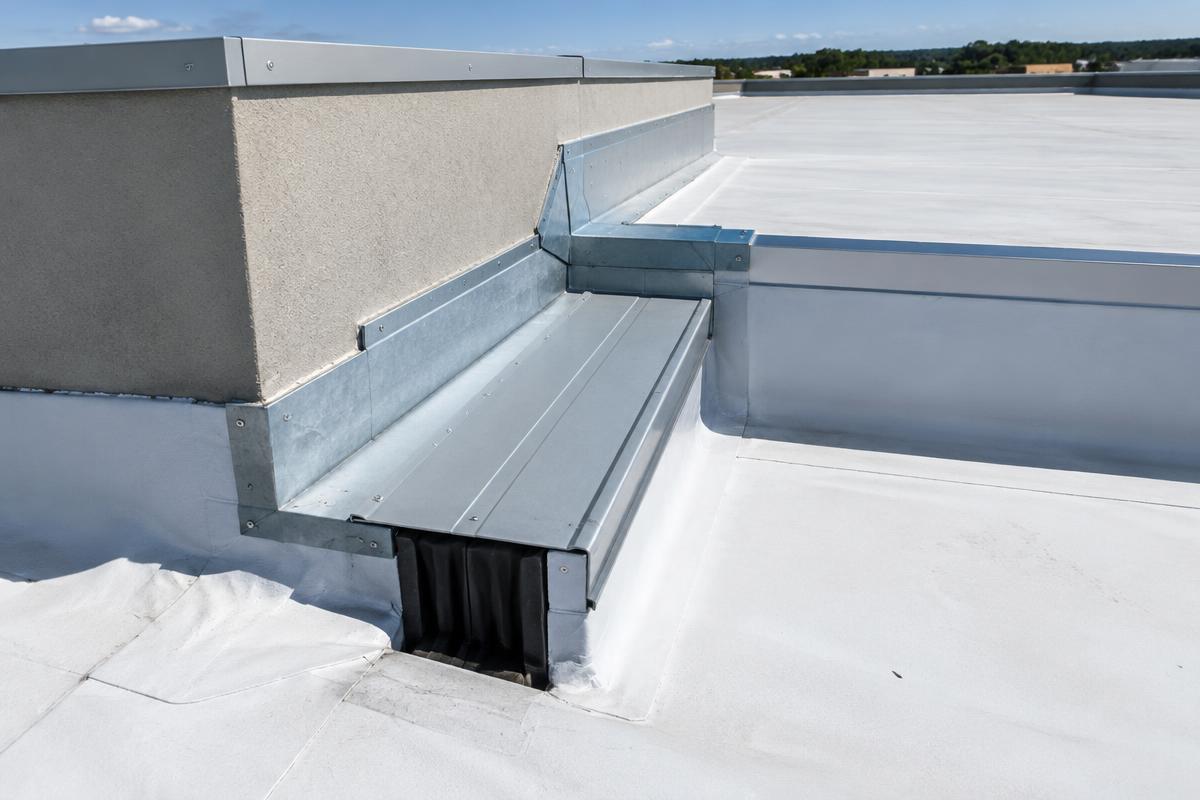
A new addition usually has its own foundation and frame. The two structures expand, contract and settle differently, especially through Dallas's hot summers and occasional winter freezes. If the roof is rigidly connected across that line, it can tear.
Structural engineers often call for an expansion joint where the buildings meet. The roofer then installs an expansion joint cover or raised curb that keeps water out while allowing movement. Where no structural joint exists, an area divider may still be used to separate roof sections.
Heights, walls and drainage
Additions often sit at a different height than the existing building. If the new roof is higher, a wall forms above the old roof, and the flashing up that wall needs proper height and counterflashing. If the new roof is lower, water from the existing roof may shed onto it, so drainage must be sized for both.
The goal is simple: water should flow away from the tie-in, never toward it. Crickets, tapered insulation and additional drains or scuppers may be needed. Dallas's heavy rain bursts quickly expose drainage that's undersized or poorly placed.
Protecting existing warranties
If the existing roof is still under warranty, check the terms before anyone cuts into it. Many manufacturers require notification or an authorized contractor for modifications. Skipping that step can put coverage at risk.
Watch for leaks at the tie-in after construction
Even good tie-ins deserve attention after the first few storms. Look for ceiling stains along the connection line, standing water near the joint, or loose metal. Our guide to flat roof leak repair for Dallas property managers explains how to track down and report leaks quickly.
Planning an addition in Dallas?
If you're adding onto a commercial building, bring the roofer in while the addition is still being designed. Our Dallas roofing team will inspect the existing roof, recommend a tie-in detail and coordinate with your general contractor and engineer. Request an inspection and get a written roofing scope for your addition.