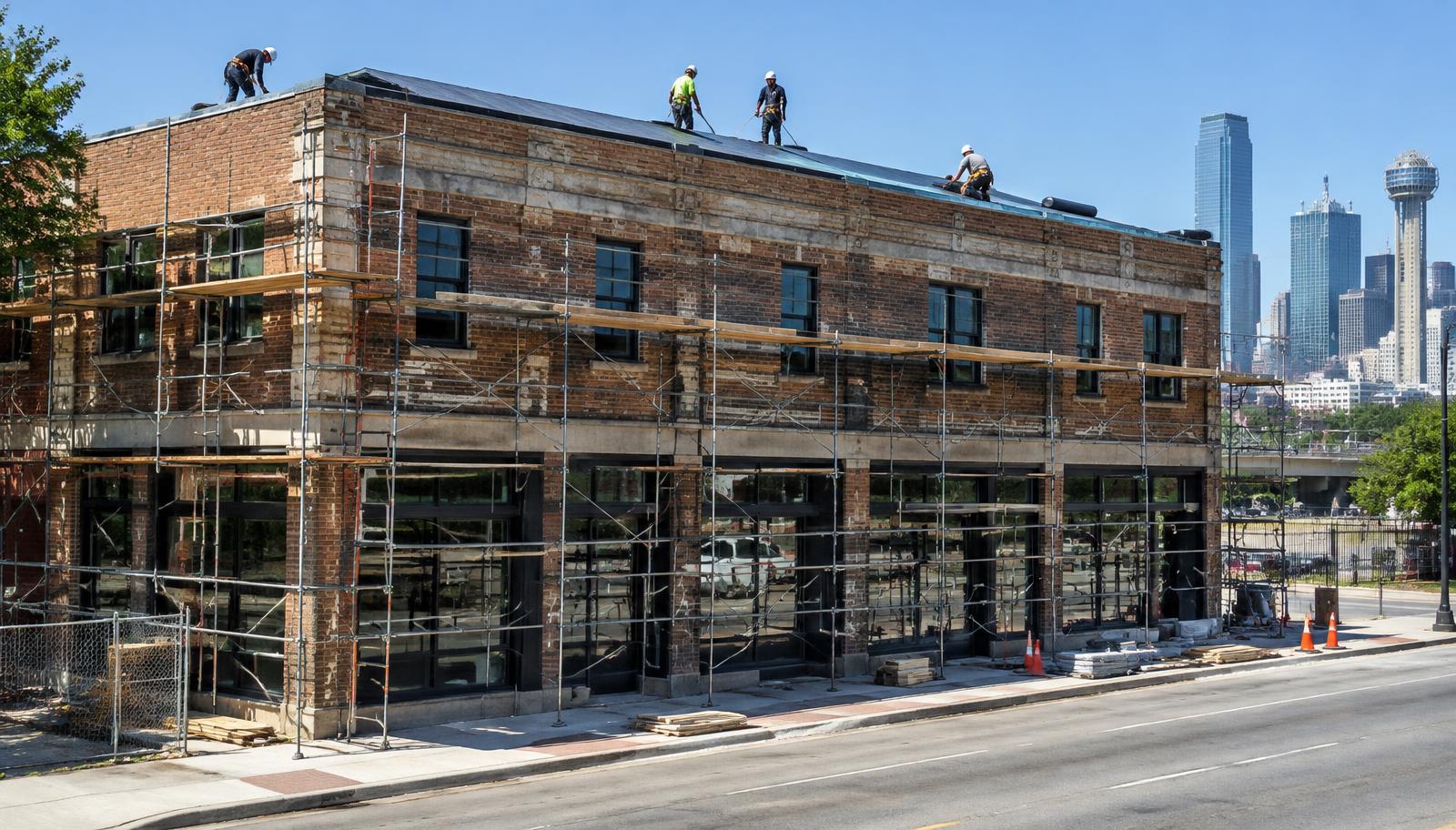
Commercial remodeling in Dallas is booming in older office parks, retail centers and warehouses being reworked for new tenants. Owners spend a lot of time on layouts, finishes and storefronts. The roof often gets a quick glance — or none at all.
That's risky. A new interior under an aging roof is one storm away from damaged ceilings, flooring and inventory. And roof work done after a remodel can mean cutting through new finishes, closing tenant spaces and repeating work. This guide explains how to bring the roof into your renovation plan from the start. Ariel Roofing handles the roofing scope only; your general contractor or design team handles the rest of the remodel.
Step 1: Find out what you have and what condition it's in
Before anything else, have a roofer inspect the roof and document its condition. A useful inspection covers the membrane surface, seams, flashing at walls and curbs, drains and gutters, signs of ponding, and moisture in the insulation. On older Dallas buildings, there may be more than one roof layer, which affects whether a new roof can go over the old one.
If you're not sure what system is on your building, our guide on identifying your commercial roof explains how to tell TPO, EPDM, modified bitumen, built-up and metal roofs apart.
Step 2: Decide whether to repair, restore or replace
The inspection should lead to a clear recommendation. In general:
- Repair makes sense when the roof is in fair condition with isolated problems, like a few failed seams or flashings.
- Restoration, such as a coating system, can extend the life of a roof that is sound and dry but showing surface wear.
- Replacement is often the better call when the roof is near the end of its life, has wet insulation, or will be cut open extensively for new equipment.
Why timing the roof with the remodel saves money
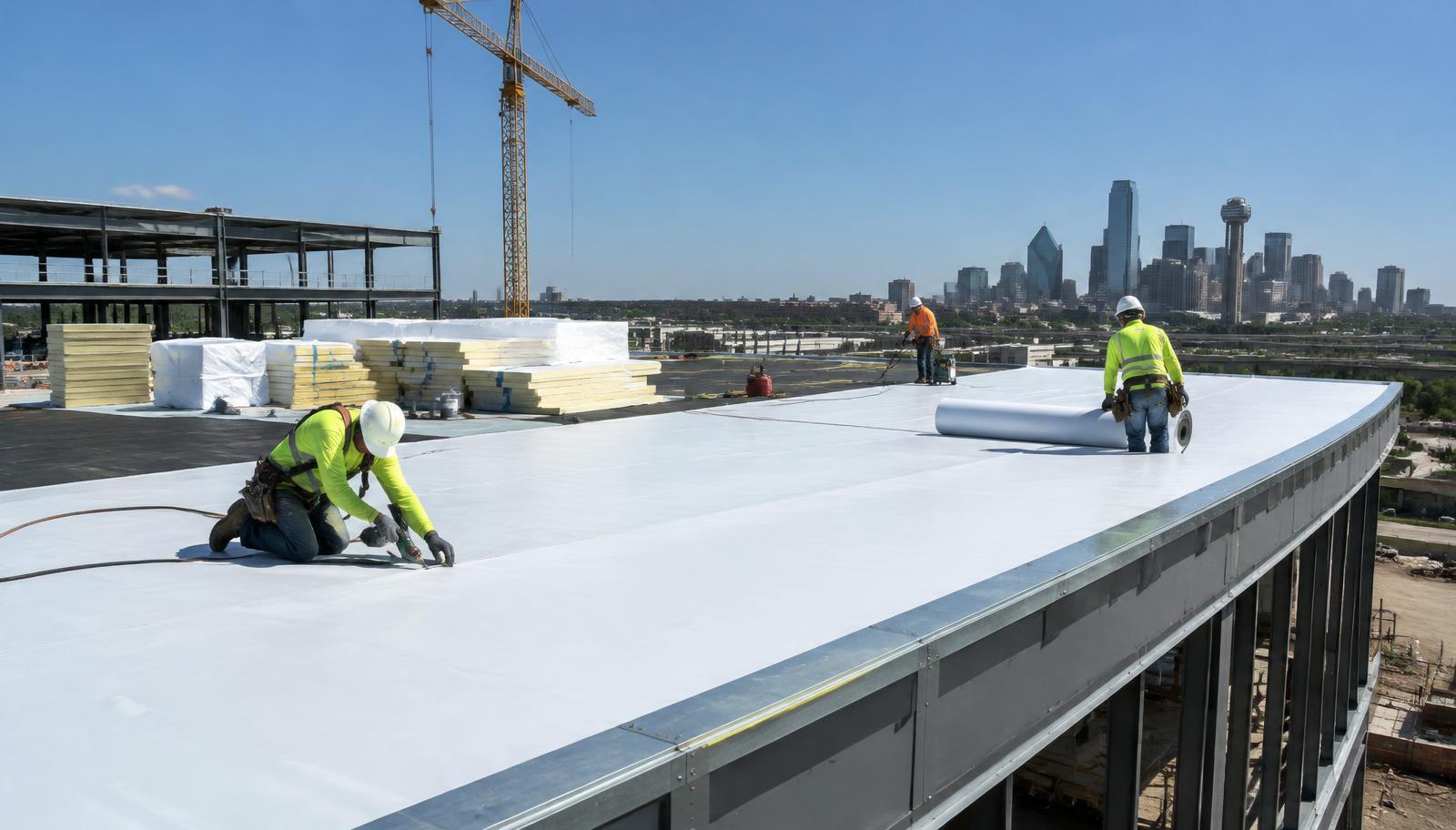
If replacement is on the horizon, doing it alongside the remodel usually costs less overall. Crews and equipment are already mobilized. Interior spaces are already empty or protected. New rooftop units can be set on a new roof with proper curbs, instead of patching them into an old one.
Waiting until after tenants move in means scheduling around business hours, protecting new finishes from dust and debris, and possibly closing spaces during tear-off.
Plan for new rooftop equipment and penetrations
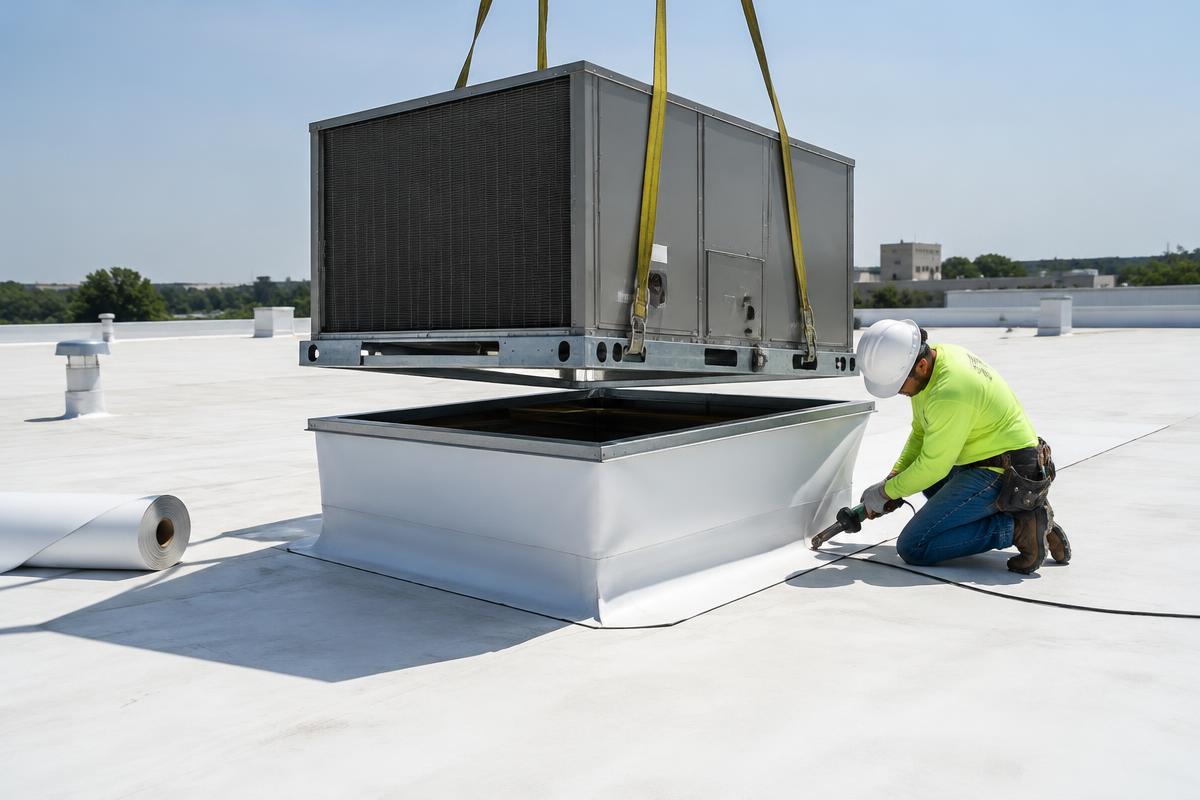
Remodels often add or move HVAC units, exhaust fans, plumbing vents, skylights, satellite equipment or signs. Each one cuts through the roof.
Ask your design team to share the rooftop plan with the roofer early. The roofer can confirm curb heights, spacing from walls and drains, and the right flashing details for your system. Penetrations flashed by other trades are one of the most common sources of leaks after a remodel, and they can affect warranty coverage.
Energy code and insulation on renovations
When a roof is replaced as part of a renovation, energy-code requirements for roof insulation may apply. The details depend on the scope and the code path your design team uses. Adding insulation can also change edge heights, so parapets, curbs and edge metal may need adjusting. It's best to settle this during design, not when materials are on the roof.
Keeping the building dry during the remodel
Dallas weather can change quickly, especially in spring. If roof sections are opened, the roofer should dry them in at the end of every day. Coordinate with the general contractor so interior demolition doesn't leave temporary openings in the roof unprotected.
Get the roof right before you remodel
If you're planning a commercial remodel or renovation in Dallas, start with a roof inspection. Our Dallas roofing team will document the roof's condition, explain your options in plain terms, and coordinate the roofing scope with your general contractor. Request an inspection and you'll receive a written report and proposal based on your building.