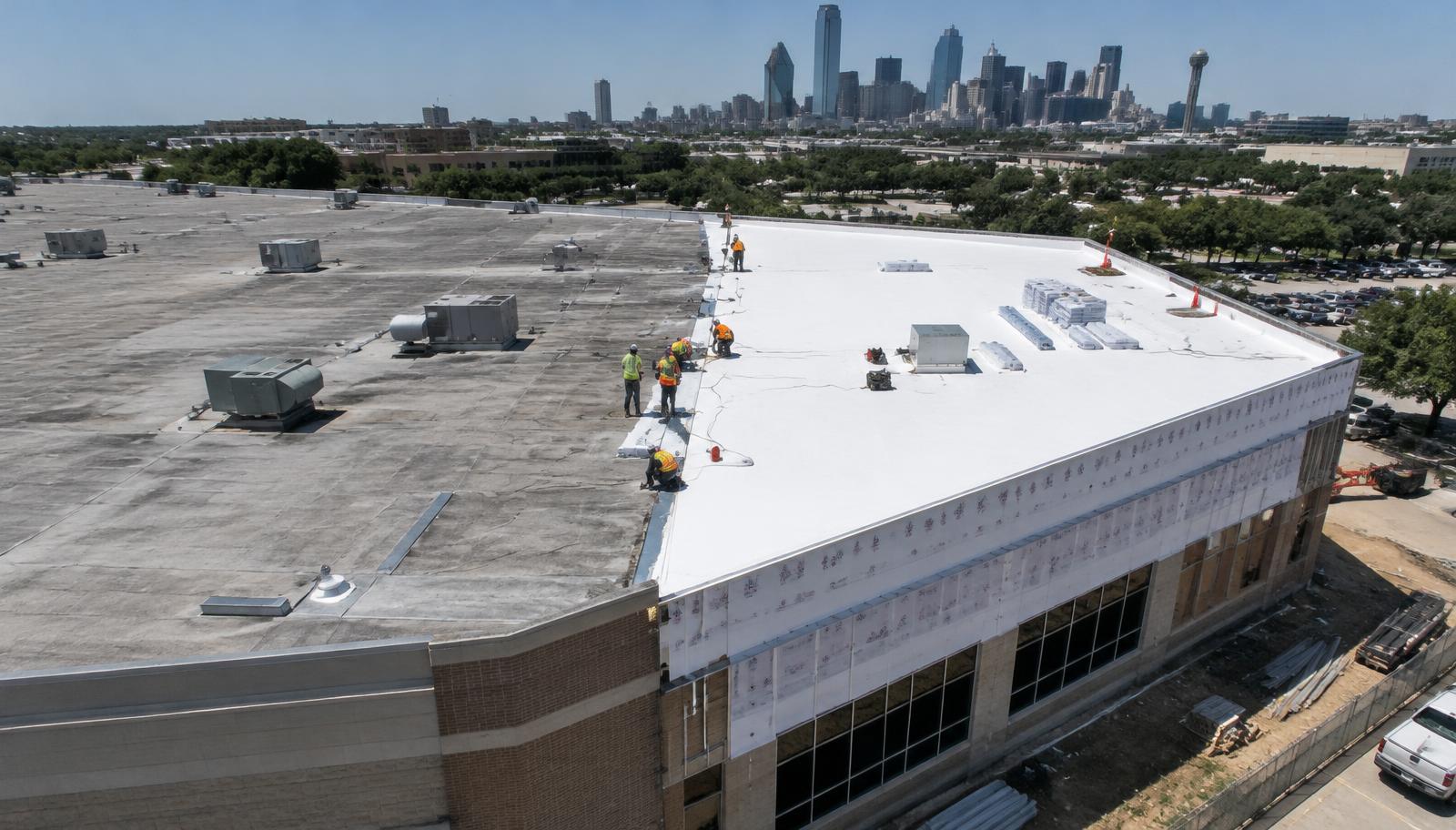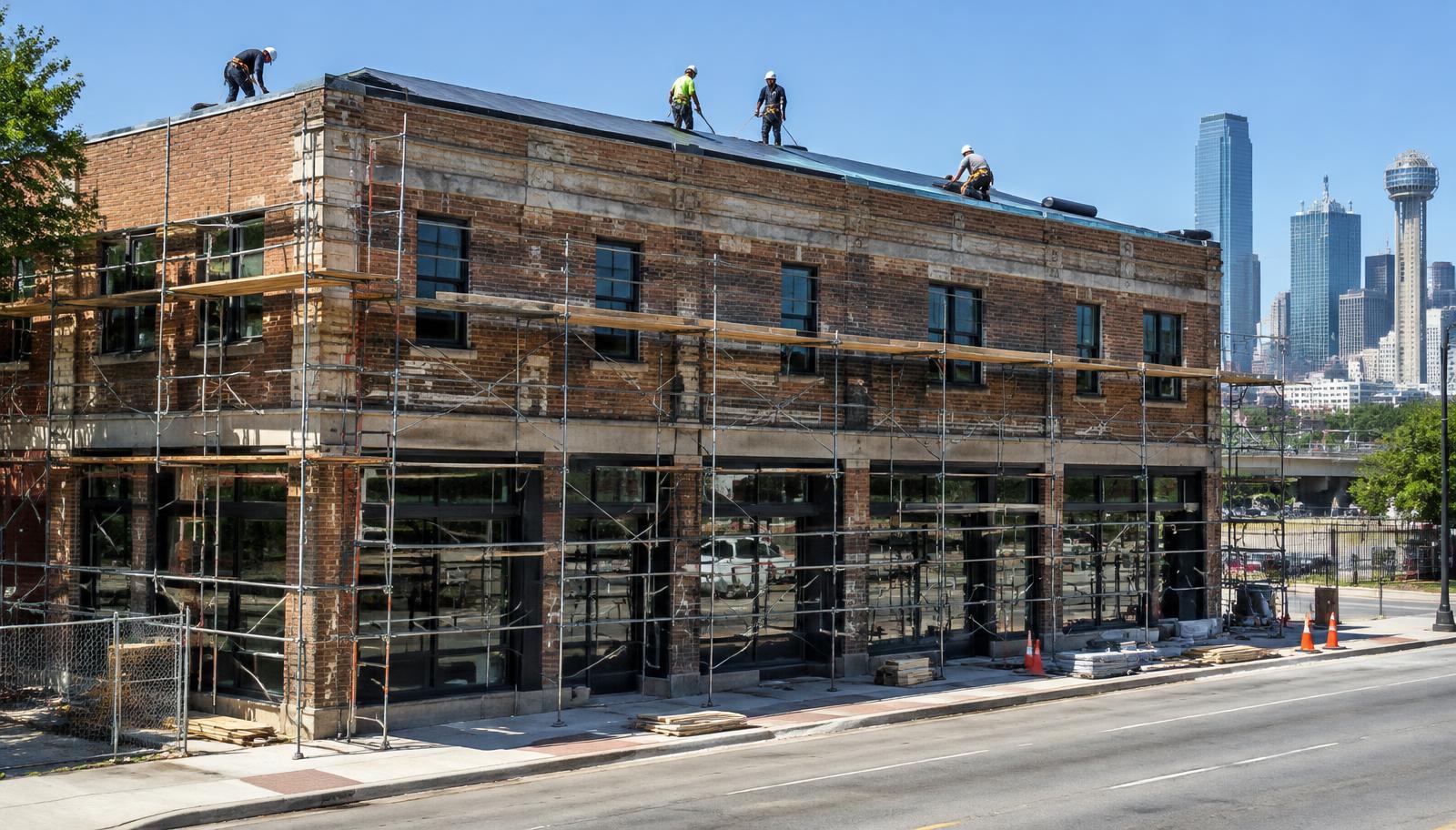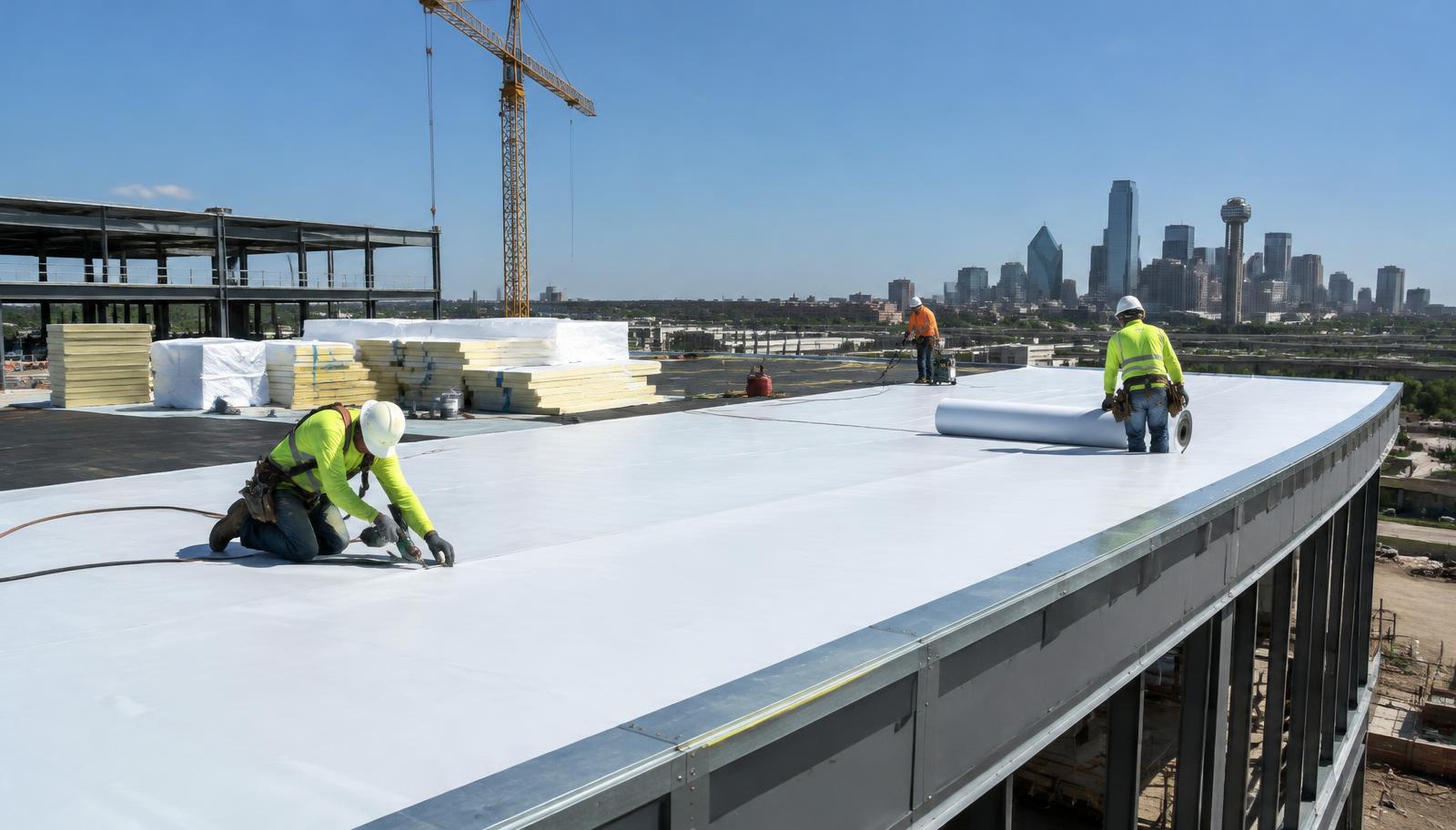
For general contractors and developers in Dallas, the roofing subcontractor is a key hire. The roof is what makes a building weather-tight, and a late or poorly installed roof can delay interior trades, inspections and opening day.
This guide explains what to expect from a commercial roofer on a construction project — from bid to closeout — and how to compare roofing contractors on more than price. Ariel Roofing works exclusively as a roofing contractor on these projects, so this is written from that side of the table.
What a good roofing bid includes
A low number with a vague scope often turns into change orders. A strong roofing bid clearly lists:
- The roof system, membrane thickness, insulation type and thickness, cover board and attachment method.
- Edge metal, copings, gutters and downspouts, and who supplies and installs each.
- Flashing of curbs and penetrations, and how added penetrations will be handled.
- The warranty type and length, and what is required to obtain it.
- Clarifications and exclusions, such as deck repairs, blocking, equipment curbs or temporary roofing.
Questions to ask before you sign
Comparing roofers is easier when you ask everyone the same questions:
- Are you authorized by the manufacturer to install the specified system and issue its warranty?
- Can you share references from similar Dallas-area commercial projects?
- What insurance coverage do you carry, and can you provide certificates naming our project?
- What safety program and fall protection do your crews use?
- Who will be our day-to-day contact, and how often will we get updates?
Submittals and preconstruction
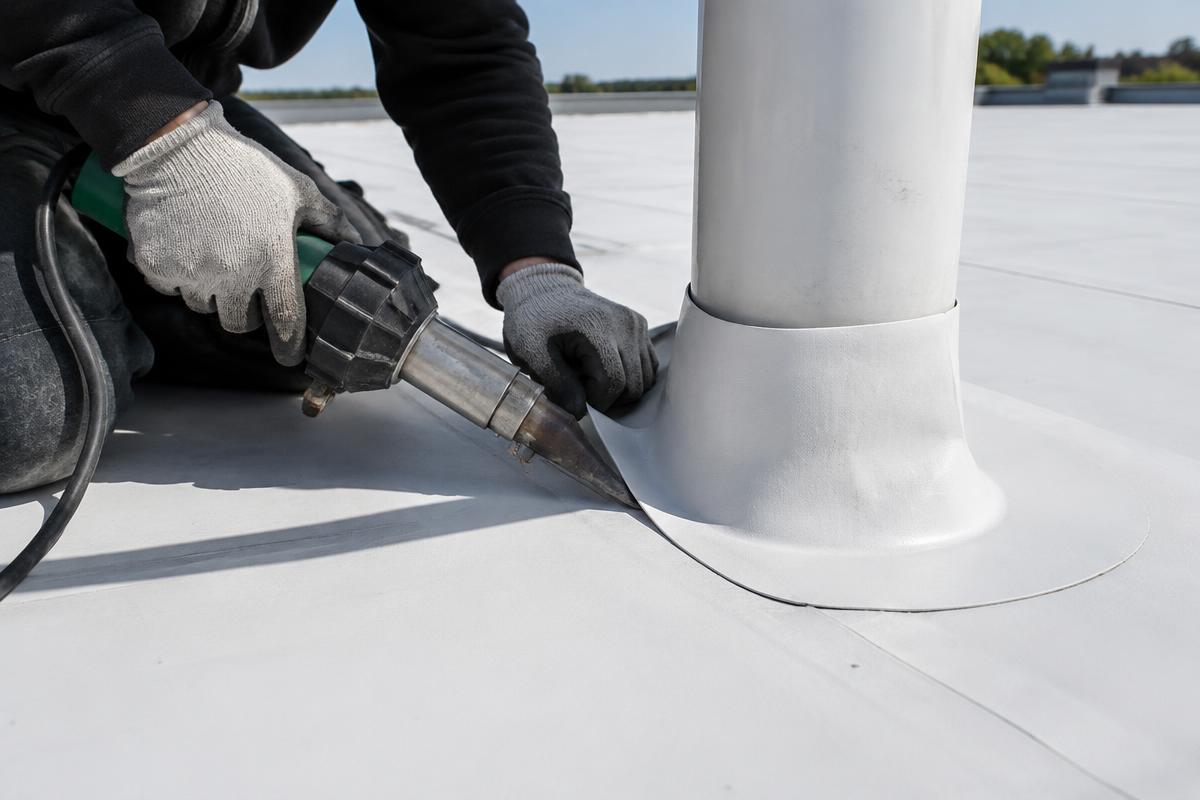
Before materials arrive, the roofer should provide product data, a tapered insulation layout, shop drawings for edge metal and copings, and details for unusual conditions. This is the point to confirm that the assembly meets the specification and any insurance or wind-rating requirements.
A preconstruction meeting with the general contractor, mechanical contractor and owner's representative helps settle staging areas, crane picks, rooftop equipment timing and roof protection.
Scheduling around Dallas weather and other trades
North Texas weather drives the roofing schedule. Spring storms, summer heat and occasional winter freezes all affect when and how crews can work. A reliable roofer plans for daily dry-in so the building stays protected overnight and during sudden storms.
Coordination with other trades matters too. Rooftop equipment should be set on curbs before final membrane work when possible, and every later penetration should be routed through the roofer for proper flashing.
Quality control and roof protection
Ask how the roofer checks their own work. On single-ply systems, seams are typically probed daily. Photos of key details, such as drains, curbs and edges, are useful records. Walkway pads and protection boards reduce damage from other trades, and a final roof walk with the general contractor should catch punctures before turnover.
Closeout and warranty
At the end of the job, expect the manufacturer inspection, completion of any punch list items, and a closeout package with the manufacturer warranty, the roofer's workmanship warranty, product data and an as-built roof plan. Our guide to commercial roofing warranties in Texas explains what these warranties do and don't cover.
Need a roofing subcontractor for a Dallas project?
If you're bidding or building a commercial project in Dallas, our commercial roofing team can review your plans, provide a clear scope with clarifications, and work alongside your crews to deliver a dry building and a warranty that holds. Send your drawings and schedule, and we'll respond with a written roofing proposal.