Ask three contractors to 'inspect' a commercial roof and you can get three very different things: a salesperson's ten-minute glance, a maintenance checklist, or a genuine condition assessment. If you're budgeting for repairs, planning a replacement, documenting storm damage or buying a building, only the third one is worth much.
This checklist shows what a thorough commercial roof inspection in Dallas should cover, so you know what to ask for — and what to question if a report comes back thin.
The surface: membrane, panels and seams
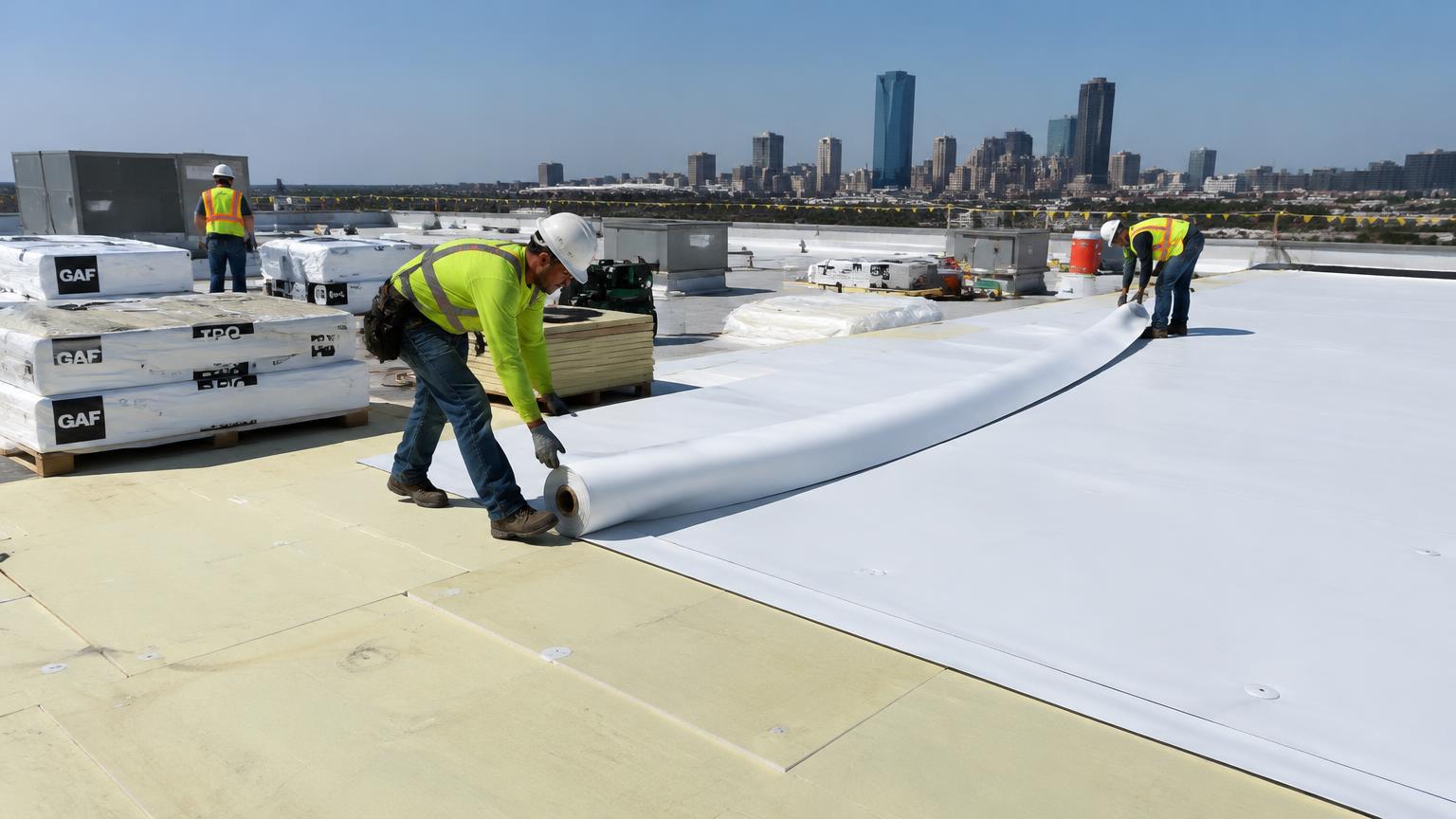
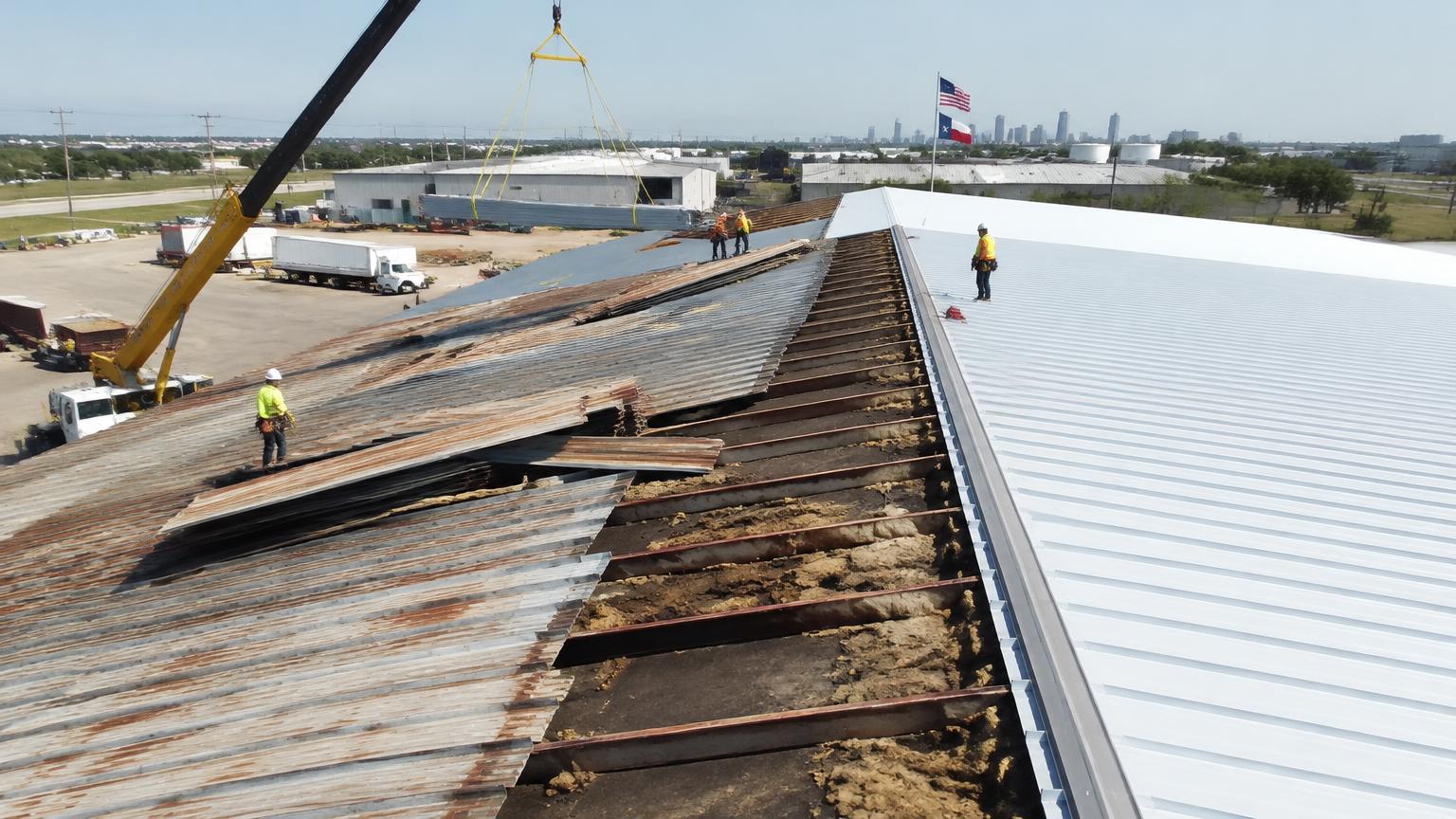
The inspector walks the entire roof field, not just the areas near the access hatch. On single-ply roofs (TPO, PVC, EPDM) they're looking at seam integrity, membrane punctures, surface wear, and areas where the membrane has shrunk or bridged. On metal roofs, it's fastener condition, panel rust, seam separation and sealant failure. On modified bitumen, it's granule loss, blisters and cracked laps.
Every deficiency should be photographed and located on a roof plan, not just described in a sentence.
Flashing and penetrations: where leaks actually start
Most commercial leaks don't start in the middle of the roof — they start at the edges and interruptions. A thorough inspection checks every penetration: HVAC curbs, pipes, vents, skylights, conduit and drains. It checks wall flashings, counterflashing, parapet caps and expansion joints. And it checks the roof edge itself, where wind gets under the system first.
In Dallas, this matters even more. Hail dents soft metals and cracks brittle sealants, and summer heat cycles open up anything that was marginal. Flashing failures found early are cheap repairs; found late, they're deck rot and interior damage.
Drainage: the silent roof killer
Standing water that remains more than a day or two after rain shortens a roof's life and can affect warranty coverage. The inspection should map ponding areas, check that drains and scuppers are clear and correctly set, and verify that overflow drainage exists and works.
On older Dallas buildings, we often find drains that have slowly risen above the surrounding roof as insulation was added over the years — the roof effectively re-sloped itself away from its own drains. That's fixable, but only if someone documents it.
Moisture detection: what you can't see

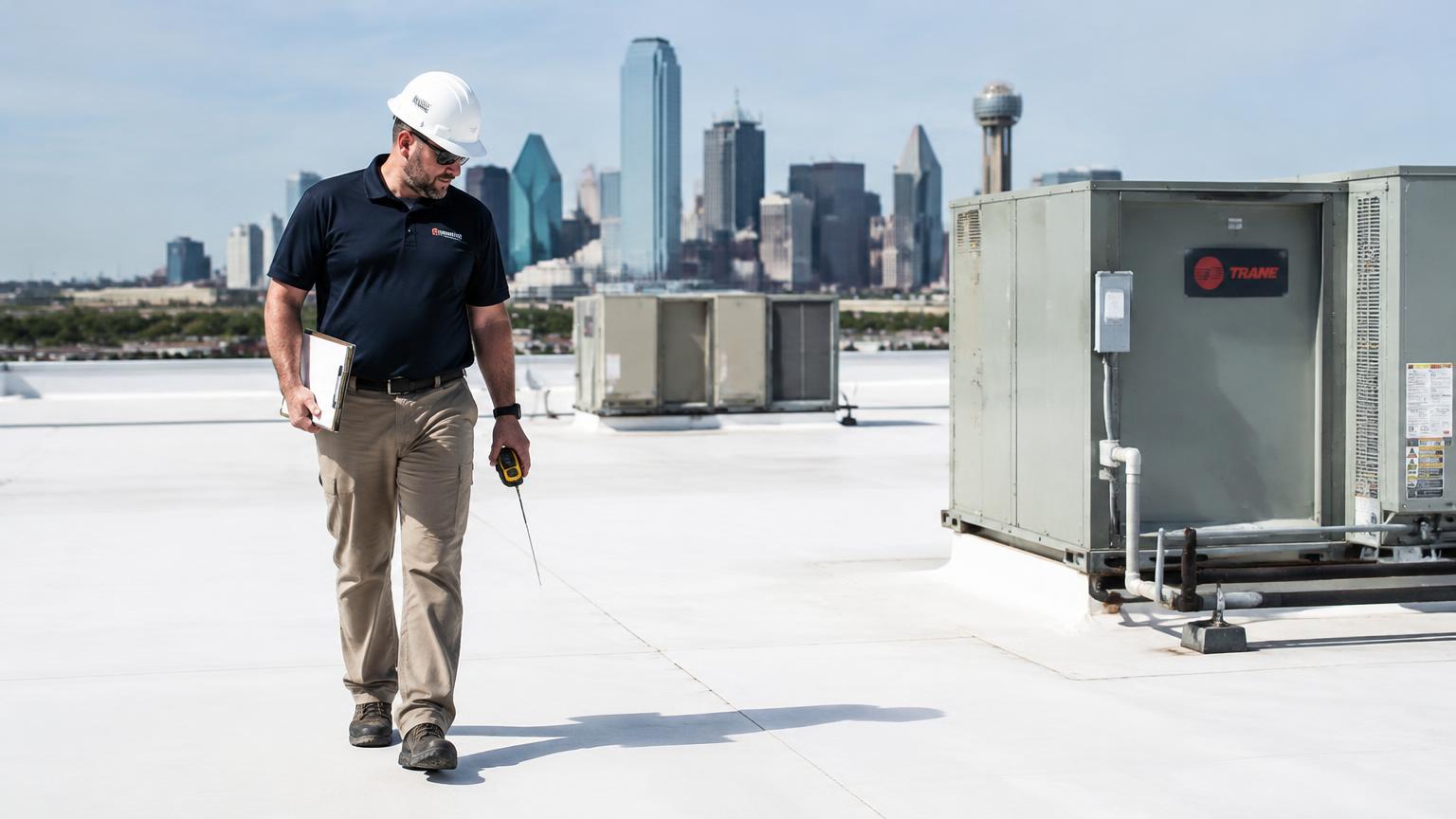
A roof can look fine and still have saturated insulation underneath. Wet insulation destroys R-value, corrodes decks from below and turns a recoverable roof into a tear-off. Infrared scanning (done at dusk, when wet areas release heat differently) and moisture meters find these areas before they announce themselves as leaks.
For any inspection tied to a purchase, a replacement decision or an insurance claim, ask whether moisture detection is included. A visual-only inspection can't answer the most expensive question.
The interior and the paperwork
A complete inspection includes the inside: stained ceiling tiles, rust on deck flutes visible from below, and musty insulation all tell part of the story. The inspector should also review what paperwork exists — previous warranties, repair records and the roof's approximate age and history.
What the report should give you
A useful inspection report includes:
- Dated, located photographs of every deficiency.
- A condition summary by roof area, not just one verdict for the whole building.
- Prioritized repairs: what needs attention now, what can wait, and what to monitor.
- A realistic estimate of remaining service life under a normal maintenance program.
- Clear documentation you can hand to an insurer, a buyer or your ownership group.
How often should a Dallas roof be inspected?
Twice a year is the standard recommendation — once after hail season and once before storm season — plus after any significant storm. Buildings under a commercial roof maintenance program get these inspections on a schedule, which is how small flashing repairs stay small.
If it's been more than a year since anyone walked your roof, our Dallas commercial roofing team provides documented inspections with photos, moisture assessment and a prioritized plan. Request an inspection and you'll know exactly where your roof stands.