Drive through the industrial corridors of Arlington, Irving or Grand Prairie and you'll see metal roofs on everything from warehouses to retail centers. Metal earns that popularity in North Texas: it handles hail better than most systems, reflects heat well in a light finish, and can outlast two membrane roofs over its life.
But when a building owner tells us they want 'a metal roof,' that can mean three very different systems with very different prices, lifespans and maintenance needs. This guide breaks down standing seam, R-panel and retrofit systems the way we explain them to DFW owners — so you can walk into a proposal meeting knowing what you're actually comparing.
Standing seam: the premium option
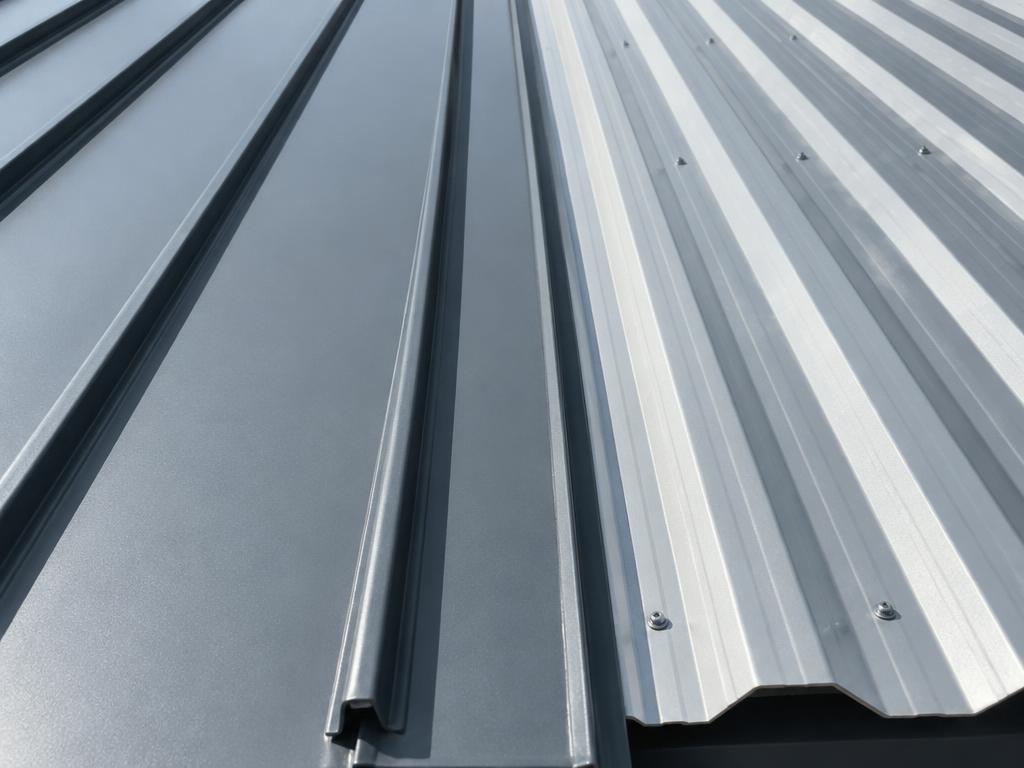
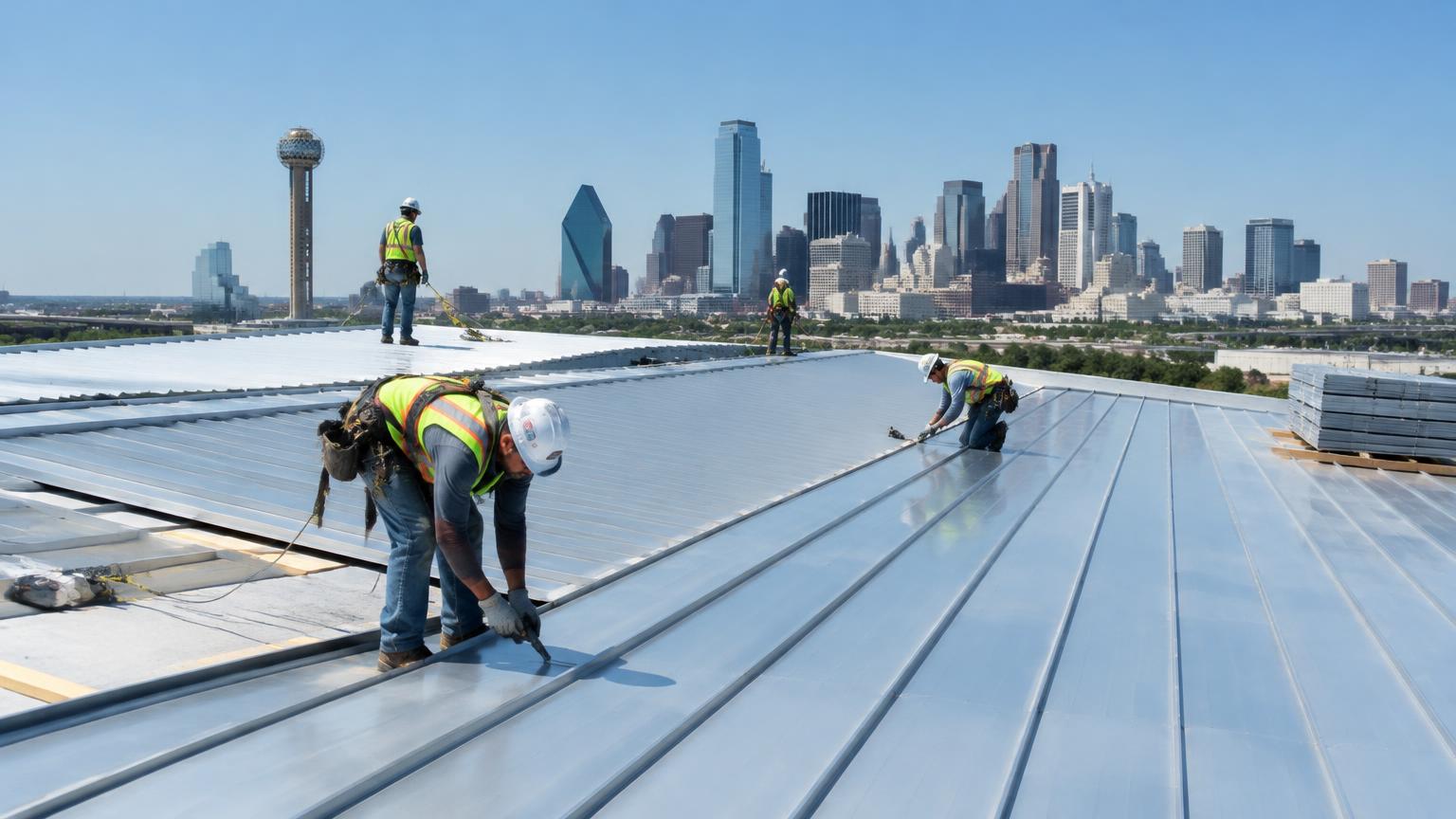
Standing seam panels lock together with raised vertical seams, and the fasteners sit underneath the panel where water and sun never reach them. Because nothing penetrates the face of the panel, the system tolerates the expansion and contraction that comes with Texas temperature swings — panels move on their clips instead of fighting their fasteners.
For owners planning to hold a building for decades, standing seam is usually the strongest long-term value. It carries the best weather-tightness warranties, needs the least routine maintenance, and handles Dallas hail well in heavier gauges. The trade-offs are cost and installation time: it's the most expensive of the three options and demands an experienced crew.
R-panel: economical, with a maintenance catch
R-panel (also called exposed-fastener or screw-down panel) is the workhorse of older DFW warehouses and metal buildings. Panels overlap and screw directly through the face into the purlins. It's fast to install and the most affordable metal option, which is why so much of it is out there.
The catch is the fasteners. Each screw has a rubber washer that bakes in the Texas sun, and the panels' expansion and contraction slowly wallows out the screw holes. An R-panel roof isn't a set-it-and-forget-it system — plan on periodic fastener inspection and replacement, especially after year ten. For budget-sensitive projects or buildings with a shorter ownership horizon, it can still be the right call, as long as maintenance is part of the plan.
Metal retrofit: a new roof without tear-off
If your building already has an aging metal roof, a retrofit system can install new sub-framing and panels directly over it. The old roof stays in place as a substrate, insulation is often added between the old and new layers, and the building stays open and dry the whole time.
Retrofits avoid tear-off disposal costs and the weather exposure that comes with an open deck. They're not right for every building — the existing structure has to support the added weight, and trapped moisture in the old assembly has to be ruled out first — but for large warehouses and occupied buildings, they're often the most practical path to a new metal roof.
What North Texas weather asks of a metal roof
Whatever profile you choose, three DFW realities should shape the specification:
- Hail: heavier panel gauges and impact-rated assemblies dent less and keep insurance conversations simpler. NOAA's storm database shows why North Texas owners plan for hail, not hope to avoid it.
- Heat and sun: light-colored, reflective finishes reduce cooling load and slow finish chalking. Thermal movement is constant, so concealed-fastener systems or well-maintained exposed fasteners matter.
- Wind: perimeter and corner zones see the highest uplift. Edge and ridge details need enhanced attachment — this is where cheap installations fail first.
How to choose for your building
The decision usually comes down to four questions: What's the roof slope? How long will you own the building? What's the budget? And how much maintenance are you willing to schedule? Low-slope roofs with long ownership favor standing seam. Tight budgets and shorter horizons can justify R-panel. An existing metal roof in decent structural shape often points to a retrofit.
We compare metal against single-ply and other systems in our guide to commercial roofing materials in Dallas. For a building-specific recommendation, our Dallas metal roof systems team can inspect your roof, review the structure and price the options that genuinely fit — pricing always comes from the building, not a generic square-foot number.