Most commercial metal roofs in the Dallas area don't fail all at once. They fade slowly: fasteners back out, washers crack, seams open, and rust creeps in around penetrations. By the time leaks show up inside, owners usually have two real options — cover the old roof with a retrofit system, or tear it off and replace it completely.
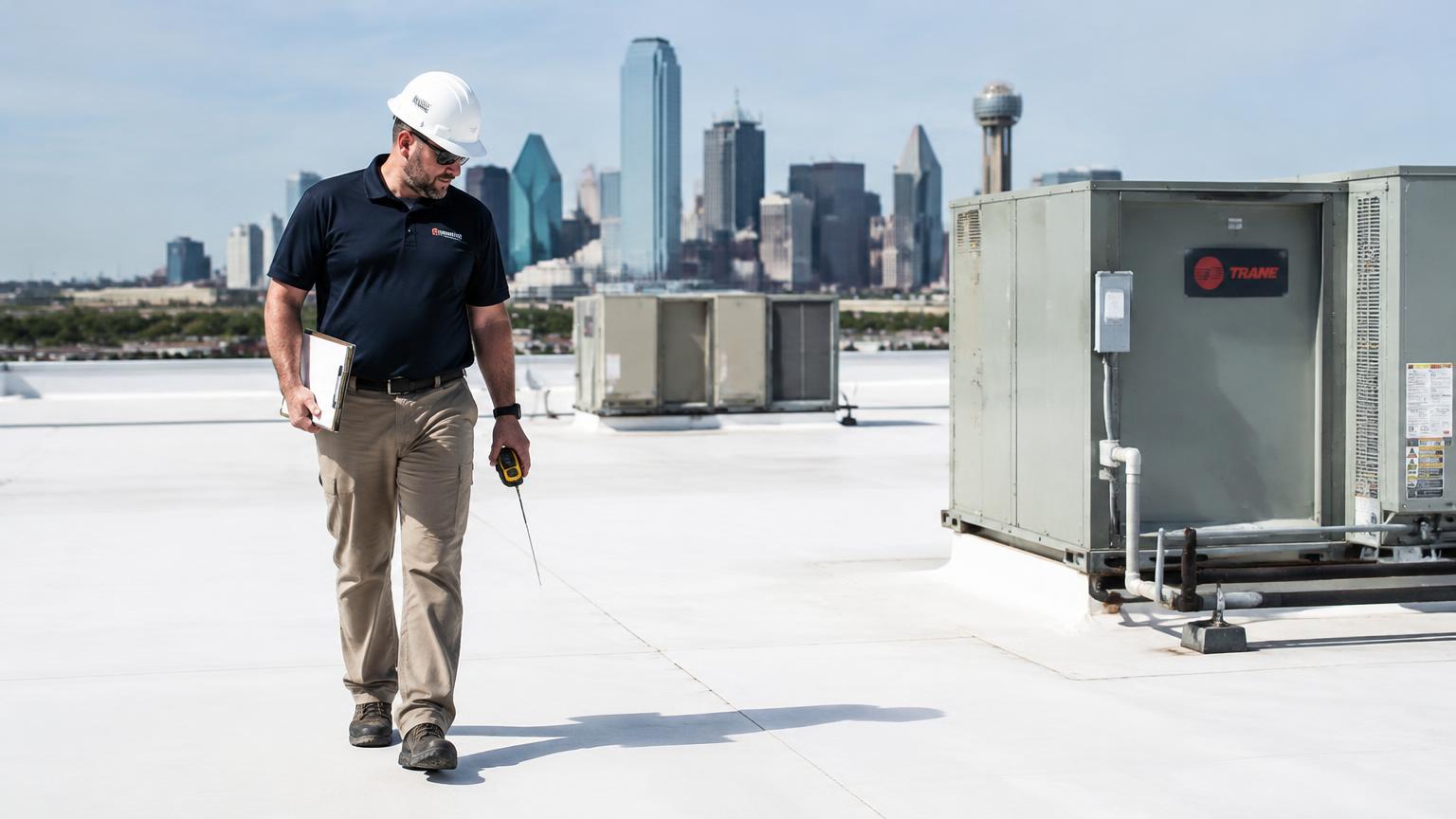
Both are legitimate paths, and both are common on DFW warehouses, retail centers and industrial buildings. The right one depends on what's actually happening on your roof, which is why the decision should start with an inspection rather than a bid.
How a metal retrofit works
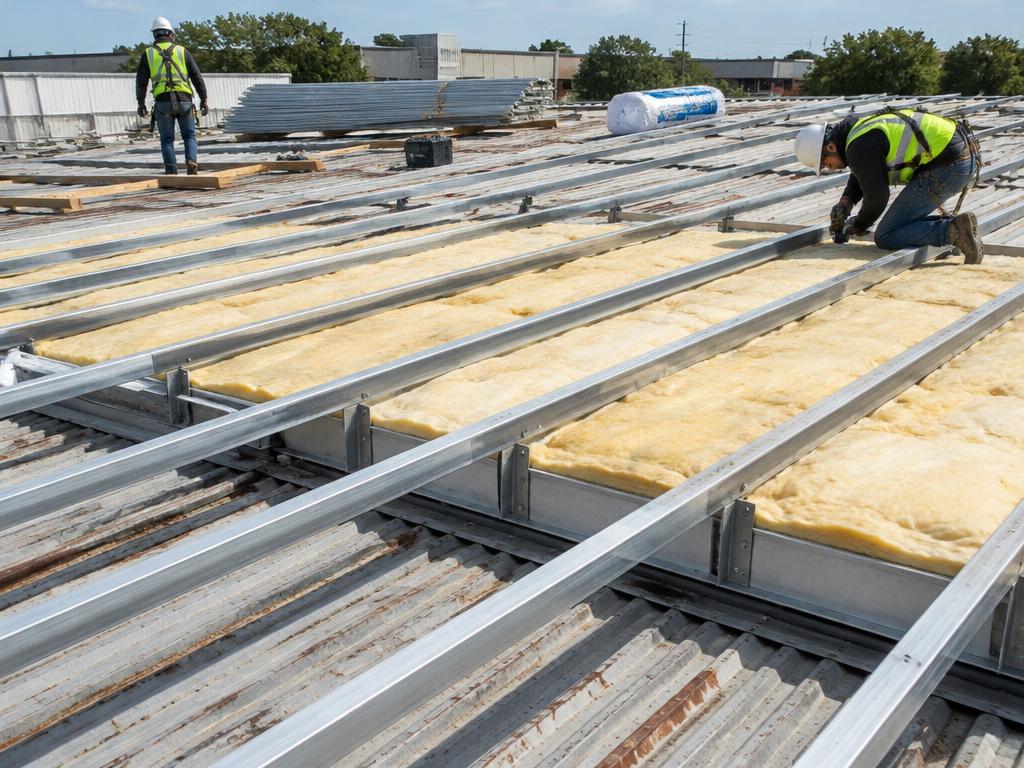
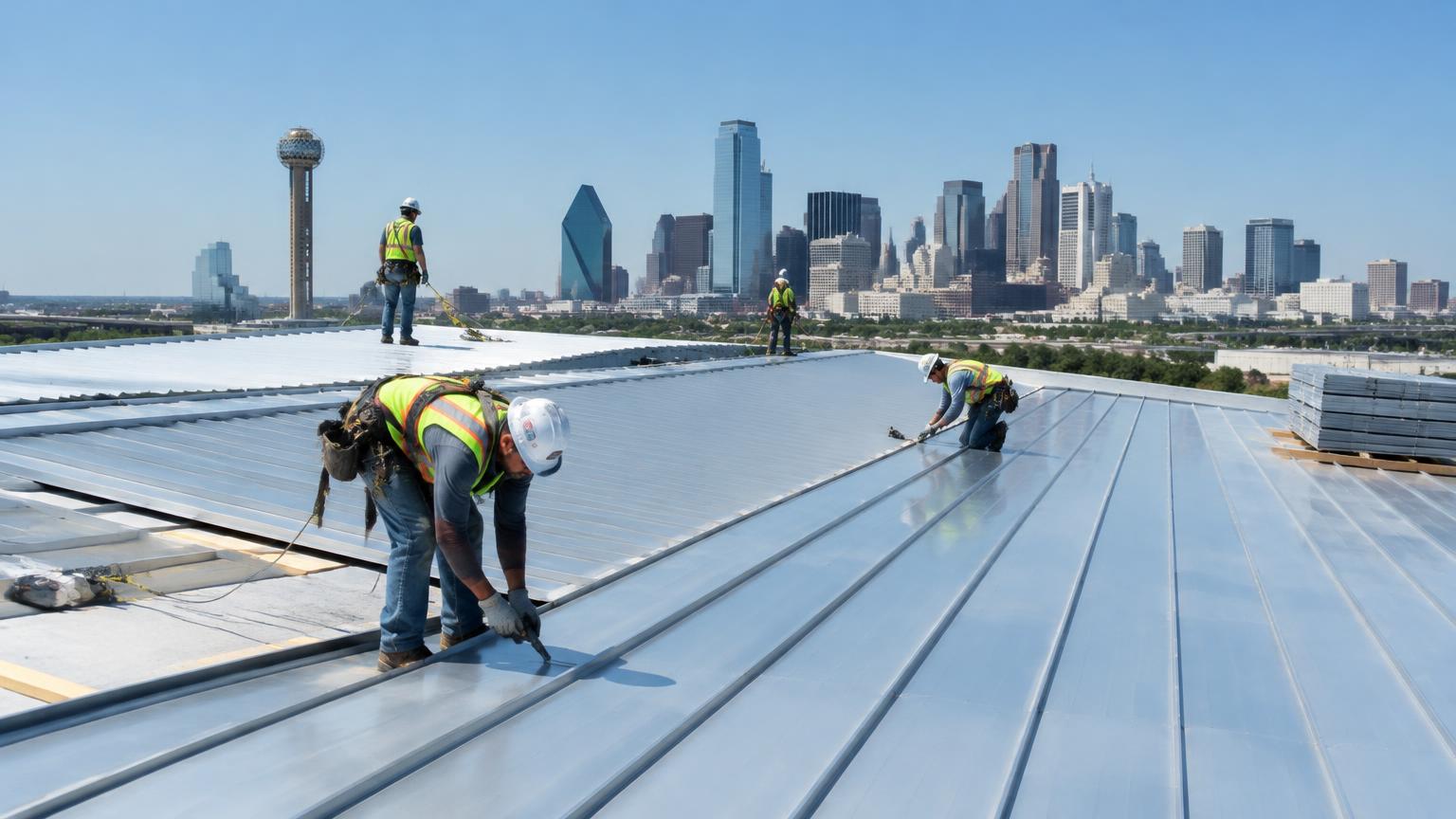
In a retrofit, the existing metal roof stays in place. A new sub-framing system — typically steel purlins or hat channels — is attached through the old panels into the structure. Insulation is added between the old roof and the new one, which often improves the building's energy performance at the same time. Then new standing seam or R-panel sheets go down over the framing.
The practical benefits are significant: no tear-off disposal, no days with an open deck exposed to Texas storms, and no interruption to the business operating below. For occupied warehouses and retail centers, that continuity is often the deciding factor.
When a tear-off is the better call
A retrofit covers the old roof — and everything wrong with it. If the inspection finds widespread panel rust, saturated insulation, corroded deck or structural concerns, covering it up just postpones a bigger problem.
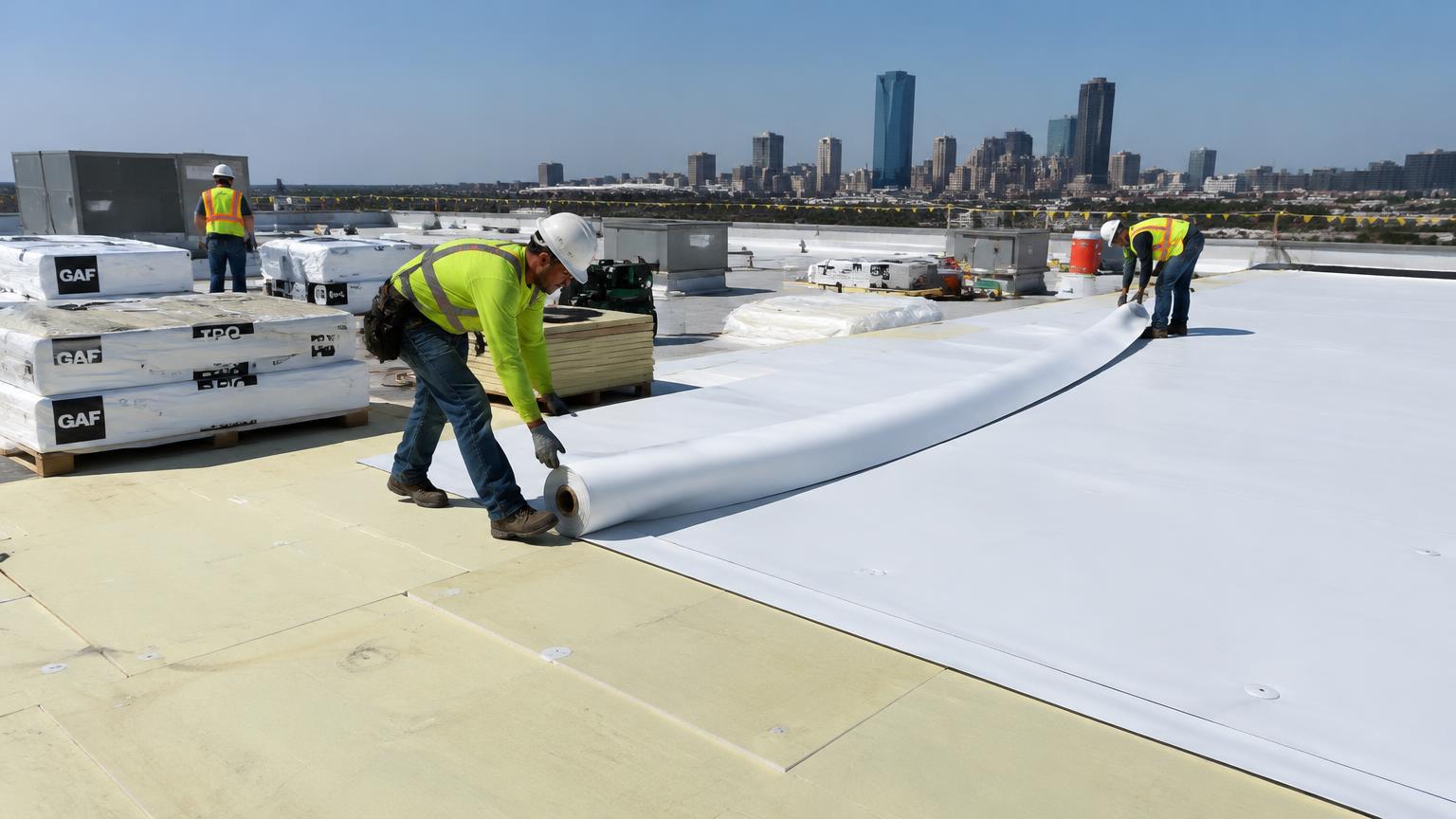
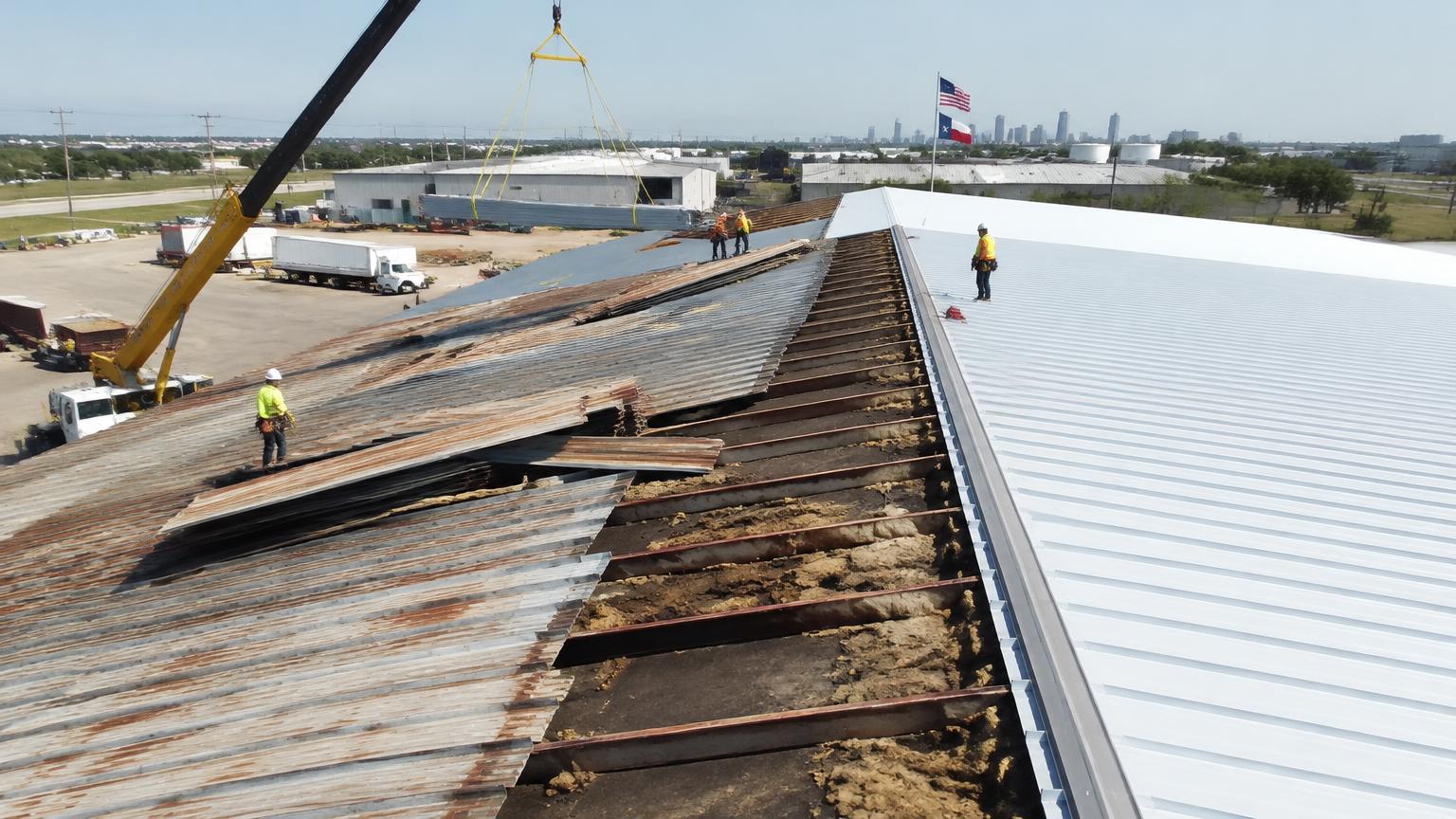
A full tear-off removes the old panels and insulation down to the deck. That exposes everything: rusted deck sections get replaced, the structure gets verified, and the new assembly starts from a known-clean base. Tear-off also makes sense when the building needs a different roof slope, major new penetrations, or a change from metal to a single-ply system. It costs more and takes longer, but it resets the clock completely.
The inspection questions that decide it
Before anyone prices either option, these questions need answers:
- How widespread is panel rust? Localized rust can be addressed; systemic rust points to tear-off.
- Is the insulation wet? Moisture trapped under a retrofit becomes mold, deck corrosion and lost R-value.
- Can the structure carry the added weight? A retrofit adds framing, insulation and new panels — an engineer may need to confirm capacity.
- What's the fastener and purlin condition? Sound attachment points are what a retrofit anchors to.
- Are there code triggers? A full replacement can trigger energy-code insulation requirements that a retrofit may also need to meet.
Disruption, schedule and weather risk
Dallas weather adds a practical wrinkle. A tear-off opens the deck, so the project has to be sequenced in sections with dry-in each day — spring storm season demands extra discipline. A retrofit never fully opens the building, which is why many owners of occupied buildings schedule retrofits year-round and reserve tear-offs for milder windows when possible.
Either way, ask any bidding contractor how they handle daily dry-in, what happens if a storm hits mid-project, and how they'll protect inventory or tenants below. The answers tell you a lot about the crew you're hiring.
How pricing works
Retrofit and tear-off price differently. Retrofit pricing is driven by the sub-framing design, added insulation and new panel system. Tear-off pricing adds removal and disposal, deck repairs and whatever the new assembly requires. Roof size, access, height and the number of penetrations affect both. We break down the general cost drivers in our guide to commercial roof replacement costs in Dallas-Fort Worth — but any honest number for your building starts with an inspection.
Not sure which path your roof is on?
Our Dallas commercial roofing team inspects aging metal roofs across DFW and gives you a written comparison of both options when both are viable — including what the inspection found, what each path involves, and what each costs. Request an inspection and we'll walk the roof before we talk numbers.