The same ceiling tile has been replaced twice. A tenant reports water in a different suite after the next storm. Your maintenance file shows repairs, but not a clear explanation of why the leaks keep returning. If you are considering commercial roof replacement in Dallas, that pattern is a reason to investigate—not proof that the entire roof must come off.
A warehouse leak can threaten stored goods. Water above a retail unit can interrupt trading; in an office, it can affect equipment and occupied space. Delaying a necessary replacement may let moisture reach insulation and decking, expanding the work beyond the waterproof layer. Replacing too soon has a cost as well: discarding an assembly that still has a practical repair path.
The useful question is not simply whether the roof looks old. It is whether an inspection can explain the failures and show that repairs will keep the building protected. The seven signs below help you prepare for that conversation. Stay off a damaged or unfamiliar roof; photographs from safe locations and your leak records are enough to get an assessment started.
7 Signs Your Dallas Commercial Building May Need Roof Replacement
Each sign is a prompt for professional evaluation. Several occurring together are more concerning than one isolated defect, but none is an automatic instruction to replace the whole roof.
1. Frequent roof leaks and recurring water intrusion
Record the date, room, weather conditions, and previous repair for every leak. A repeat leak at one HVAC curb may be a detailing problem. New leaks across separate roof areas may suggest a broader loss of waterproofing or moisture spreading through the assembly.
Ceiling stains do not map roof damage reliably: water can travel along decking before it becomes visible indoors. Ask the inspector to connect each reported leak to a likely entry point, explain uncertainties, and distinguish roof leaks from condensation or equipment problems. Replacement becomes more credible when multiple failures cannot be corrected with durable, compatible repairs.
2. Widespread membrane damage, cracks, or blistering
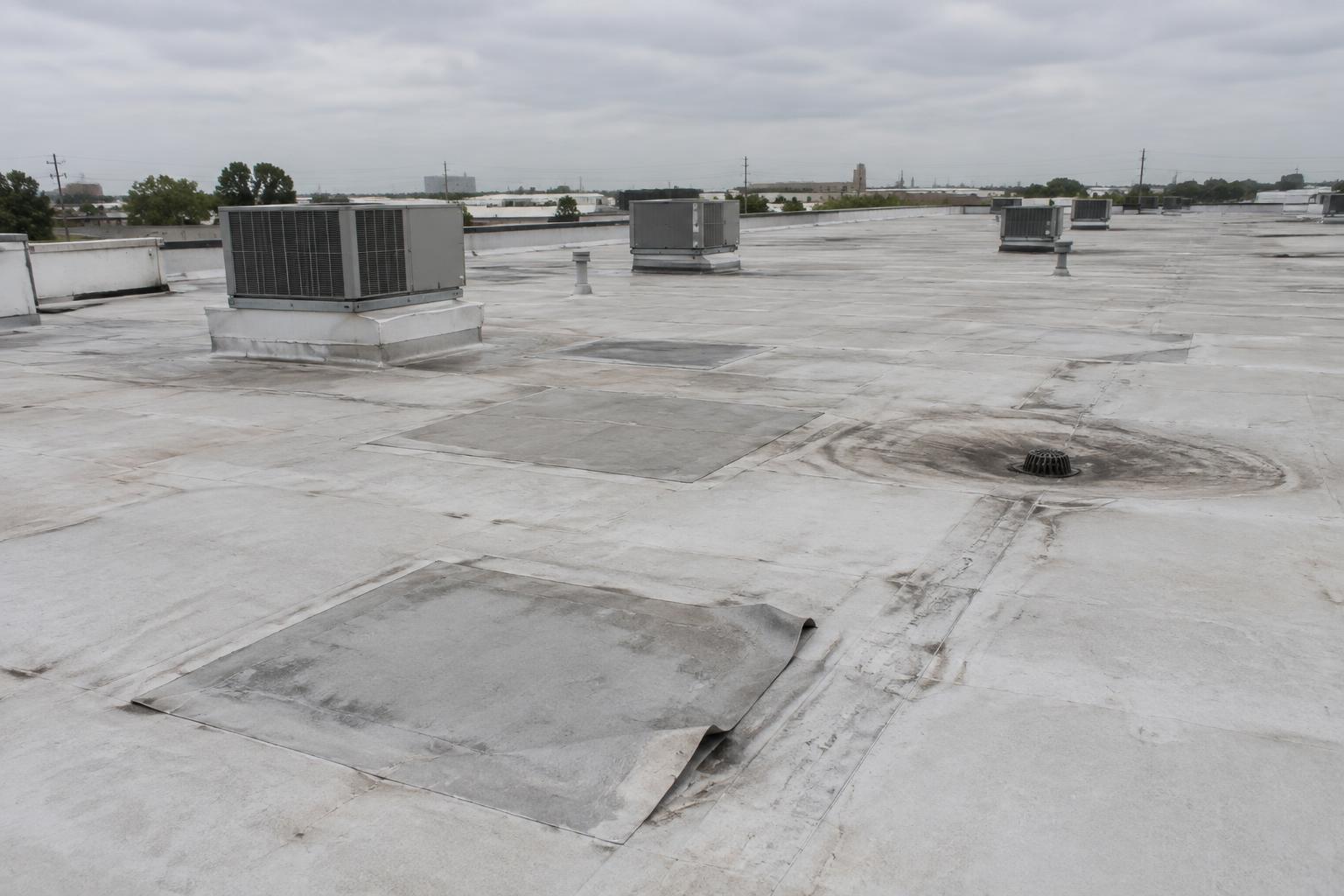
The membrane is the roof's waterproof layer. A service technician's dropped screw can make a small, repairable puncture; cracks across large areas, extensive splitting, exposed reinforcement, or numerous failed patches call for a broader condition survey.
Blisters need system-specific interpretation. In asphalt-based roofs they can involve trapped air or moisture between layers; their presence alone does not establish how much insulation is wet. Do not cut, puncture, or cover them yourself. Have a roofer determine whether the damage is localized, whether repair materials will bond to the existing surface, and whether the remaining membrane can perform after repairs.
3. Persistent ponding water on flat roofs
Low-slope roofs should move water toward drains or scuppers, the outlets through a parapet wall. A shallow puddle immediately after rain is different from a recurring pool that remains after surrounding areas have dried. NRCA guidance flags ponding beyond 48 hours under conditions conducive to drying as potentially detrimental to a membrane roof assembly.
The cause may be a blocked drain, insufficient slope, compressed insulation, or deck deflection. Cleaning an outlet may solve one problem; adding tapered insulation or redesigning drainage may be needed for another. Standing water adds load and keeps defects submerged. If you see sagging or suspect structural movement, restrict access and arrange qualified assessment rather than walking into the affected area.
A replacement proposal should explain the drainage correction. Putting new membrane over the same low spot does not remove the reason water collects there.
4. Deteriorating flashing and roof seams
Flashings seal transitions at walls, curbs, pipes, and roof edges. Seams join membrane sheets. Movement, weathering, poor attachment, and unsuitable earlier repairs can leave openings at these details even when the main roof surface appears sound.
An isolated failed seam or curb flashing often has a repair solution. Repeated separation along many seams, loose perimeter details, or widespread flashing failure may justify replacement—especially when the existing material is no longer suitable for reliable joining. Ask for close-up photographs and a description of the failure, not just a recommendation to add sealant everywhere.
5. Insulation damage and rising energy costs
Insulation sits below the membrane and helps limit heat transfer. Moisture can reduce its insulating performance and may affect adjacent materials. A roof that appears intact from above can still contain wet areas from older leaks.
Higher cooling bills are not a roof diagnosis. HVAC faults, occupancy changes, thermostat settings, and a hotter summer can also increase consumption. Use utility records as context, then ask whether a moisture survey or selective core sampling is appropriate. Infrared findings need suitable conditions and confirmation; they are not a substitute for interpreting the complete assembly.
The amount and distribution of wet insulation influence scope. A few verified wet areas may be removable during targeted work. Extensive moisture makes a simple overlay or coating harder to justify. Do not assume a new reflective surface will produce a specific energy saving for your building.
6. Repeated repairs without long-term improvement
A repair invoice proves work was performed, not that the cause was resolved. Review what each contractor repaired, what material was used, and whether the leak returned in the same place. Failed spot repairs can mean the diagnosis was incomplete rather than the whole roof being beyond repair.
Replacement deserves consideration when properly scoped repairs no longer control water intrusion or when repair costs, interior damage, and interruption keep accumulating without a credible longer-term plan. Compare the documented repair scope with replacement over your intended ownership period. There is no universal repair-cost percentage that decides the answer for every building.
7. An aging roof approaching the end of its service life
Find installation records, product information, warranty documents, and any history of re-covering. The visible surface may be newer than the layers beneath it. Age helps establish context, but exposure, installation quality, drainage, maintenance, and prior storm damage affect how a system actually performs.
A warranty expiration date is not a failure date. An older roof that is dry and repairable may remain serviceable; a younger roof with widespread defects may need major work. Plan replacement when the findings show limited remaining repairability or unacceptable risk to the building—not solely because a calendar milestone has passed.
How Dallas Weather Affects Commercial Roofing Systems
Dallas summer heat and sunlight expose membranes, asphalt surfaces, and sealants to sustained weathering. Material response varies by product and assembly. Reflectivity can reduce solar heat gain, but insulation, air leakage, rooftop equipment, and building use still influence energy performance.
Hail can puncture or fracture some roof materials, while wind can damage edges and attachments. The significance of a dent or surface mark depends on the system; visible storm marks do not automatically establish functional failure. Arrange a condition assessment after significant weather and keep dated documentation.
Heavy rain tests drain capacity and reveals low areas. Debris from nearby trees, construction, or rooftop service can obstruct outlets. Temperature changes also cause materials to expand and contract, stressing transitions between different components. A replacement should address these details, not just specify a membrane by brand name.
Commercial Roof Repair vs. Full Roof Replacement: Which Makes More Sense?
Repair is often appropriate when the entry point is identifiable, damage is limited, surrounding materials remain serviceable, and wet components can be removed locally. A repair recommendation should name the cause, materials, affected area, and limitations—not promise that every future leak has been eliminated.
Full replacement becomes worth evaluating when deterioration is widespread, moisture affects substantial areas, decking needs access for repair, or repeated failures make continued patching unreliable. Partial replacement or a re-cover may be alternatives, but existing layers, attachment, moisture, structural capacity, and applicable code must be checked first.
For a property-specific assessment of commercial roof replacement in Dallas, bring your leak history and ask for findings that distinguish what can be repaired from what needs removal. The scope should identify membrane, insulation, decking, drainage, flashing, and any work requiring a separate qualified trade or design professional.
| Finding | Possible direction | What to verify |
|---|---|---|
| One failed detail; surrounding roof is sound | Targeted repair | Leak source, material compatibility, and nearby moisture |
| Several leaks but damage extent is unclear | Further investigation | Roof plan, repair history, and moisture assessment |
| Widespread deterioration or wet insulation | Replacement assessment | Removal limits, deck condition, and viable alternatives |
| Recurring ponding or suspected deck movement | Drainage/design review | Outlet condition, slope, loads, and structural assessment where needed |
Commercial Roofing Systems to Consider for Your Replacement Project
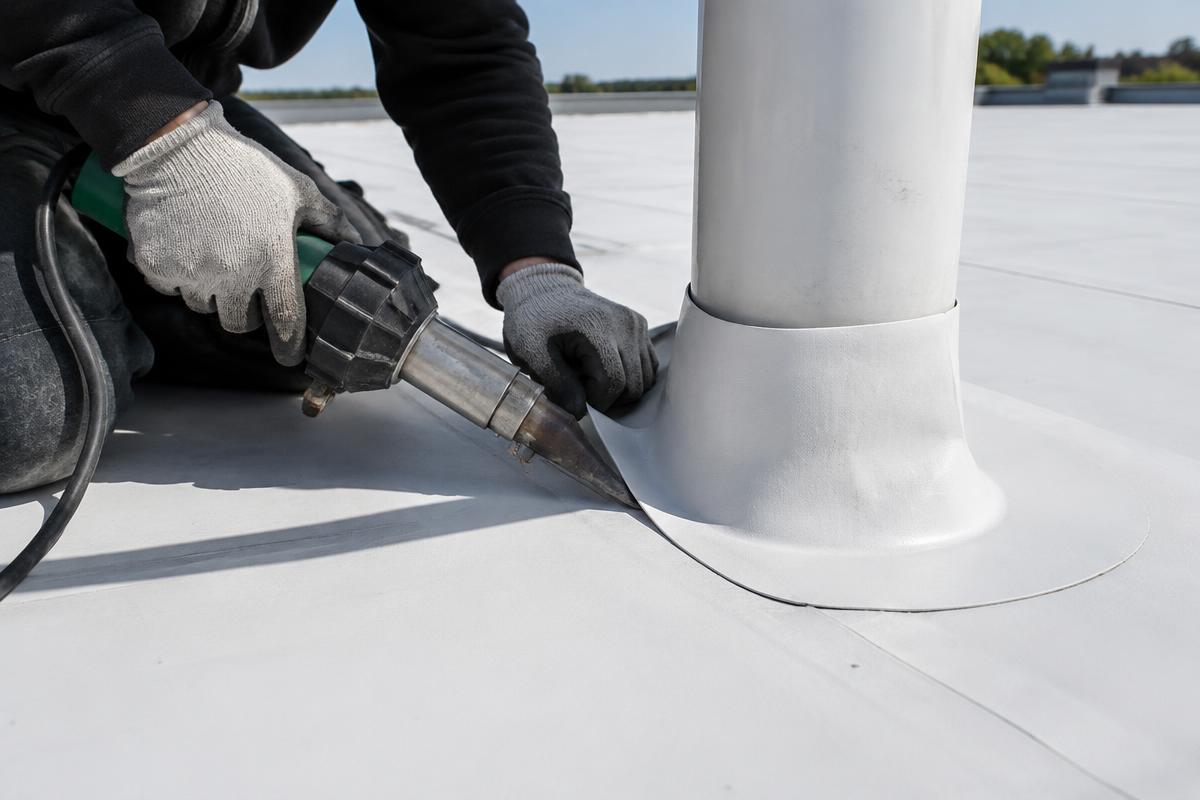
Start with the building rather than a favorite product. A large warehouse, a restaurant with exhaust above the roof, and an office with frequent HVAC access can need different assemblies. Compare membrane thickness, attachment, cover board, insulation, drainage, fire and wind requirements, and warranty conditions as a package.
Our commercial flat roofing services cover low-slope system options. Use a contractor's proposal to check which assembly suits your actual roof conditions and what preparation it requires.
TPO: reflective single-ply roofing with welded seams
TPO, or thermoplastic polyolefin, is a single-ply membrane commonly available with a reflective surface. Heat-welded seams join the sheets. It is an option for commercial low-slope roofs, including warehouses and retail buildings. Weld quality, product specification, attachment, and protection from service traffic matter; a white surface alone says little about the complete roof's quality.
EPDM: flexible rubber membrane
EPDM is a synthetic rubber membrane, typically joined using compatible seam tapes or adhesives rather than heat welding. Its flexibility is useful where an assembly must accommodate normal movement, but it does not correct structural settlement. Standard black EPDM absorbs more sunlight than a reflective surface; discuss available reflective options, insulation, and building energy needs rather than assuming color decides the whole project.
Modified bitumen: reinforced asphalt-based roofing
Modified bitumen combines asphalt with polymers and reinforcement, often in a multi-layer assembly. Products vary in surface finish and application method, including self-adhered, cold-applied, and heat-applied options. It may suit commercial roofs needing a robust layered system. Confirm weight, substrate preparation, fire-safety procedures, and detailing; no roof should be treated as an unprotected walkway.
PVC and metal: options for specific building conditions
PVC is another heat-welded single-ply option and may be worth evaluating where grease or chemical exposure is a concern. Compatibility depends on the particular substance and product, so get manufacturer guidance rather than treating resistance as universal. Metal can suit sloped commercial buildings and some engineered retrofit arrangements. Profile, attachment, movement, corrosion exposure, and roof geometry determine suitability. No one system is best for every Dallas property.
What Factors Influence Commercial Roof Replacement Costs in Dallas?
A reliable budget for commercial roof replacement in Dallas starts with an inspection and a defined scope. Roof area is important, but it does not reveal how much material must be removed or what is damaged beneath it. Avoid comparing proposals that price different assemblies as though they were the same project.
- Area and geometry: measured roof size, separate levels, parapets, penetrations, and equipment density.
- Existing assembly: membrane type, number of layers, tear-off requirements, disposal, and conditions found below the surface.
- Deck and structure: confirmed deck repairs, with clear unit rates or allowances for concealed damage and a process for approving changes.
- Insulation: dry versus wet material, required thermal performance, cover boards, and tapered insulation where drainage needs correction.
- Drainage and details: drains, scuppers, edge metal, wall transitions, curbs, and pipe flashings.
- New system: membrane specification, attachment method, accessory requirements, and actual warranty terms.
- Access and logistics: staging space, lifting equipment, parking restrictions, deliveries, occupied areas, and rooftop services.
- Operations and schedule: phasing, noise-sensitive tenants, weather protection, permitted work hours, and any coordination with other trades.
How to Prepare Your Commercial Property for a Roof Replacement Project
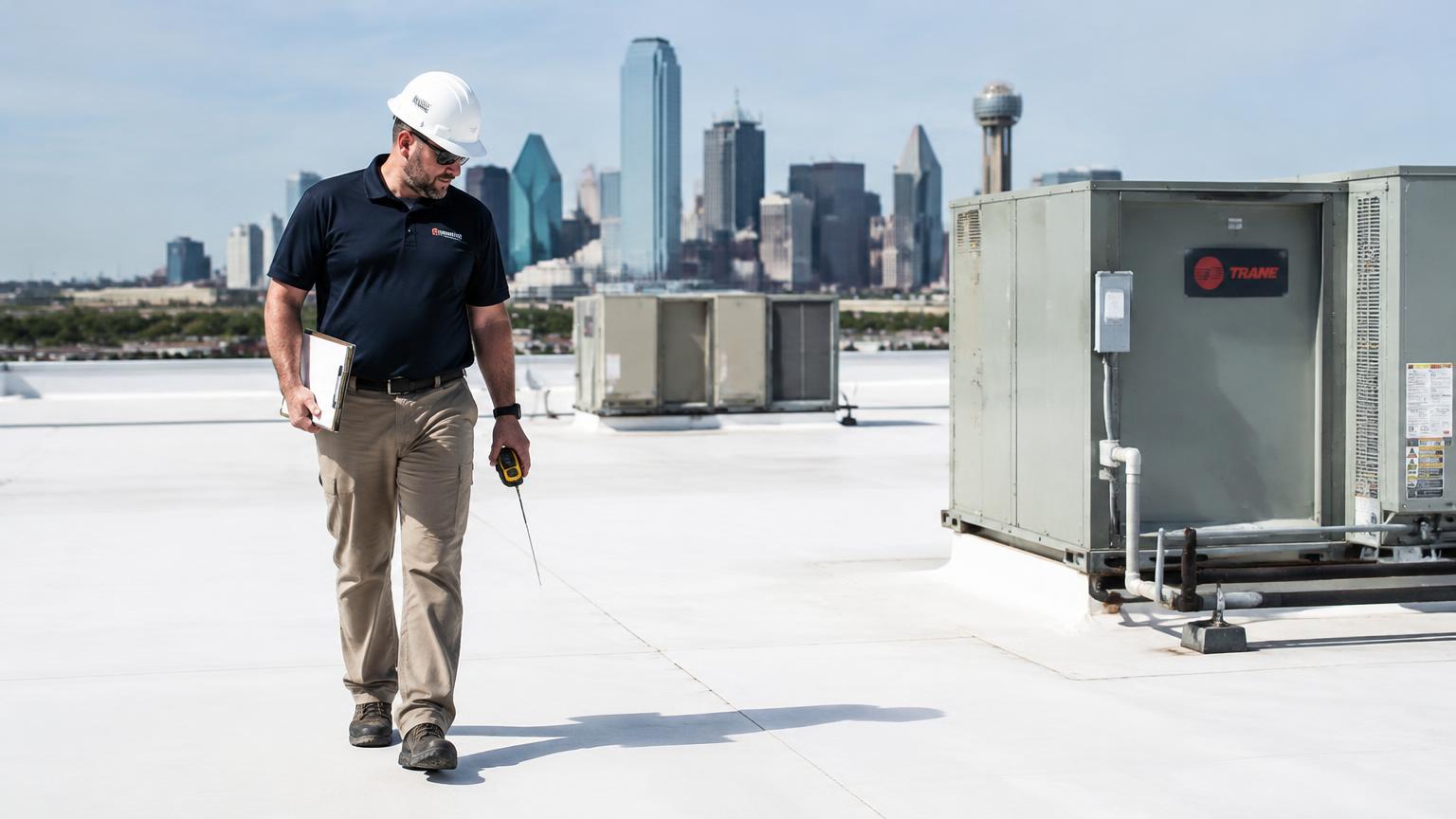
Gather the existing roof documents and identify who can authorize access, approve scope changes, and notify occupants. A roof plan marked with leak locations and tenant uses helps the contractor understand what needs protection below each work area.
For a warehouse, coordinate deliveries and loading docks with material staging. Retail managers should plan customer access and notification for noisy work. Office and medical occupancies may need more restrictive work windows. These are planning considerations, not a promise that roofing can always proceed without interruption.
Ask how much roof will be opened each day, how temporary watertight protection will be provided, and who responds if rain arrives unexpectedly. Protect vulnerable inventory and equipment, keep emergency exits clear, and have qualified trades manage any equipment isolation or reconnection. Ariel Roofing's role is the roofing work, not unrelated building construction.
- Agree on a written schedule with weather contingencies and daily communication contacts.
- Notify tenants and employees about noise, access changes, odors where relevant, and restricted areas.
- Confirm fall protection, ground-level barriers, material storage, fire precautions, and public access controls.
- Require documented approval of concealed-condition changes before additional work proceeds.
- At completion, collect inspection records, product details, warranty documents, and a maintenance plan.
Choosing the Right Commercial Roofing Contractor in Dallas
Ask for relevant commercial roofing experience with your proposed assembly, not only a portfolio of residential shingles. Request examples the contractor is authorized to share and ask how comparable access, drainage, and occupied-building challenges were handled. Do not assume every certification applies to every product or warranty.
Verify insurance directly through current certificates and clarify coverage for the planned work. Confirm applicable local registration and permit requirements, and any license required for regulated trade work. A generic claim of being 'licensed' is not enough: ask who issued it and what activity it covers.
A detailed proposal should state removal limits, insulation and membrane specifications, flashing scope, exclusions, scheduling assumptions, payment terms, and treatment of hidden damage. Compare those items line by line. Material warranties and workmanship warranties cover different responsibilities; ask what is excluded, who handles a claim, and what inspection or maintenance records you must keep.
When speaking with Ariel Roofing or another commercial roofing contractor, ask the same question: what documented findings support this recommendation, and what reasonable alternatives have been ruled out? A proposal should let you understand the decision without relying on a sales promise.
Plan Your Commercial Roof Replacement with Ariel Roofing
If several warning signs describe your building, start with an assessment rather than a product order. For commercial roof replacement in Dallas, the next useful step is to establish damage extent, repairability, and what your business needs from the project schedule.
Contact Ariel Roofing at +1 469-833-2332 or info@arielroofing.com to discuss your Dallas commercial property and arrange a roofing assessment. Have your leak records, available roof documents, and access requirements ready. Ask for a written explanation of the options before choosing the work.