Every commercial building owner in Dallas-Fort Worth eventually gets the same phone call from a roofing contractor: your roof is aging, here are two paths, a coating or a full replacement. The pitch usually leans toward whichever service that contractor sells more of. The honest answer is that the roof itself tells you which path is correct — you just have to know what to look for and be willing to test before you decide.
Restoration coatings have earned a legitimate place in commercial roofing because a properly prepared low-slope membrane, when coated correctly, can perform like new for another decade or more at a fraction of tear-off cost. But coatings are not a universal fix, and applying one to the wrong roof is one of the most common ways property managers waste capital budget in North Texas.
What a restoration coating actually does
A roof coating is a fluid-applied, seamless membrane sprayed or rolled over an existing roof surface — TPO, EPDM, modified bitumen, built-up roofing, or metal. It is not paint. A properly specified system is 20–40 dry mils thick, bridges hairline cracks, seals minor seam separation, and creates a new UV-reflective, waterproof top layer bonded to what's already there.
The coating restores two things simultaneously: waterproofing integrity and reflectivity. On a 15-year-old TPO roof with UV-degraded surface but sound seams and dry insulation underneath, a silicone recoat can functionally reset the clock on the visible wear layer without touching the substrate that's still doing its job.
What it cannot do is fix what's underneath. If the insulation is saturated, if the deck has rotted, or if seams have failed structurally rather than cosmetically, a coating traps moisture in place and gives you a shiny roof over a rotting one.
Silicone, acrylic, or polyurethane: what North Texas weather rewards
Silicone is the default recommendation for most flat commercial roofs we evaluate in DFW, specifically because of ponding water. DFW's low-slope commercial stock — strip centers, warehouses, older schools — routinely holds standing water for 48+ hours after a summer thunderstorm, and acrylic coatings soften and re-emulsify under sustained ponding. Silicone tolerates ponding water indefinitely without breaking down, which is why most silicone manufacturer warranties explicitly cover ponding while acrylic warranties explicitly exclude it.
Acrylic coatings are cheaper and still have a role on steeper-sloped metal roofs or roofs with no ponding history, where their lower cost and easier application outweigh the ponding limitation. They also offer better reflectivity numbers initially, which matters for buildings chasing cool-roof energy credits.
Polyurethane coatings, particularly aromatic base coat with aliphatic UV-stable top coat, earn their premium price on roofs with regular foot traffic — rooftop HVAC service platforms, roofs with frequent contractor access for satellite or generator work. Polyurethane resists abrasion and puncture far better than silicone or acrylic, at the cost of lower reflectivity and a higher price point.
Eligibility: the tests that decide, not the sales pitch
Before we recommend a coating on any commercial roof in Dallas-Fort Worth, we run a moisture survey — either infrared thermal scan at dusk after a sunny day, or a grid of core cuts through the membrane down to the deck. Wet insulation reads warm on an IR scan because it retains solar heat longer than dry insulation; core cuts confirm it directly and let us measure insulation compression and deck condition at the same time.
A roof qualifies for restoration when core cuts show insulation moisture content under roughly 15%, no widespread membrane blistering, seams that are mechanically sound even if surface-degraded, and a deck free of soft spots or rot. Roofs with more than 25% wet insulation coverage, by NRCA guidance most manufacturers follow, are past the point where coating makes financial sense — the wet insulation has to come out regardless, and once you're tearing into the roof to replace insulation, you're doing a re-roof.
We also check the drainage plan itself. A coating cannot fix a roof that ponds because the drains are undersized or the deck has structural sag. In those cases we may recommend tapered insulation crickets be cut in alongside the coating, which adds cost but solves the root cause instead of coating over standing water year after year.
Cost per square foot: coating versus replacement in 2026
For a qualifying roof, a two-coat silicone restoration system with reinforced seam detailing typically runs $2.50 to $5.50 per square foot installed in the DFW market, depending on membrane condition, deck access, and building height. Acrylic systems run somewhat lower, roughly $1.75 to $3.50 per square foot; polyurethane systems run higher, often $3.50 to $6.50 per square foot given material cost.
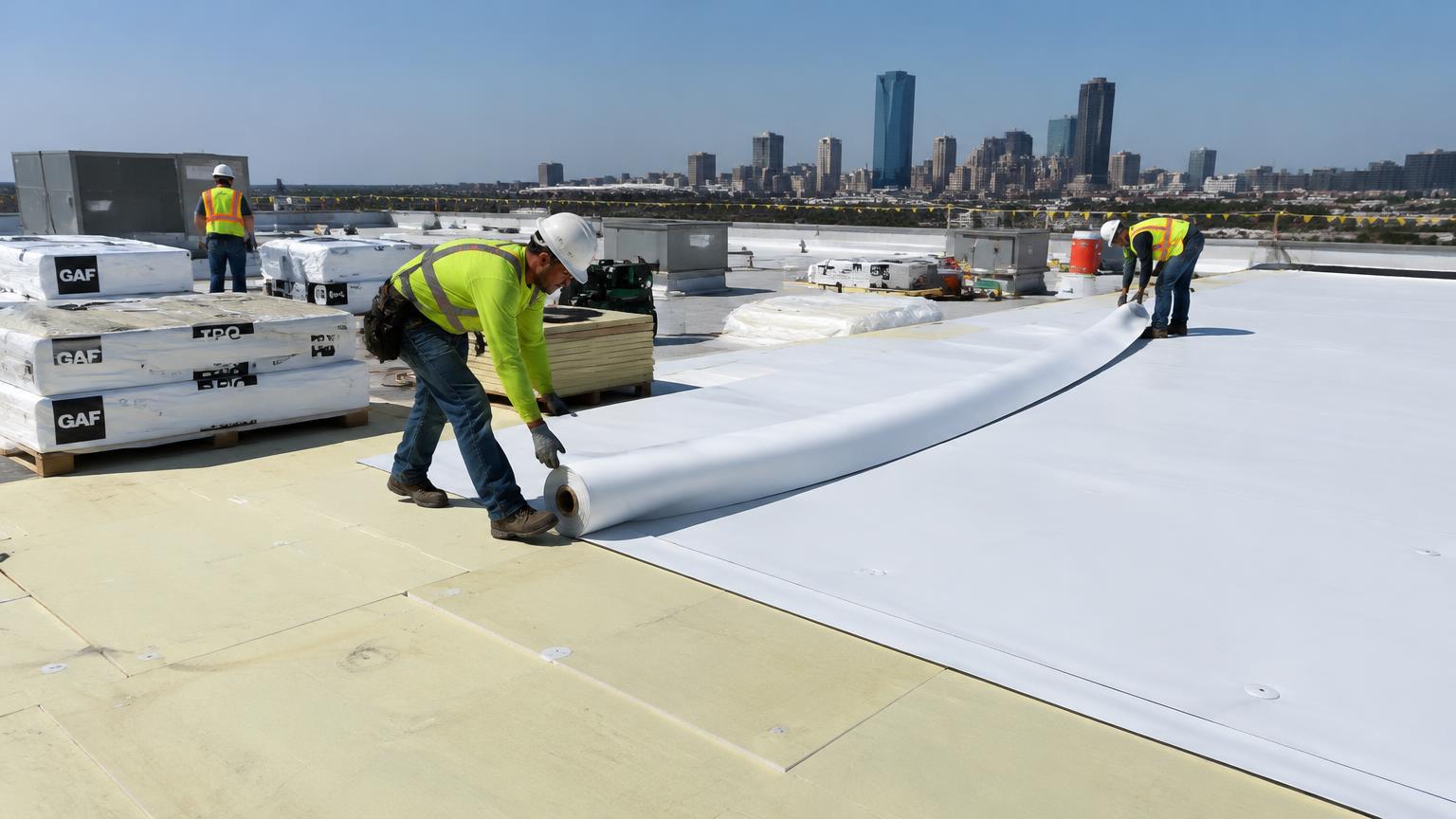
Full commercial replacement — tear-off and new TPO or modified bitumen system with new insulation — runs $7 to $14+ per square foot in North Texas as of 2026, with the wide range driven by insulation thickness required by current energy code, deck repair scope, and roof height and access complexity. On a 40,000 sq ft warehouse roof, that's the difference between roughly $140,000 in coating cost and $350,000-plus for full replacement.
The financial case for coating strengthens further when you factor disruption. Replacement means tear-off dust, exposed roof during install, and often occupied-space disruption for a period measured in weeks; a coating project is faster, generates minimal debris, and rarely requires the roof to be opened.
Added service life and renewal cycles
A well-installed silicone restoration system on a qualifying substrate typically adds 10 to 15 years of service life, and the system itself can be recoated again at the end of that cycle for a fraction of the original cost — essentially extending a roof indefinitely in maintenance cycles rather than one-time replacement events, provided the substrate keeps passing moisture inspection.
This is the model many national retail and industrial portfolios have shifted to deliberately: coat, monitor, recoat, and defer full replacement capital expenditure for decades on roofs where the underlying structure remains sound. It works because the labor-intensive, disruptive part of roofing — tear-off and deck work — only happens once, and every renewal after that is comparatively cheap.
Manufacturer warranties on restoration systems
Reputable coating manufacturers — the names most commercial roofers in DFW carry certifications for — offer their own NDL or material-only warranties on restoration systems, typically in 10, 15, or 20-year terms, separate from whatever warranty remained on the original roof membrane. These warranties require manufacturer-specified mil thickness verified by wet-mil gauge readings during application and, in most cases, an annual maintenance inspection to stay active.
Read the fine print on ponding water coverage specifically. Some silicone warranties cover indefinite ponding; others cap it at 48 or 72 hours. If your DFW property has known ponding areas, confirm the exact ponding language before you sign, because it's the single most common point of warranty denial on coated commercial roofs.
Energy and reflectivity: the cool-roof upside
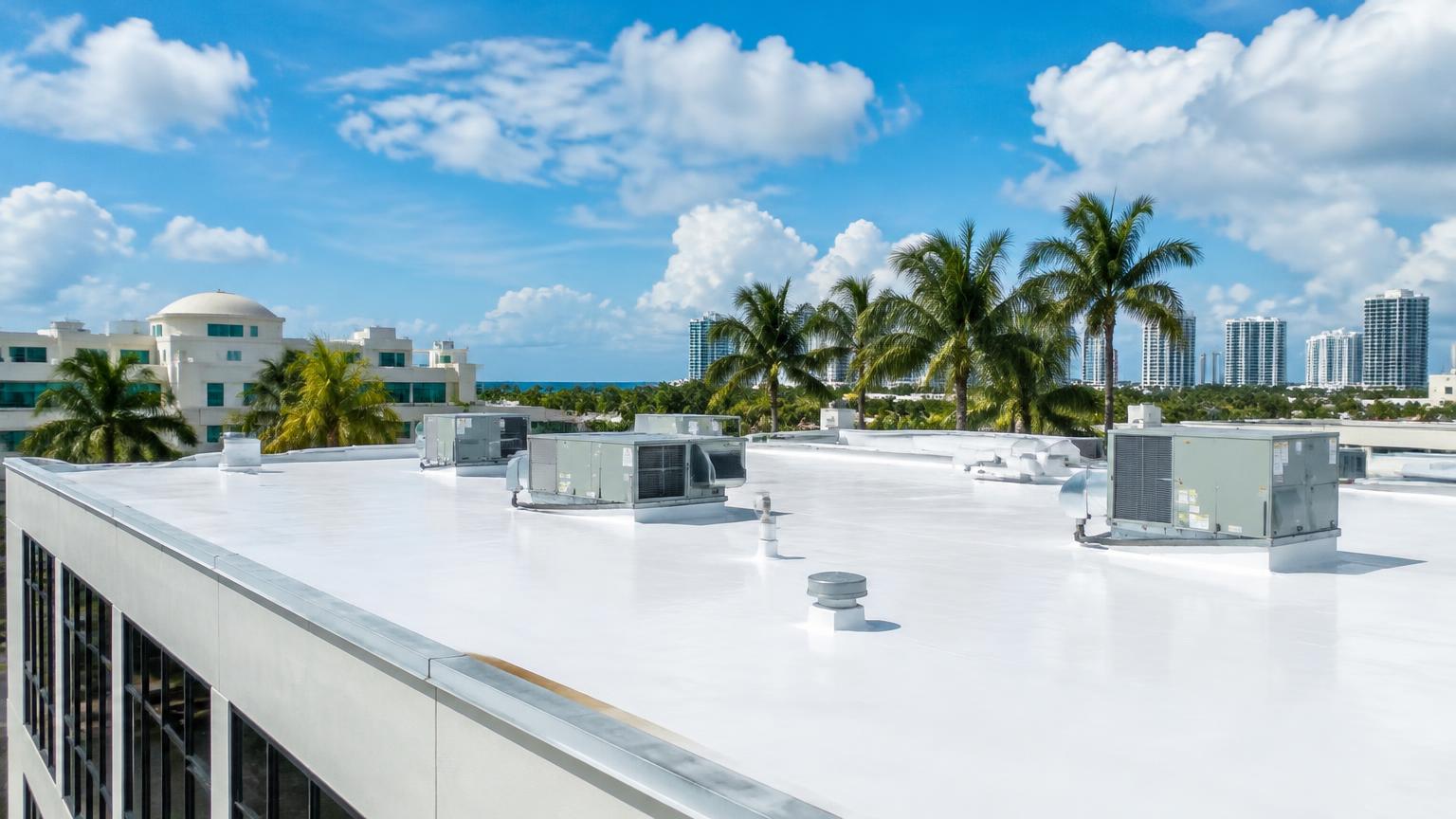
Fresh white or light-colored coatings can reduce rooftop surface temperature by 50 degrees or more compared to an aged, darkened membrane on a Texas summer afternoon, and that reduction in heat load translates into measurable cooling cost savings for buildings with rooftop HVAC units — often cited in the 10–20% range for cooling costs on well-insulated buildings, though the exact number depends heavily on insulation levels and unit efficiency.
Several municipalities and utility rebate programs in North Texas offer incentives tied to Energy Star or Cool Roof Rating Council reflectivity thresholds. It's worth checking current program availability before finalizing coating color and product, since white silicone and acrylic systems generally qualify while pigmented or metallic coatings often do not.
When coating is the wrong answer
Coating is the wrong call when moisture surveys show widespread saturated insulation, when the deck itself has structural issues, when the roof has already been coated multiple times and buildup is compromising drainage, or when the building's remaining ownership horizon and capital plan clearly point toward replacement anyway within the coating's warranty term. In those cases, spending on a coating just delays the larger expense while adding a sunk cost.
It's also the wrong call when a roof has significant storm damage — hail impact, wind-lifted seams, or membrane punctures from debris. Storm damage claims typically need to be resolved through insurance before any coating or repair work proceeds, since coating over unresolved storm damage can complicate a claim and won't address underlying compromised material.
Prep, application, and North Texas weather windows
Proper coating application starts with a full roof wash to remove dirt, chalking, and biological growth, followed by seam and penetration detail work using reinforcing fabric before the base coat goes down. Skipping detail work at seams and penetrations is the single most common cause of early coating failure — the field coat can look perfect while the roof still leaks at a pipe boot or curb flashing.
The application window in DFW generally runs from late spring through early fall, avoiding the summer's most extreme heat spikes when coatings can skin over too fast, and working around the unpredictable spring storm pattern that can wash out a fresh application before it cures. Most manufacturers specify a minimum substrate and ambient temperature range and require a dry forecast window of at least 24–48 hours after application, which our crews plan against local forecasting rather than a fixed calendar date.