
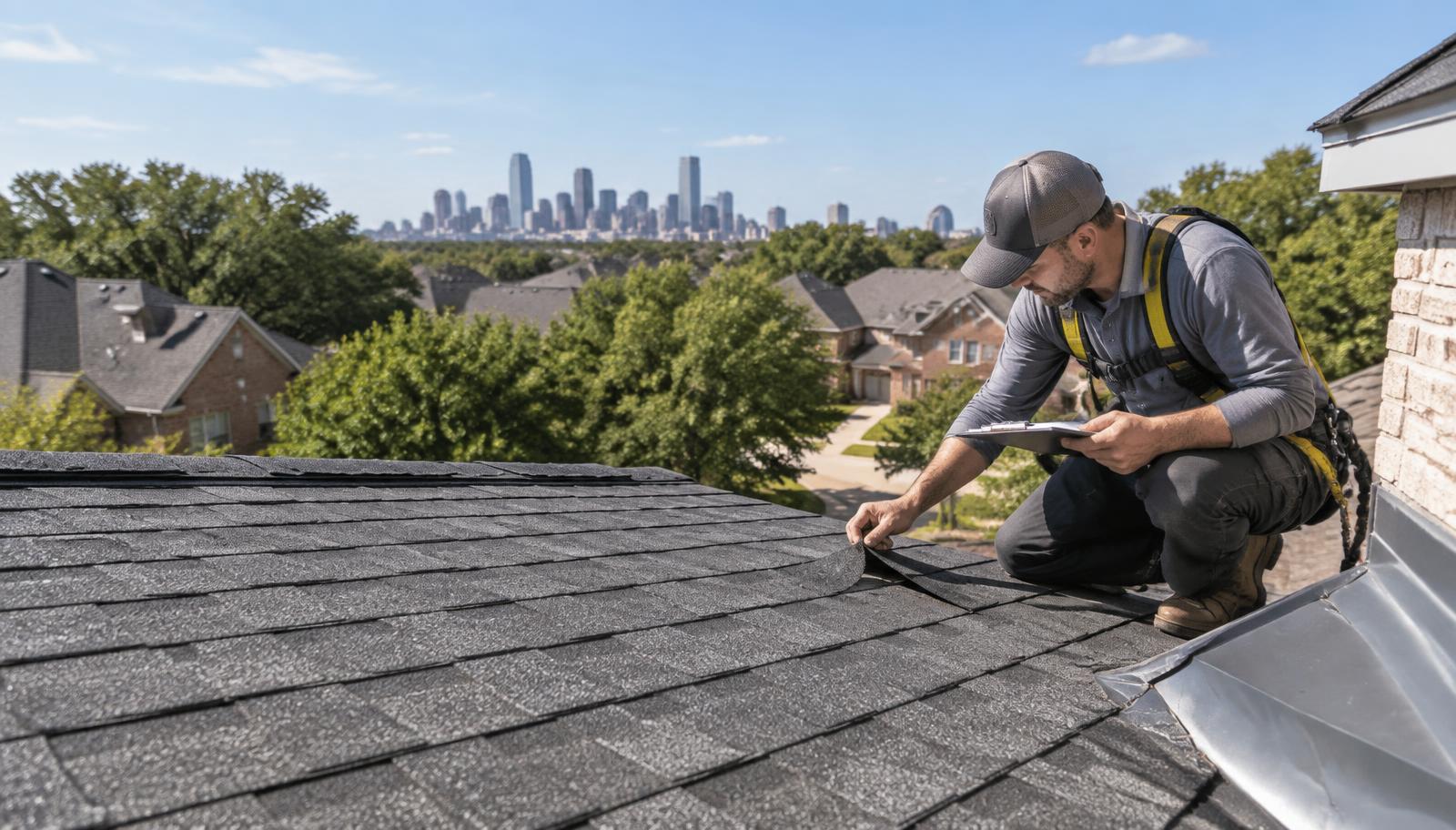
When a ceiling stain appears or shingles land in the yard after a North Texas storm, most property owners ask the same question: do I need a roof repair, or is it time for a full roof replacement? In Dallas, TX, that question comes up often — our roofs take a beating from spring hail, straight-line winds, triple-digit summer heat, and the occasional hard freeze.
The honest answer is that it depends on the condition of the whole roof, not just the spot where the problem showed up. A leak is a symptom. Sometimes it traces back to one failed pipe boot that a technician can fix in an hour. Sometimes it is the first visible sign that the entire system has reached the end of its service life.
This guide explains how professionals make the repair-vs-replace call on both homes and commercial buildings in Dallas, so you can read a proposal with confidence. It is written to inform, not to sell: if your roof only needs a repair, that is what a trustworthy roofing contractor should recommend.
When roof repair is the right call
Repair makes sense when the damage is limited and the surrounding roof still has useful life left. The key word is isolated. A good inspector looks at the area around the damage and asks whether the rest of the system is performing.
Across Dallas, the repairs we see most often trace back to a short list of causes: hail bruises on a handful of shingles, wind-lifted tabs along an eave or ridge, cracked rubber pipe boots, and flashing that has pulled away from a chimney or wall. Each of these is a defined fix with a defined scope.
- A few missing, cracked, or hail-damaged shingles in one slope
- A leaking pipe boot, vent, or chimney flashing
- Wind-lifted shingles that have not broken the seal on surrounding courses
- A small puncture or seam issue on a commercial flat roof
- Gutter or valley debris causing water to back up under the edge
- Decking that is sound under and around the damaged area
When roof replacement is the better option
Replacement becomes the sensible choice when deterioration is widespread or repairs have stopped holding. The money spent on the third or fourth leak call in two years often brings a roof no closer to dependable — it just delays the decision while the decking underneath keeps absorbing water.
Age matters, but condition matters more. Two Dallas roofs installed the same year can age very differently depending on ventilation, sun exposure, tree cover, and storm history. That is why the decision should be based on what an inspector finds, not a birthday.
- Granule loss across most of the roof, with bald or shiny shingles
- Leaks appearing in different rooms or different slopes
- Curling, cupping, or brittle shingles across the field
- Soft or sagging decking in more than one area
- Hail damage documented across multiple slopes in one storm
- A roof at or past its expected service life with active problems
How Dallas weather changes the math
Dallas sits in one of the most active hail corridors in the country, and hail is rarely uniform. A storm may bruise the west and south slopes while leaving the rest of the roof serviceable. After a significant hail or wind event, a documented inspection tells you which situation you are in — and that documentation matters if you file an insurance claim.
Heat is the slower force. Prolonged UV exposure and attic heat dry out asphalt shingles, crack sealants, and shorten the life of pipe boots and flashing. A roof that would last decades in a mild climate may need attention sooner here. Routine roofing maintenance — clearing valleys, resealing penetrations, checking flashing — is how Dallas owners stretch the years between replacements.
One Texas-specific note: if storm damage is involved, your insurance carrier determines coverage, and Texas law does not allow a contractor to waive or absorb your deductible. Be cautious of anyone who offers to.
Repair vs. replace on commercial flat roofs
Commercial buildings in Dallas ask the same question with different materials. On TPO, PVC, EPDM, and modified bitumen systems, the decision hinges on the membrane, the seams, and what is underneath. A puncture, an open seam, or flashing failure at a curb is often a straightforward repair for an experienced commercial roofing crew.
Replacement enters the picture when moisture has spread into the insulation, when seams are failing across the field, or when the membrane has shrunken and pulled at the perimeters. An infrared scan or core sample can show how far moisture has traveled before anyone quotes a tear-off.
There is also a middle path worth knowing about. When a commercial roof is aging but still structurally sound, a roof coating system can restore the surface, seal seams, and add reflectivity at a fraction of the disruption of a tear-off. Coatings are not a cure for saturated insulation or structural damage — but for the right building, they buy meaningful years. That assessment is part of any thorough commercial roofing inspection.
The questions a good inspection answers
A proper roof inspection in Dallas should leave you with evidence, not just an opinion. Before recommending repair or replacement, an inspector should be able to answer a short list of questions about your specific roof.
- Where exactly is water entering, and what component failed?
- Is the damage isolated, or does it appear across multiple areas?
- What condition is the decking in beneath the damaged section?
- How much service life does the surrounding roof realistically have left?
- Is there storm damage that should be documented for insurance?
- Will a repair restore dependable performance — or only delay a replacement?
What about cost?
Cost is the obvious next question, and the honest answer has not changed: a final price for roof repair or roof replacement in Dallas, TX can only be given after an on-site inspection establishes the actual scope. Online averages compare projects with different roof areas, materials, and hidden conditions, and they rarely include the items that show up later as change orders.
What a written proposal should give you instead is a clear scope: the measured area, the exact materials, the tear-off and decking terms, flashing and ventilation work, cleanup, permits, and warranty coverage. Comparing two proposals line by line tells you far more than comparing two totals.
Getting a straight answer for your Dallas property
The repair-vs-replace decision is where a roofing contractor earns or loses your trust. A contractor who pushes replacement on a repairable roof — or patches a roof that is clearly finished — is not saving you money either way.
Ariel Roofing starts every repair and replacement conversation the same way: a full inspection with a photo report, followed by a written recommendation that explains what we found and why. If a repair will genuinely solve the problem, we say so. If the roof needs replacement, you will see the evidence. For commercial properties, our commercial roofing team handles everything from targeted repairs and maintenance programs to coatings and full replacement across Dallas.
If you are weighing roof repair against roof replacement for a Dallas home or building, the fastest way to a real answer is a free roof inspection. Call us or request one online — we will inspect the roof, show you what we find, and give you a written, property-specific scope.


