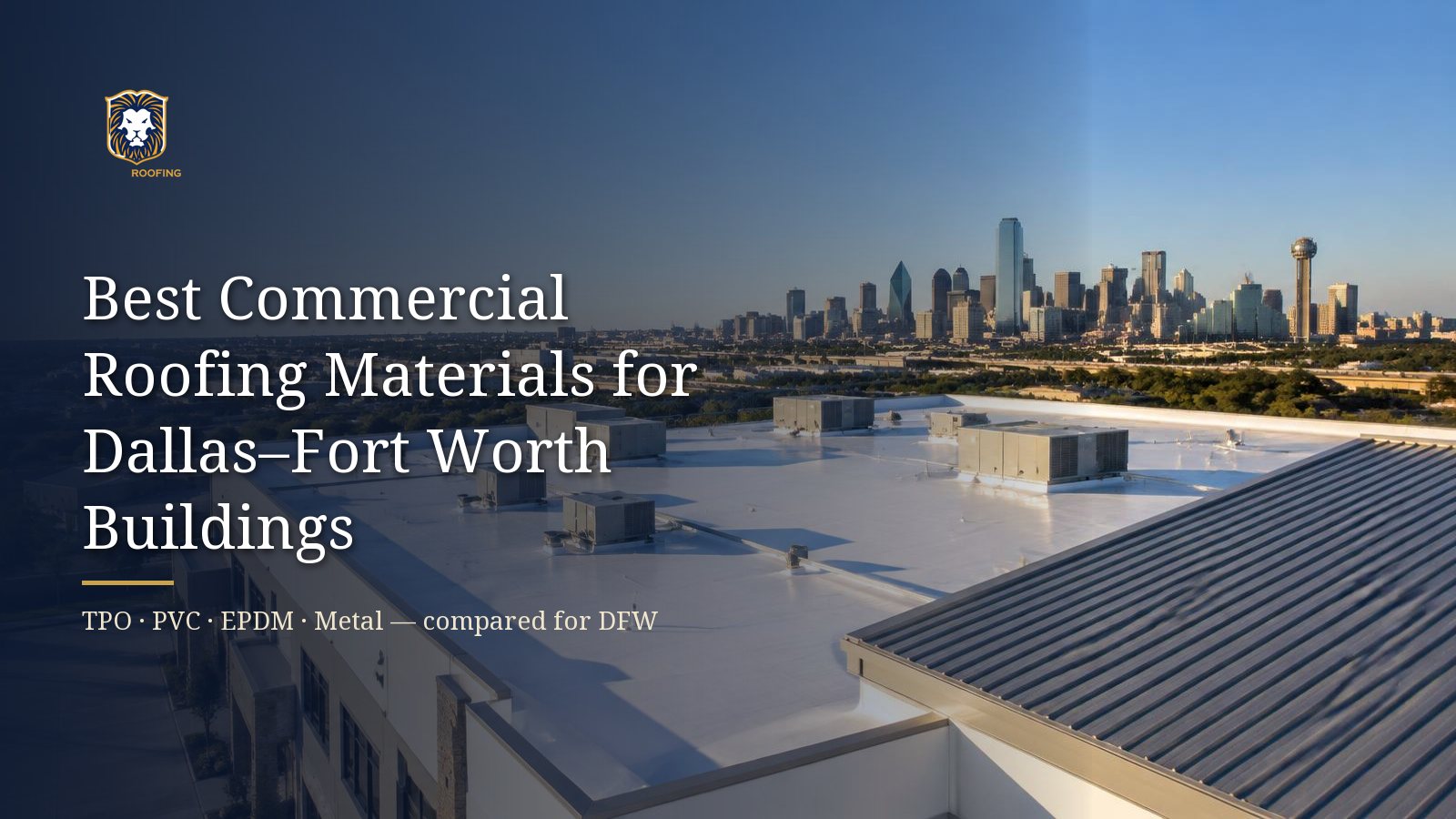
Choosing among commercial roofing materials in Dallas TX is one of the bigger decisions a building owner makes. The roof protects inventory, tenants, equipment, and operations. It also affects cooling costs every summer and how your building holds up when a hailstorm rolls across North Texas.
Most owners don't replace a commercial roof often, so few have a clear picture of the options. Contractors may push the system they install most. Online lists rank materials without asking what the building actually needs.
This guide takes a different approach. Instead of naming one winner, it shows how Dallas–Fort Worth property owners can match a roofing system to their building, the Texas climate, energy goals, and budget. If you already know you need help, our Dallas commercial roofing team can inspect your roof and walk you through options in person.
What to Consider Before Choosing a Commercial Roof in DFW
Material choice starts with conditions, not product names. Before comparing TPO and metal, look at what your roof faces every year and how your building is used.
Summer heat and UV exposure
DFW summers bring long stretches of high temperatures and intense sun. A dark roof absorbs that heat and pushes it into the building, which raises cooling loads. Reflective white membranes, such as TPO and PVC, bounce much of that energy back. Heat and UV also age materials, so a membrane's UV resistance and thickness matter here more than in milder climates.
Hail and severe storms
North Texas sits in one of the most active hail regions in the country. Hail can bruise membranes, crack aged surfaces, dent metal, and crush insulation underneath. Thicker membranes, a cover board under the membrane, and impact-rated assemblies all improve hail performance. Your insurance carrier may also care which system and rating you choose.
Heavy rain, drainage, and ponding
Spring and fall storms can drop a lot of rain quickly. Low-slope roofs depend on drains, scuppers, and tapered insulation to move water off. Water that sits for days after rain stresses seams and finds weak points. The best material in the world won't fix poor drainage, so a good replacement plan often includes tapered insulation or added drains.
Wind and temperature swings
Strong straight-line winds test perimeter edges and attachment. Rapid temperature changes, such as a cold front after a warm day, make materials expand and contract. Flexible membranes and well-designed metal panel systems handle this movement better than brittle, aged surfaces.
Your building and budget
Roof slope, deck type, foot traffic, rooftop HVAC units, and what happens inside the building all narrow the options. So does your timeline. An owner planning to sell in five years may weigh upfront cost differently than one holding a property for twenty.
The Best Commercial Roofing Materials for Dallas–Fort Worth
These are the commercial roof types we see and install most across Dallas, Fort Worth, and the surrounding cities. Each has a place. None is right for every building.
TPO (thermoplastic polyolefin)

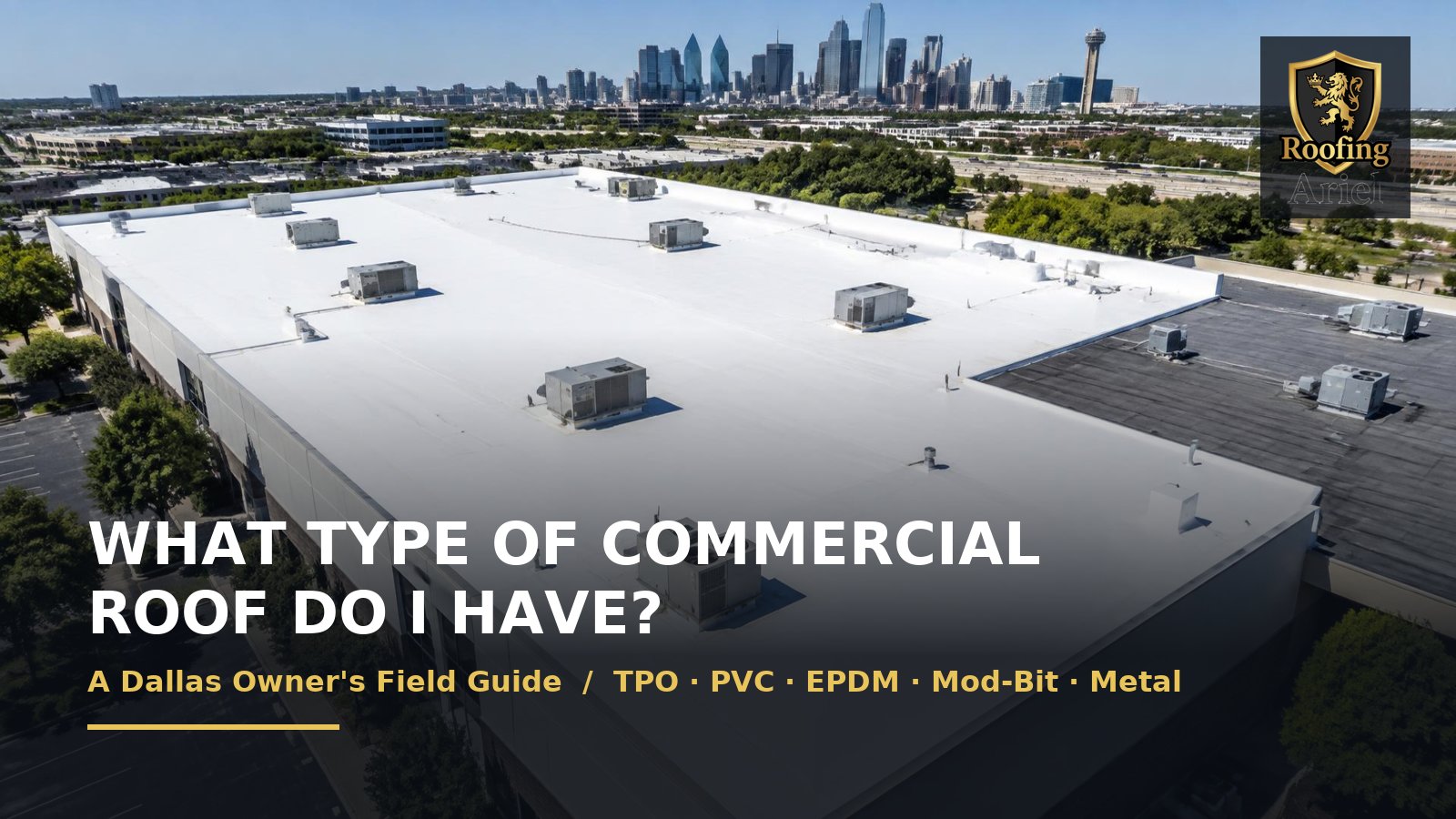
TPO is a white single-ply membrane with seams that are heat-welded into a continuous sheet. It has become the most common low-slope choice in DFW because it reflects heat, installs efficiently on large roofs, and offers strong seams.
TPO comes in several thicknesses. Thicker membranes generally hold up better to foot traffic, UV, and hail. Quality also varies between manufacturers and installers, so welding technique and detailing matter. Learn more on our commercial flat roof services page.
PVC (polyvinyl chloride)
PVC is also a heat-welded white membrane, but its chemistry differs. It resists grease, oils, and many chemicals better than TPO. That makes it a strong fit for restaurants with kitchen exhaust, food processing facilities, and buildings that vent chemicals onto the roof.
PVC usually costs more than TPO. For owners without grease or chemical exposure, TPO often delivers similar performance for less money.
EPDM (rubber roofing)

EPDM is a synthetic rubber membrane with decades of track record. It stays flexible through temperature swings and handles hail reasonably well, especially in thicker grades. Standard EPDM is black, so it absorbs heat, although white EPDM and reflective coatings exist.
Seams are adhered or taped rather than welded. Done well, they perform reliably. Done poorly, seams are where EPDM roofs leak first.
Modified bitumen
Modified bitumen is an asphalt-based system installed in layers, often with a granulated cap sheet. It handles foot traffic well and offers redundancy, since multiple plies protect the building. It's common on older Dallas strip centers, smaller commercial buildings, and roofs with frequent maintenance traffic.
Built-up roofing (BUR)
Built-up roofs use alternating layers of asphalt and felt, usually topped with gravel. They are heavy and durable, and many older DFW buildings still have them. New BUR installs are less common today, but restoration or replacement with a single-ply system is a frequent decision for owners of these roofs.
Metal roofing

Standing seam metal suits sloped commercial roofs, pre-engineered metal buildings, and owners who want a long service life. Concealed fasteners reduce leak points, and reflective finishes help with heat. Metal can show cosmetic dents from large hail, so panel gauge, coatings, and insurance terms deserve attention.
Metal generally costs more upfront than single-ply membranes, but its lifespan can make it attractive for long-term owners. Exposed-fastener metal roofs on older warehouses often need fastener and seam maintenance or a roof coating to extend their life.
TPO vs. PVC vs. EPDM vs. Metal: Comparison Table
The table below summarizes how the four most-requested commercial roofing systems in DFW compare. Treat it as a starting point. Thickness, insulation, attachment, and workmanship shift these results on any specific building.
| Factor | TPO | PVC | EPDM | Metal |
|---|---|---|---|---|
| Durability | Good; improves with thicker membranes | Very good; strong welded seams | Good; proven over decades | Excellent on properly designed sloped roofs |
| Energy efficiency | High — white and reflective | High — white and reflective | Lower when black; white options available | High with reflective finishes |
| Weather resistance | Good heat and UV resistance; hail depends on thickness and cover board | Good; resists grease and chemicals | Flexible in temperature swings; good hail tolerance in thicker grades | Strong wind resistance; can dent cosmetically in large hail |
| Maintenance | Seam and flashing checks, keep drains clear | Similar to TPO | Watch adhered seams and flashings | Fastener, seam, and sealant checks |
| Typical applications | Warehouses, offices, retail, large flat roofs | Restaurants, food processing, chemical exposure | Older flat roofs, irregular shapes, re-roofs | Sloped roofs, metal buildings, long-term owners |
| Relative cost | Moderate | Moderate to higher | Moderate | Higher upfront |
Best Commercial Roofing Material by Building Type
Building use often decides the shortlist faster than material specs do. Here's how we typically think through common DFW property types.
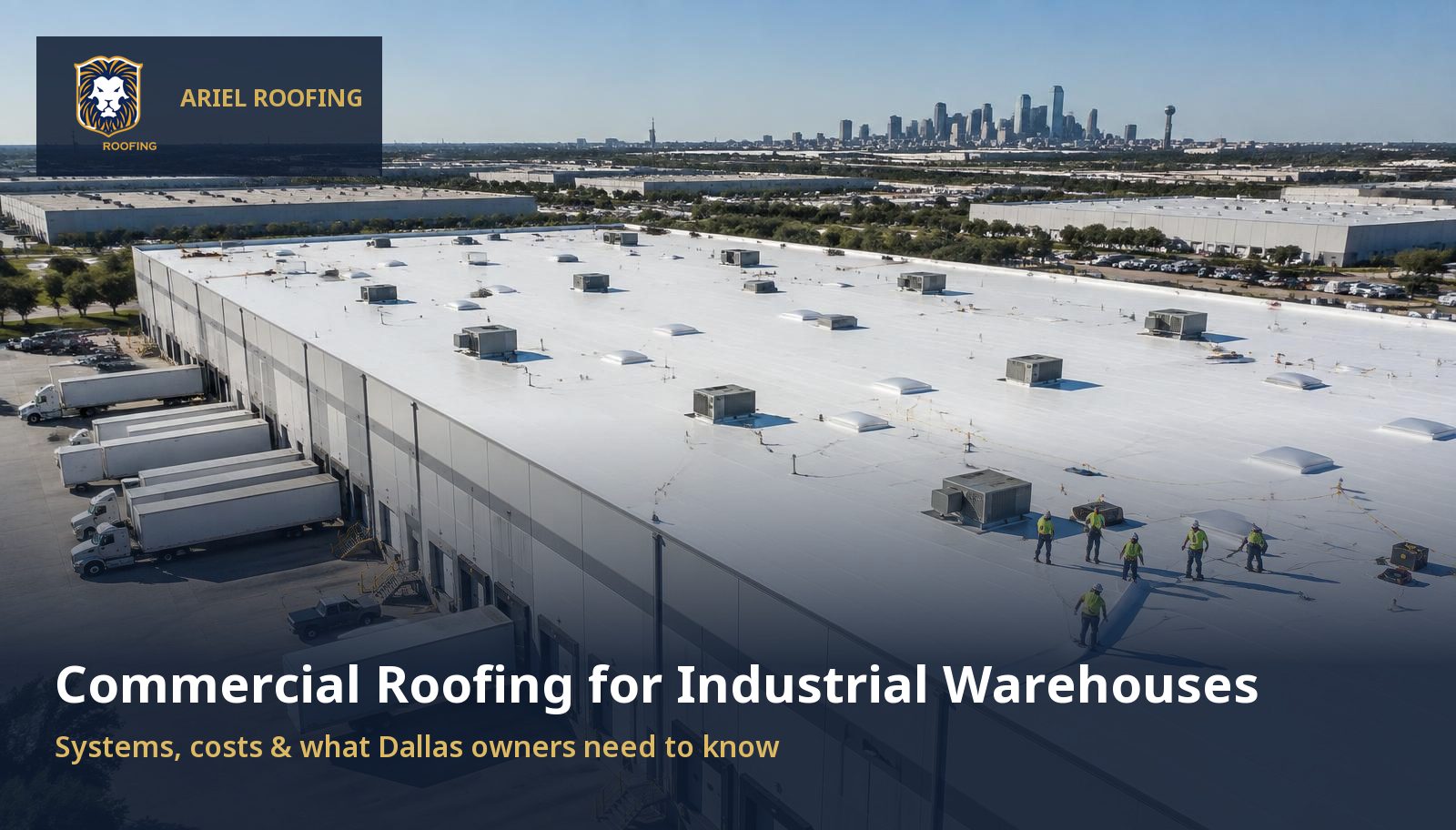
- Warehouses and distribution centers: Large low-slope roofs usually favor TPO for efficient installation and reflectivity. Older metal warehouses may be better served by restoring or re-paneling the metal. See our guide to commercial roofing for industrial warehouses.
- Office buildings: TPO or PVC keep cooling loads down and look clean from neighboring towers. Heavy rooftop equipment calls for walkway pads and a durable cover board.
- Retail centers: Multiple tenants mean many penetrations and frequent HVAC service traffic. TPO with reinforced walkways is common; modified bitumen still works well where traffic is constant.
- Restaurants: PVC is usually the safer choice around kitchen exhaust, because grease breaks down many other membranes over time.
- Industrial facilities: Chemical exhaust, heavy equipment, and process heat may point to PVC, thicker membranes, or metal. A site review of what vents onto the roof is essential.
- Multi-family and mixed-use properties: Flat sections often use TPO, while sloped sections may use shingles or metal. Noise, tenant access, and phasing shape the plan as much as material choice.
Which Commercial Roofing Material Is Best for Dallas–Fort Worth?
The honest answer: it depends on the building. A reflective TPO roof can be the right call for a Grand Prairie distribution center and the wrong call for a restaurant in Uptown. A standing seam roof can be a smart long-term asset on a sloped office building in Fort Worth and impractical on a large flat warehouse.
When we help owners choose, we look at a few questions together. What is the roof slope and deck? What's currently on the roof, and can it stay or must it be torn off? What vents or sits on the roof? How long will you own the building? What does your insurance carrier require? What drainage problems exist today?
Answering those questions turns a generic list of commercial roof types into a recommendation that fits your property. Owners in Tarrant County can start with our commercial roofing in Fort Worth page, and those comparing systems in more depth can read our commercial roofing system comparison for Dallas.
When Should You Repair or Replace a Commercial Roof?
Not every leak means a new roof. Many commercial roofs can be repaired or restored for years of extra service. Others have reached the point where repairs only delay a larger bill.
- Repair usually makes sense when damage is limited to a few areas, the membrane is still flexible, and the insulation underneath is dry.
- Restoration with a coating may fit when the roof surface is aging but structurally sound, with little wet insulation.
- Replacement is often the better choice when leaks keep returning in different spots, large areas of insulation are wet, seams are failing broadly, or hail has damaged much of the roof.
- Replacement also makes sense when you need to fix poor drainage, add insulation, or change systems — for example, moving from black EPDM to reflective TPO.
If replacement looks likely, our commercial roof replacement team can scope the work, plan phasing around your operations, and explain which materials fit. For small, recent problems, start with commercial roof repair.
Why a Professional Commercial Roof Inspection Matters
What you see from the roof surface tells only part of the story. Wet insulation, deck corrosion, and failing seams often hide under a membrane that looks fine. An inspection can include core samples, moisture scanning, and a close look at flashings, drains, and penetrations.
That information shapes every decision in this guide. It tells you whether repair is realistic, whether existing layers can stay, how much insulation must be replaced, and which materials will perform on your building. It also gives you documentation if you're filing a hail claim.
Pricing works the same way. Roof size, tear-off, deck repairs, insulation, edge metal, and access all move the number, so a reliable price comes after an on-site roof inspection rather than from a per-square-foot guess.
Talk to a Dallas–Fort Worth Commercial Roofing Contractor
Ariel Roofing works with property owners and managers across Dallas, Fort Worth, and the surrounding DFW communities. We'll inspect your roof, explain what we find in plain terms, and recommend materials that fit your building, budget, and plans for the property.
Book a free commercial roof inspection or call +1 469-833-2332 to talk with a project lead. You can also learn more about our work across the city on our Dallas roofing page.