Ask ten commercial property managers in DFW what warranty their roof carries and you'll get answers ranging from a confident number of years to a shrug. That gap matters, because a commercial roof warranty is one of the most misunderstood documents a building owner holds — and one that can either save six figures on an unexpected failure or turn out to be nearly worthless when a claim actually gets filed.
The confusion is understandable. There isn't one warranty on a commercial roof — there are typically two or three, issued by different parties, covering different failure modes, with different maintenance obligations attached to each. Understanding which is which, before you need to use one, is the difference between a warranty that pays out and one that becomes a legal argument.
The three warranty categories, and who's actually on the hook
A manufacturer's material warranty covers defects in the roofing material itself — a membrane that fails prematurely due to a manufacturing defect, not installation error or weather event. This is issued by the company that made the TPO, EPDM, or modified bitumen, and it typically has the narrowest scope of the three warranty types.
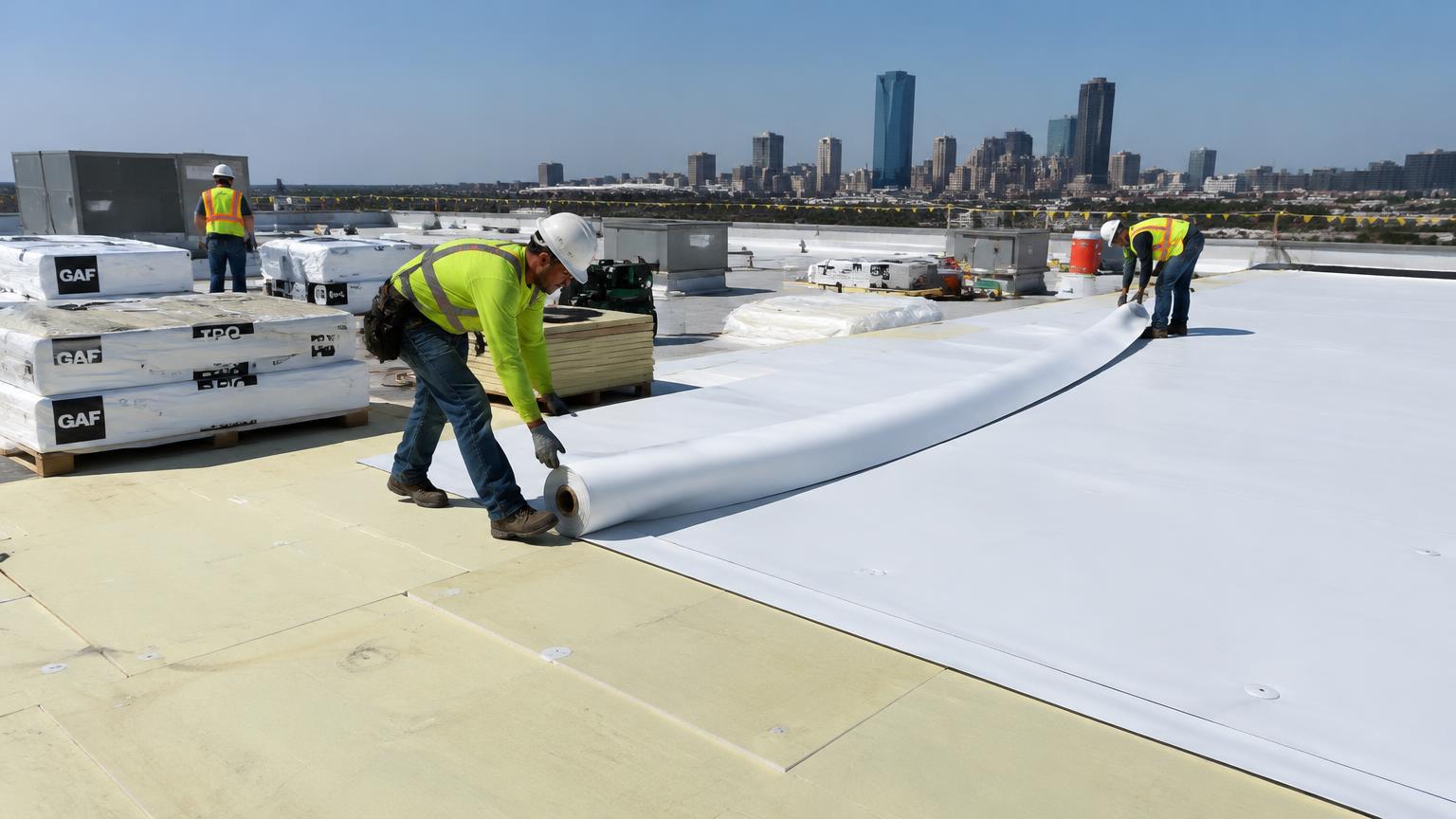
A manufacturer's system or NDL (no dollar limit) warranty is broader: it covers the entire roofing system as installed — material and, critically, labor to repair or replace failed components — up to no fixed dollar cap, provided the roof was installed by a contractor certified by that manufacturer and the installation followed their specifications exactly. This is the warranty most owners think they have when they really only have material coverage.
A contractor's workmanship warranty is separate from both and comes from the roofing company itself, not the manufacturer. It covers installation errors — a poorly sealed seam, a mis-flashed penetration — for a period the contractor sets, commonly 2 to 10 years. This warranty is only as good as the contractor's continued existence and reputation; if the company closes or changes hands, workmanship warranty enforcement gets considerably harder.
Typical terms and what the upgrade actually costs
Material-only warranties commonly run 15, 20, or even 30 years on premium membranes, but again, that's material defect coverage only — it doesn't pay for labor if a seam fails from installation error. NDL system warranties are typically offered in 10, 15, or 20-year terms, with 20-year NDL coverage on a quality TPO or PVC system being fairly standard for institutional and larger commercial properties.
Upgrading from a 10-year to a 20-year NDL warranty on a typical commercial roof usually adds a modest percentage to the total project cost — often in the range of 3-8% depending on manufacturer and membrane type — and for most owners planning to hold a property for more than a decade, that premium is worth it given the labor coverage alone can be worth many times the incremental cost if a systemic failure occurs.
Workmanship warranty length varies more by contractor than by any industry standard. A longer workmanship warranty is a reasonable signal of contractor confidence, but it's only meaningful if the contractor has the track record and financial stability to still be operating when a claim comes in ten years later.
What's excluded — the part nobody reads until there's a leak
Ponding water is the most commonly misunderstood exclusion. Many standard commercial roof warranties either exclude ponding water damage entirely or cap coverage at ponding that clears within 48 or 72 hours after rainfall — language that matters enormously in DFW, where flat roofs with marginal drainage slope regularly hold water for days after a summer storm system moves through.
Wind speed caps are another frequent surprise. A warranty may state coverage up to a specific wind speed — commonly in the 55-90 mph range depending on the system and attachment method — well below the gusts recorded during a significant North Texas thunderstorm outflow or the edge of a tornado-producing supercell. If recorded wind speeds at the property exceeded the warranty's stated threshold, the manufacturer can and will deny the claim.
Hail damage is excluded from the vast majority of standard commercial roof warranties outright, since hail is treated as a casualty event for insurance to cover rather than a material or workmanship defect — this is one of the most common points of confusion we see with DFW property managers who assume their roof warranty functions like a hail damage policy. It doesn't, and hail claims go through your building's property insurance, not the roof manufacturer.
Consequential damage — interior water damage, inventory loss, business interruption — is excluded from essentially every manufacturer roof warranty. Those warranties cover repair or replacement of the roof system itself, not the downstream cost of a leak reaching the space below. That gap is exactly what a building's property insurance and, in some cases, added coverage endorsements are meant to fill.
The certification and inspection requirement
NDL warranties are conditioned on installation by a contractor specifically certified by that manufacturer — not just any licensed roofer, but one who has completed the manufacturer's training and installs enough of that system annually to maintain certification status. Installing a non-certified contractor's work under a system meant to carry NDL coverage is one of the most common reasons a claim gets denied outright: the warranty was never actually valid from day one.
Most manufacturers also require the completed installation to pass a post-install inspection by a manufacturer field representative before the warranty is formally issued. Skipping or failing this step — sometimes because a contractor rushes to close out a job — can leave a building owner holding a warranty certificate that was never properly activated.
Maintenance obligations that keep coverage alive
Nearly every commercial roof warranty, NDL or otherwise, requires documented periodic maintenance to remain valid — typically at least annual inspections, prompt repair of minor damage, and clearing of debris and drains. This is not boilerplate; manufacturers do request maintenance records when a claim is filed, and a warranty holder with no documentation of upkeep can have a legitimate claim denied purely on a lack of proof that basic maintenance occurred.
This is exactly why we push commercial clients toward a preventative maintenance program rather than a reactive repair-only relationship. A documented twice-yearly inspection with dated photos and a written report is often the single piece of evidence that determines whether a warranty claim gets approved or denied years down the line, well after anyone remembers the specifics of that day's storm.
How rooftop contractors and HVAC work void coverage
The most common way we see commercial roof warranties voided in North Texas has nothing to do with the roof itself — it's an HVAC technician, satellite installer, or electrical contractor accessing the roof for unrelated work and puncturing, cutting, or improperly resealing the membrane around new equipment. Manufacturer warranties typically require any rooftop penetration or equipment work to be performed or approved by a certified roofing contractor, and unauthorized modifications by other trades are one of the most litigated exclusions in commercial roofing.
Property managers should require any vendor accessing the roof — HVAC service, telecom, solar installers — to coordinate with the roofing contractor of record or at minimum notify building management before cutting into or walking heavily on roof areas. A simple rooftop access policy, communicated to all vendors, prevents the majority of these avoidable warranty voids.
Transferring a warranty when the building sells
Most manufacturer warranties are transferable to a new owner when a commercial property sells, but transfer is not automatic — it requires formal notification to the manufacturer, often within a specific window after closing, and frequently a transfer fee and a fresh roof inspection to confirm the system is still in warrantable condition. Skipping this step means the new owner inherits a roof with a warranty that technically lapsed at closing.
This detail belongs on every commercial real estate transaction checklist involving a roof under warranty. We routinely get calls from new building owners a year or two after purchase who assumed the warranty transferred automatically, only to discover during a claim that it never was formally transferred and is no longer valid.
Filing a claim: what actually happens
A warranty claim starts with documentation — photos of the damage, a description of when it was discovered, and ideally your maintenance records showing the roof has been kept up per the warranty's requirements. That package goes to the manufacturer's warranty claims department, which typically dispatches a field representative to inspect the roof in person before approving or denying repair scope.
The inspection determines whether the failure falls under a covered defect or an excluded cause — wind speed exceedance, unauthorized rooftop work, lack of maintenance, or a hail event are the most common reasons a claim gets denied at this stage. If approved, the manufacturer typically directs an NDL-certified contractor to perform the repair, which may or may not be your original installer depending on certification status and manufacturer network in your area.
Having your own roofing contractor present during the manufacturer's inspection, and having your maintenance documentation organized before the claim is filed, meaningfully improves the odds of a smooth approval — we attend these inspections directly with clients specifically because an advocate on-site who knows the system's install history tends to move the claim along faster than paperwork alone.
Reading the document and questions to ask before you sign
Before accepting any commercial roofing proposal, ask for the actual sample warranty document — not a sales sheet summarizing it — and read the exclusions section specifically for ponding water language, the stated wind speed threshold, and any clause about who is authorized to perform rooftop work without voiding coverage. Ask whether the warranty is material-only or full NDL system coverage, and confirm your contractor's manufacturer certification status directly with the manufacturer, not just the contractor's word.
Also ask what maintenance documentation the warranty requires to stay valid, whether that maintenance can be self-performed or must come from a certified contractor, and what the transfer process and cost look like if you plan to sell the building within the warranty term. A roofing contractor who answers these questions clearly and provides the actual document without hesitation is telling you something important about how they do business.